The Bottom Turn in Surfing: Your First Manoeuvre After the Pop Up
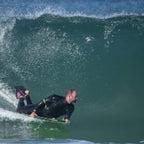
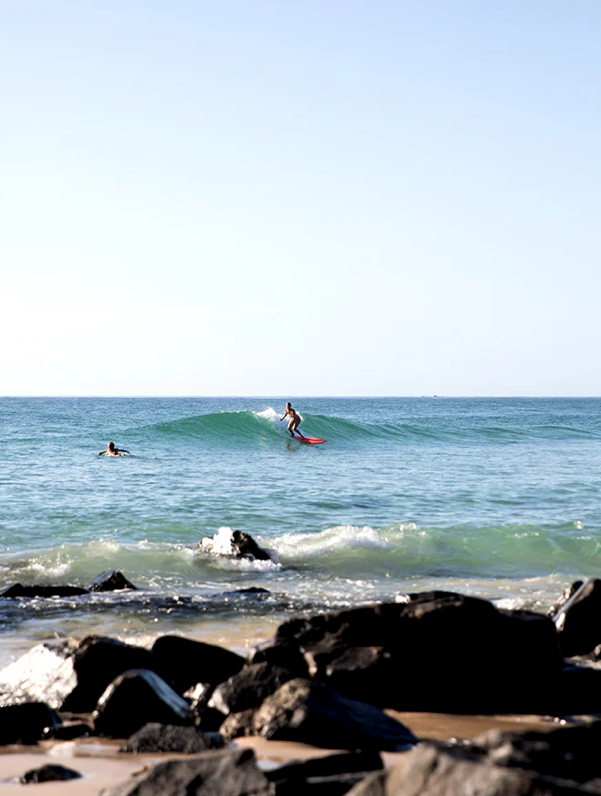
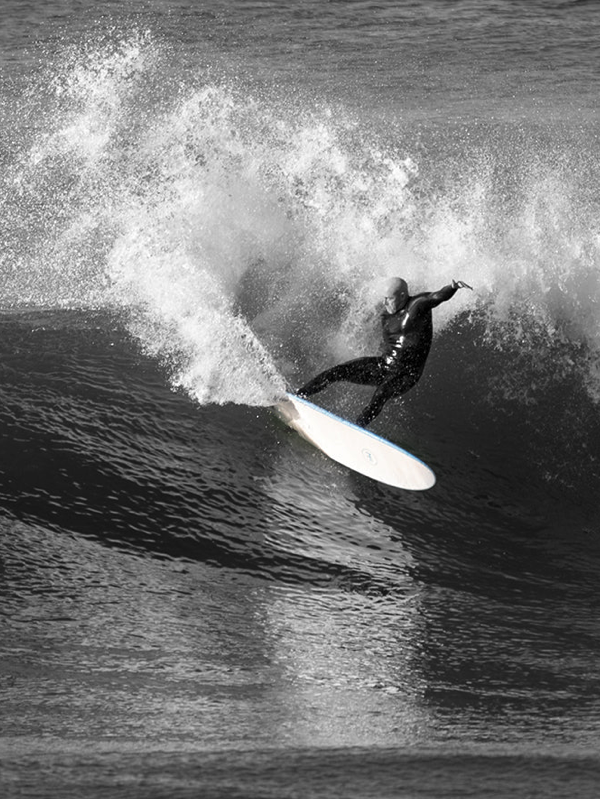
The bottom turn is the first turn you learn in surfing, once you can pop up and take off along the shoulder of the wave. It is a powerful turn made at the bottom of the wave that converts the energy of the drop into speed along the face. In other words: it is what takes you from going straight to actually surfing. And it is the foundation of every manoeuvre that follows.
Qu’est-ce que le bottom turn, exactement
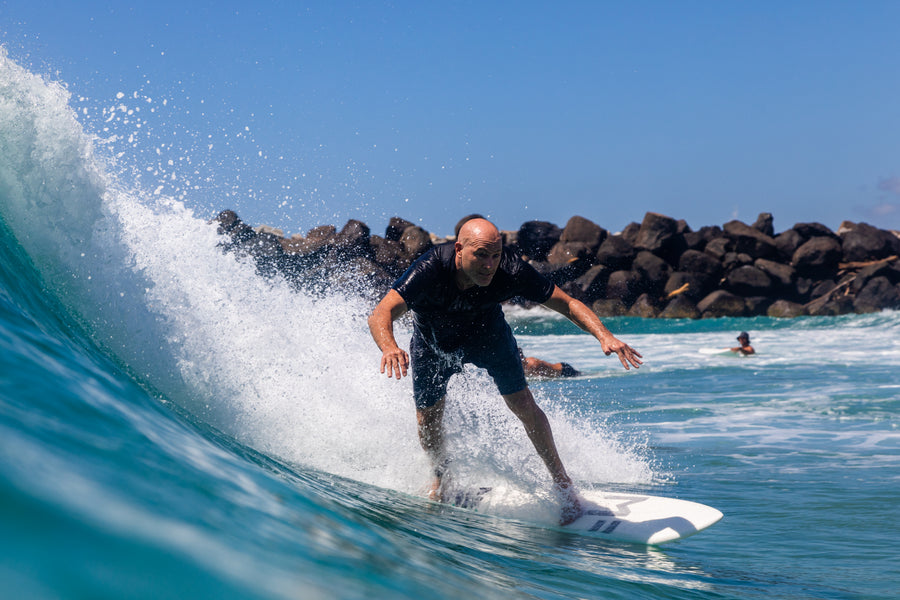
Quand tu prends une vague, tu descends sa face : l’énergie est verticale. En bas, tu enclenches un large virage, presque à 180 degrés, pour repartir le long de la vague vers l’épaule, et l’énergie devient horizontale. C’est ce virage qui te donne la vitesse et la direction nécessaires pour rester sur la vague et enchaîner. Sans un bon bottom turn, impossible de progresser vers les manoeuvres suivantes.
Les étapes pour réussir ton bottom turn
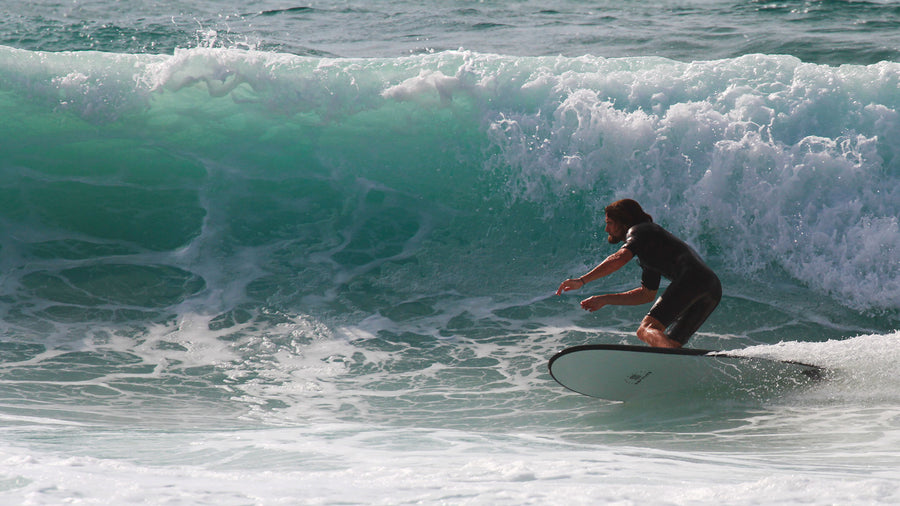
Compression
Stay compressed from the pop up: keep your knees bent and your centre of gravity low. The more compact you are, the more balance and control you have to set the turn.
Eyes
Look towards the shoulder of the wave, in the direction you are aiming for, never down at your feet or the nose. Turn your head and your eyes: your body follows your eyes.
Loading the inside rail
Load the inside rail: frontside (facing the wave), press through your toes and lean into the face. Backside (back to the wave), press through your heels and lean back, looking over your leading shoulder.
The inside hand
Guide the turn with your inside hand: brush the surface with the hand closest to the wave, which helps you keep your balance and draw the arc.
Extension
Extend to accelerate once the turn is set and the board is heading back up the face. Straighten your legs slightly: that extension drives the board and gives you speed for what comes next.
Frontside ou backside ?
En frontside, tu fais face à la vague : tu la vois, c’est le plus simple pour débuter. En backside, tu lui tournes le dos : la planche paraît moins stable et la vague moins lisible, c’est pour ça qu’on le travaille en second. Commence par maîtriser le bottom turn frontside avant de t’attaquer au backside.
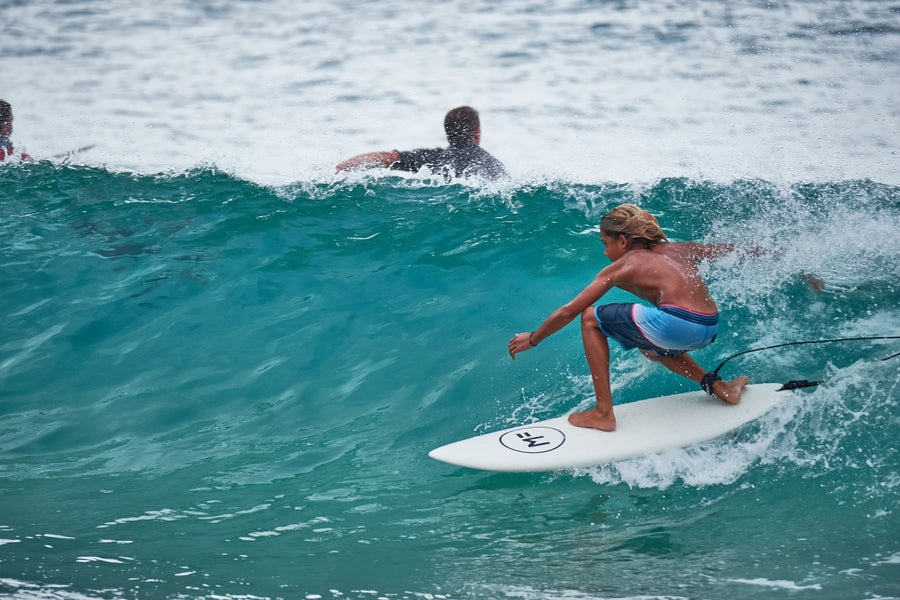
Les conseils qui changent tout
Ne pars pas tout droit au take-off : prends un léger angle dès le départ, ça facilite la transition vers le virage. Attaque le bottom turn à pleine vitesse, sur le plat de la vague, sans attendre que la planche remonte toute seule. Et anticipe : le virage se déclenche dès que tu arrives en bas, pas une seconde plus tard.
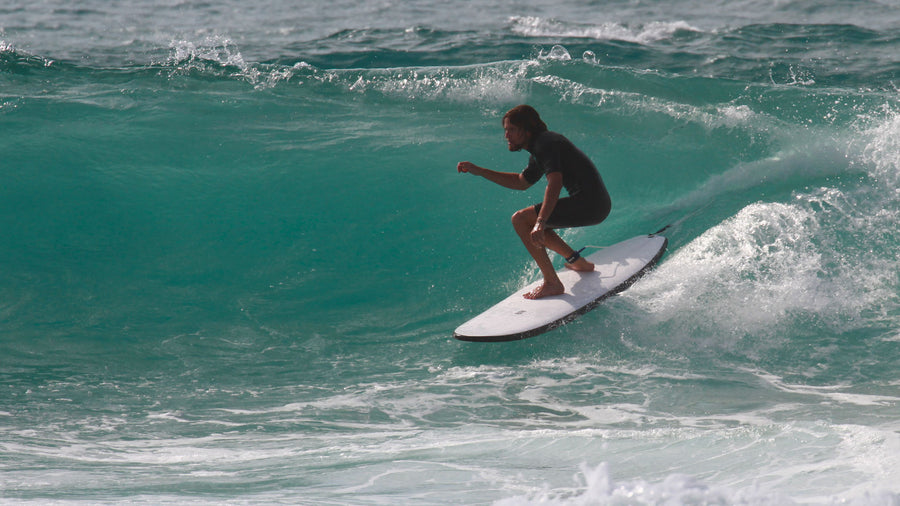
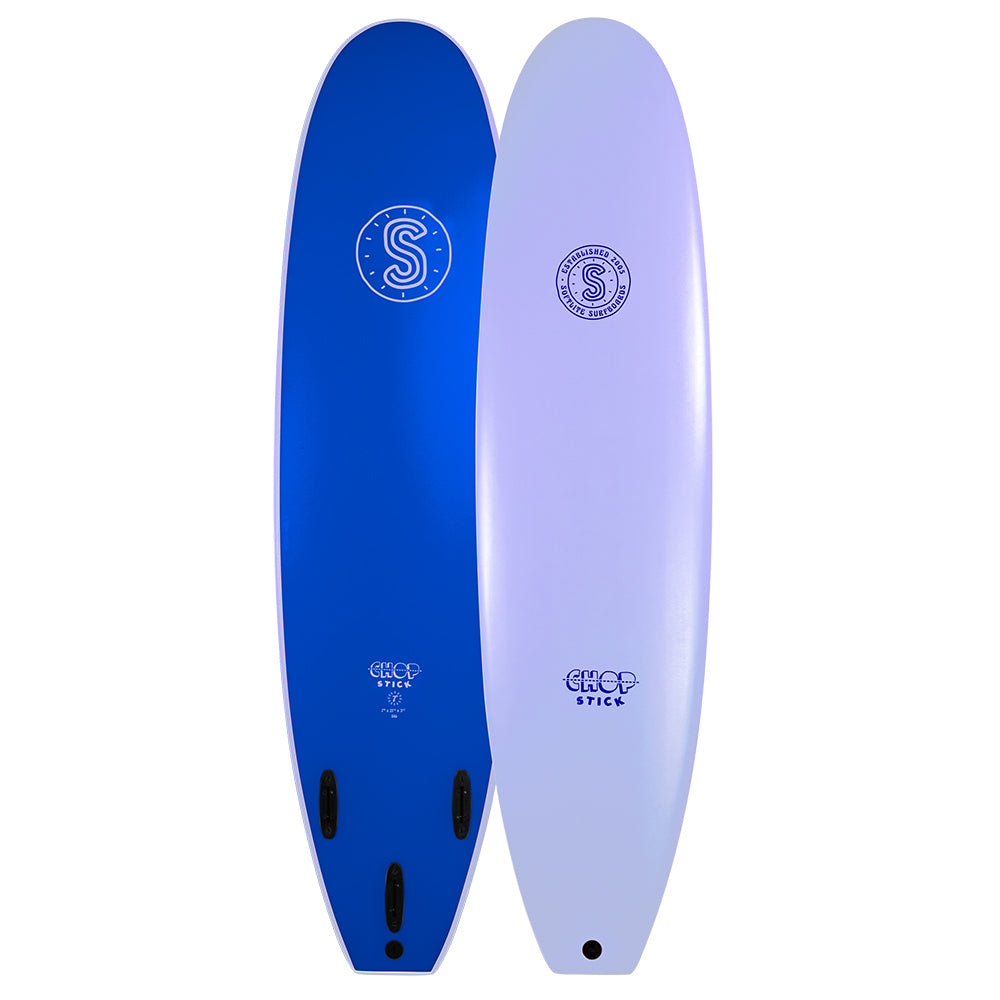
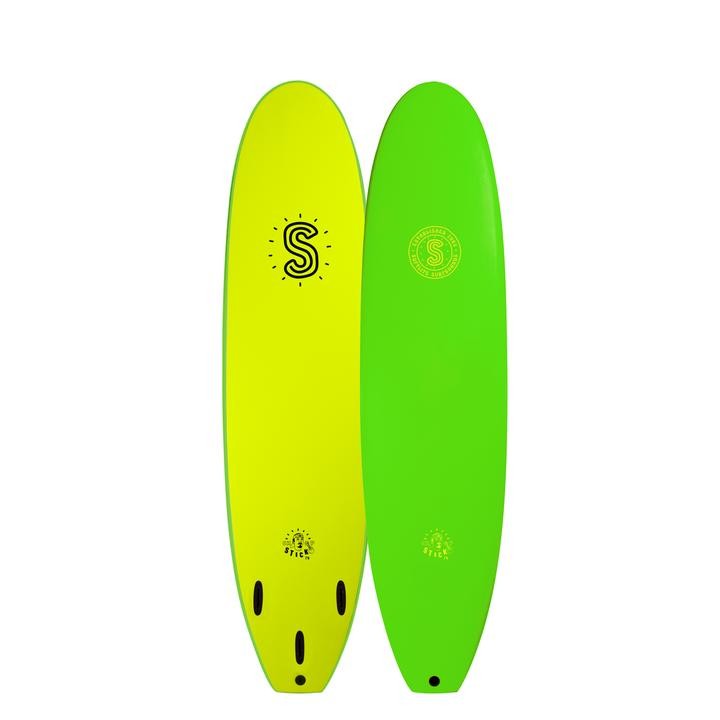
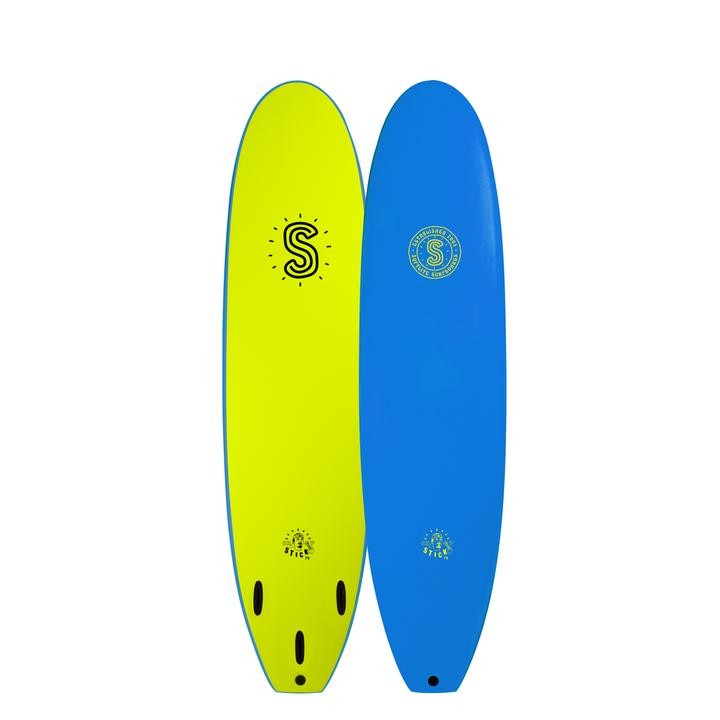
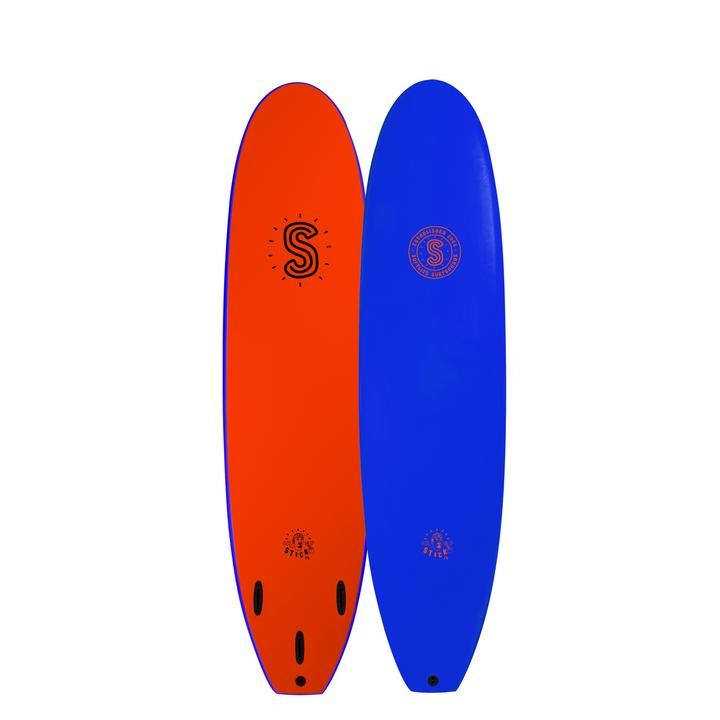
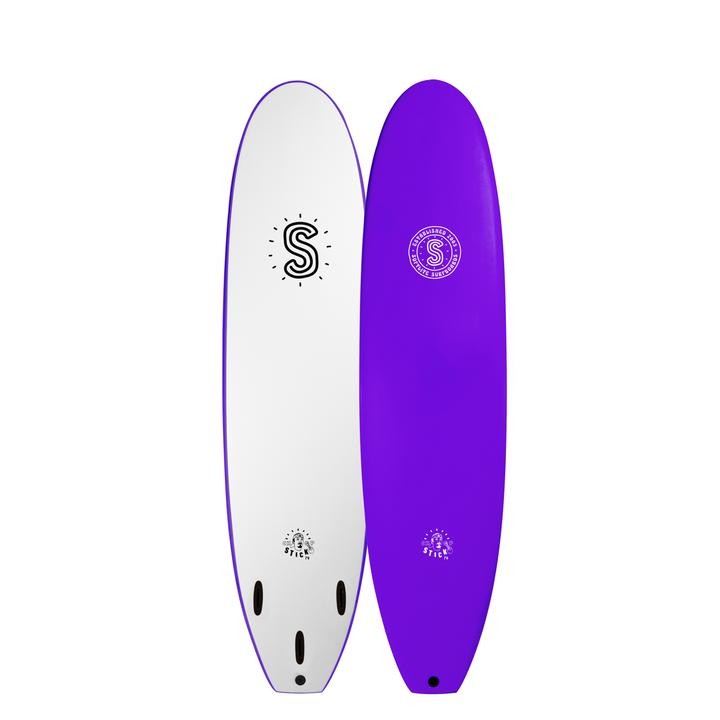
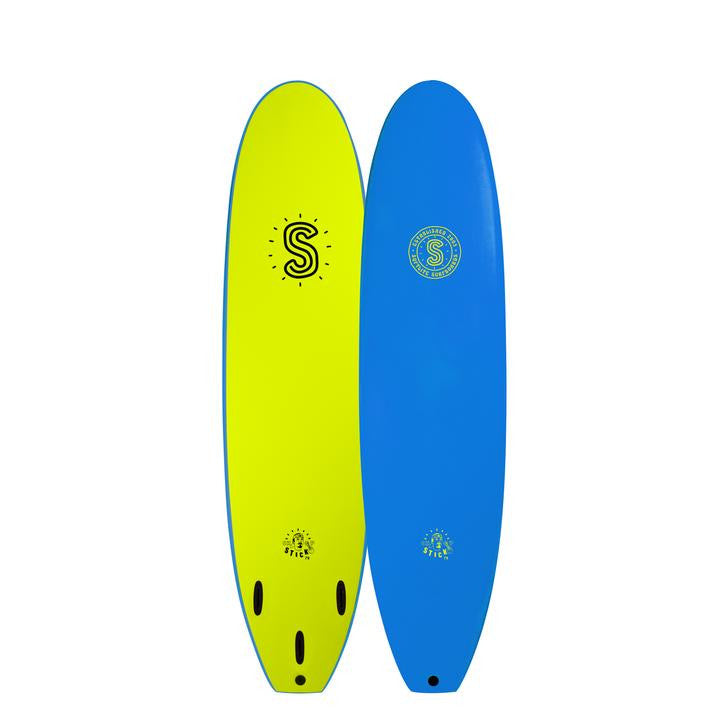
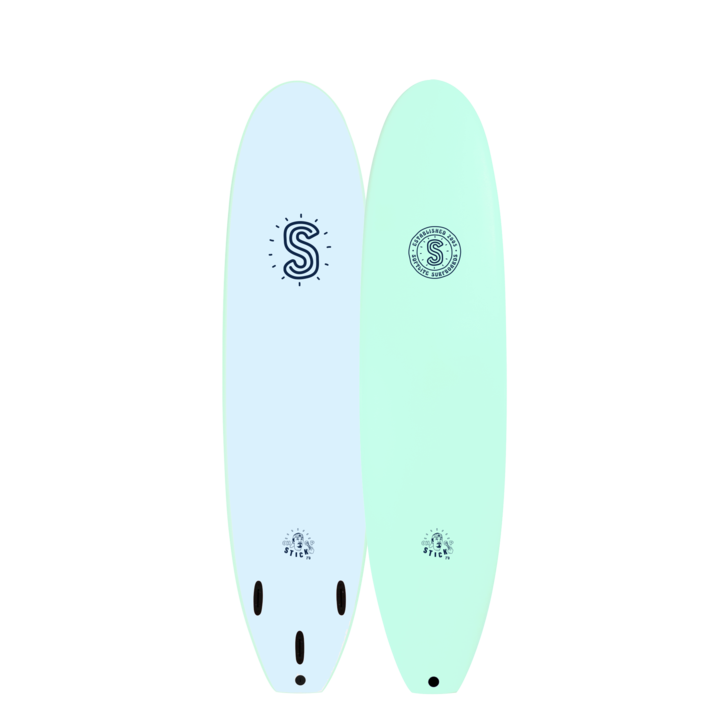
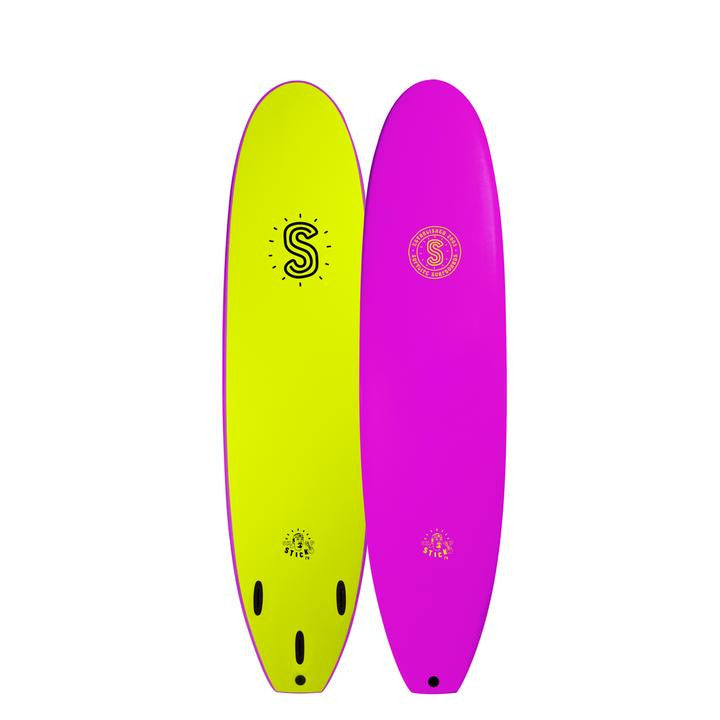
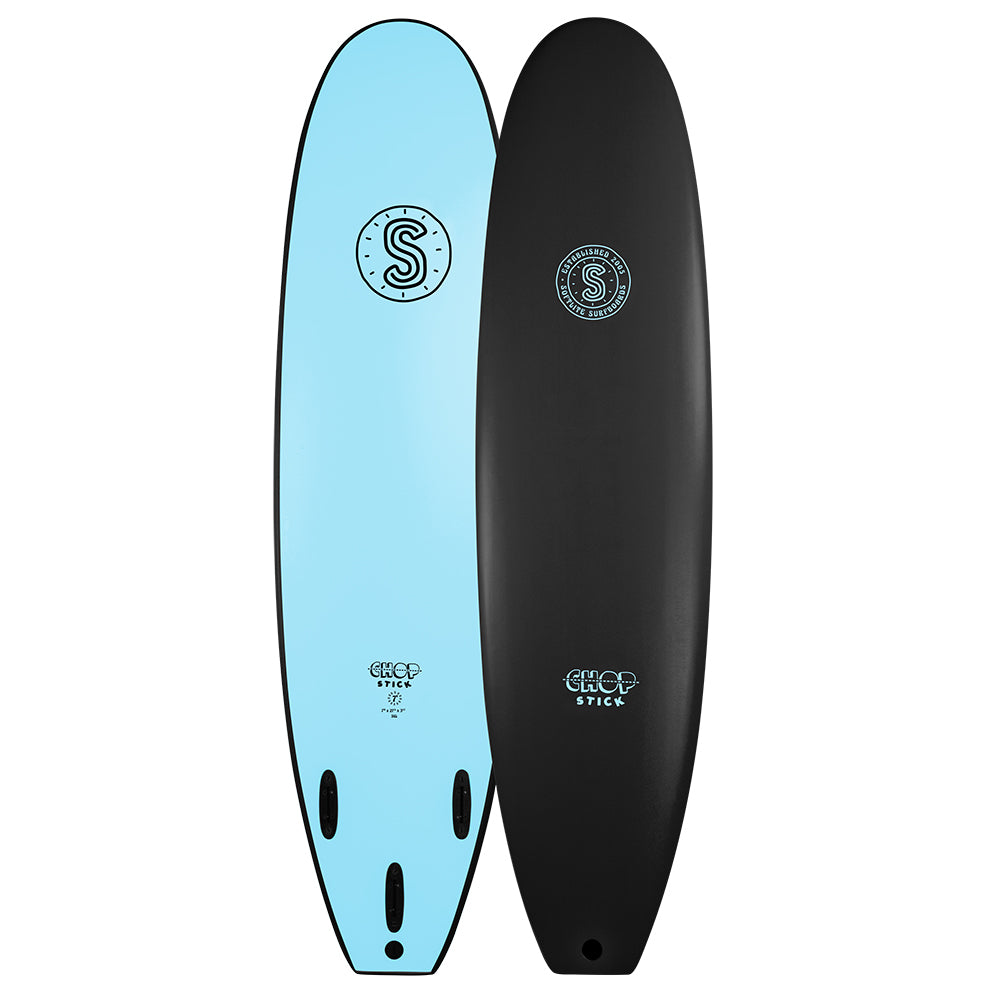
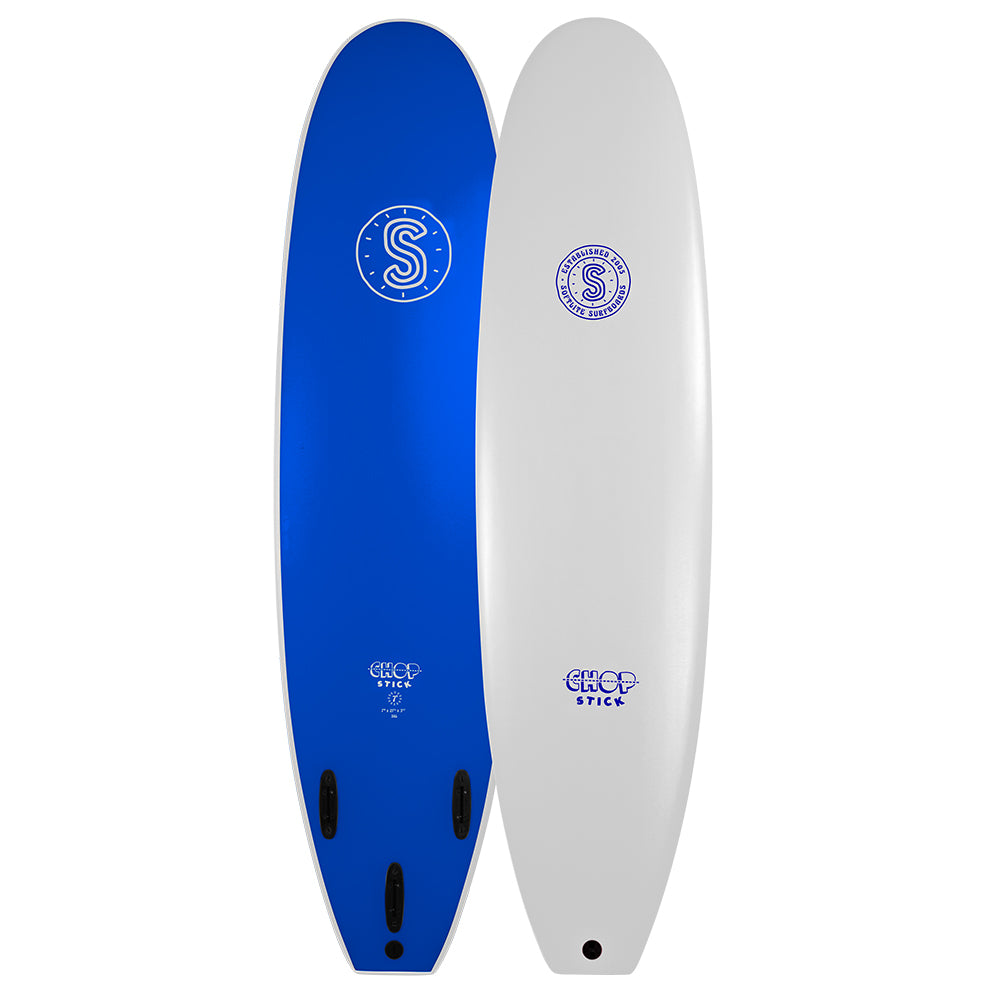
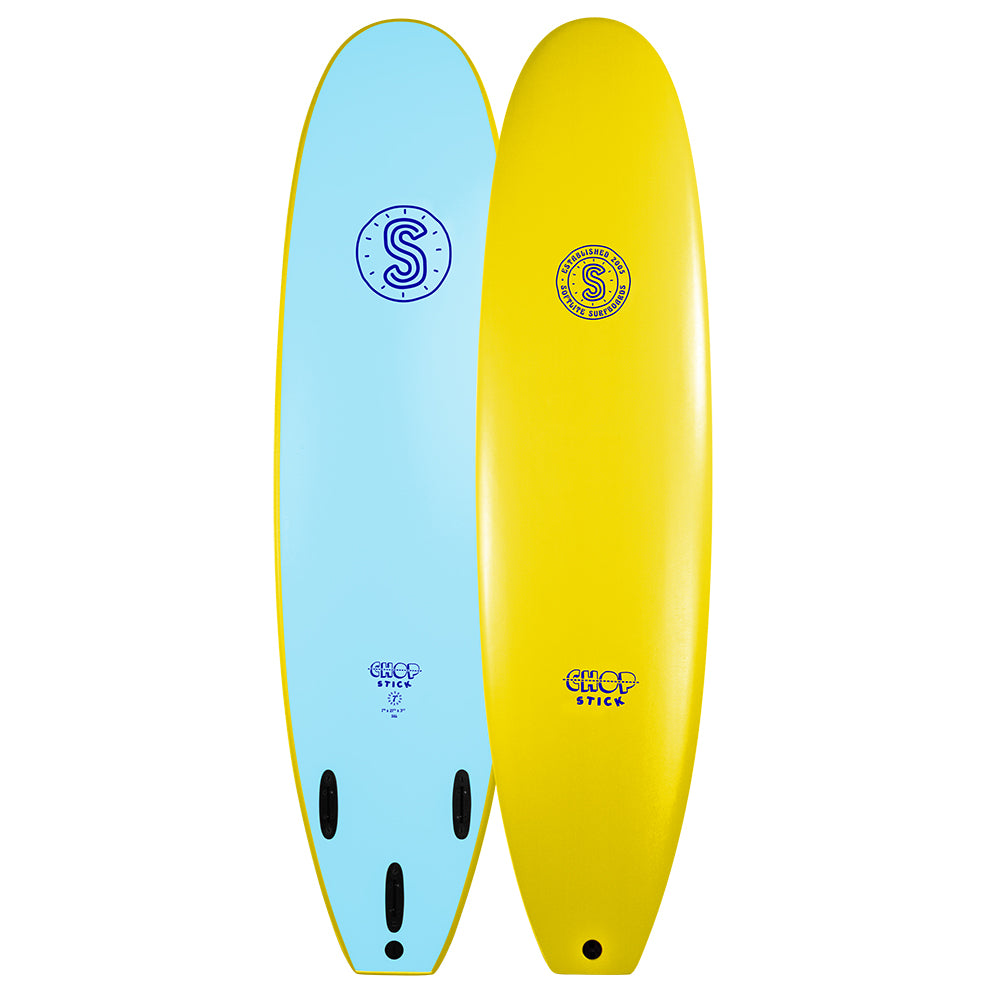
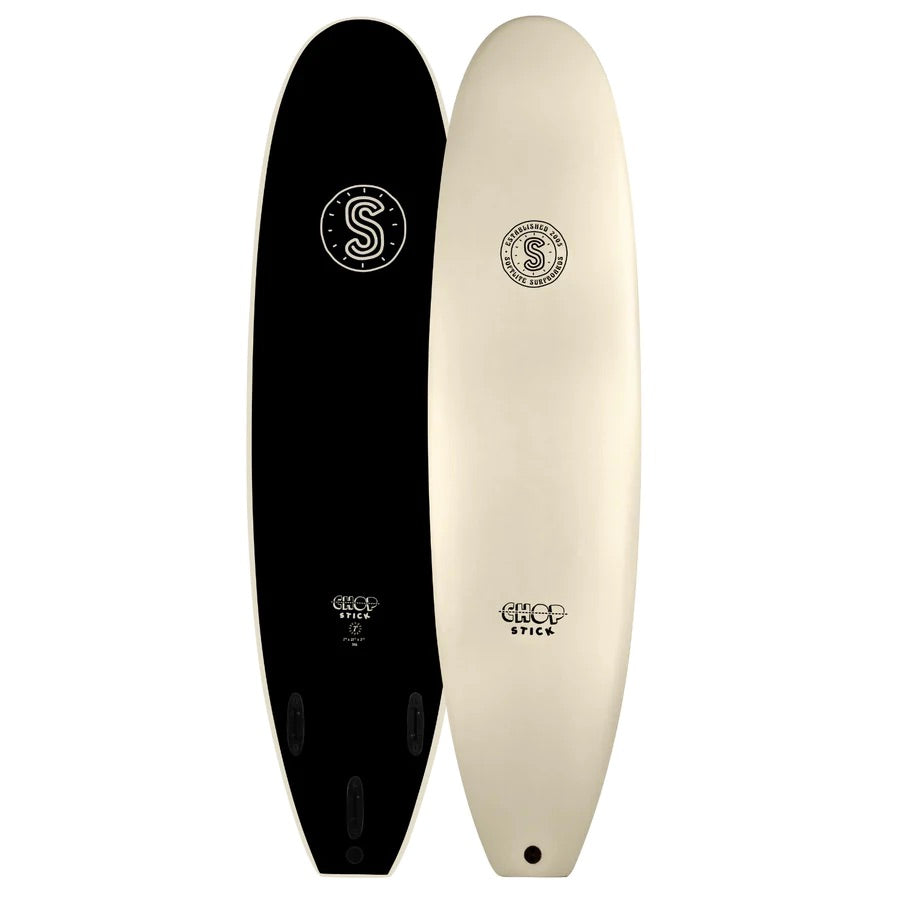
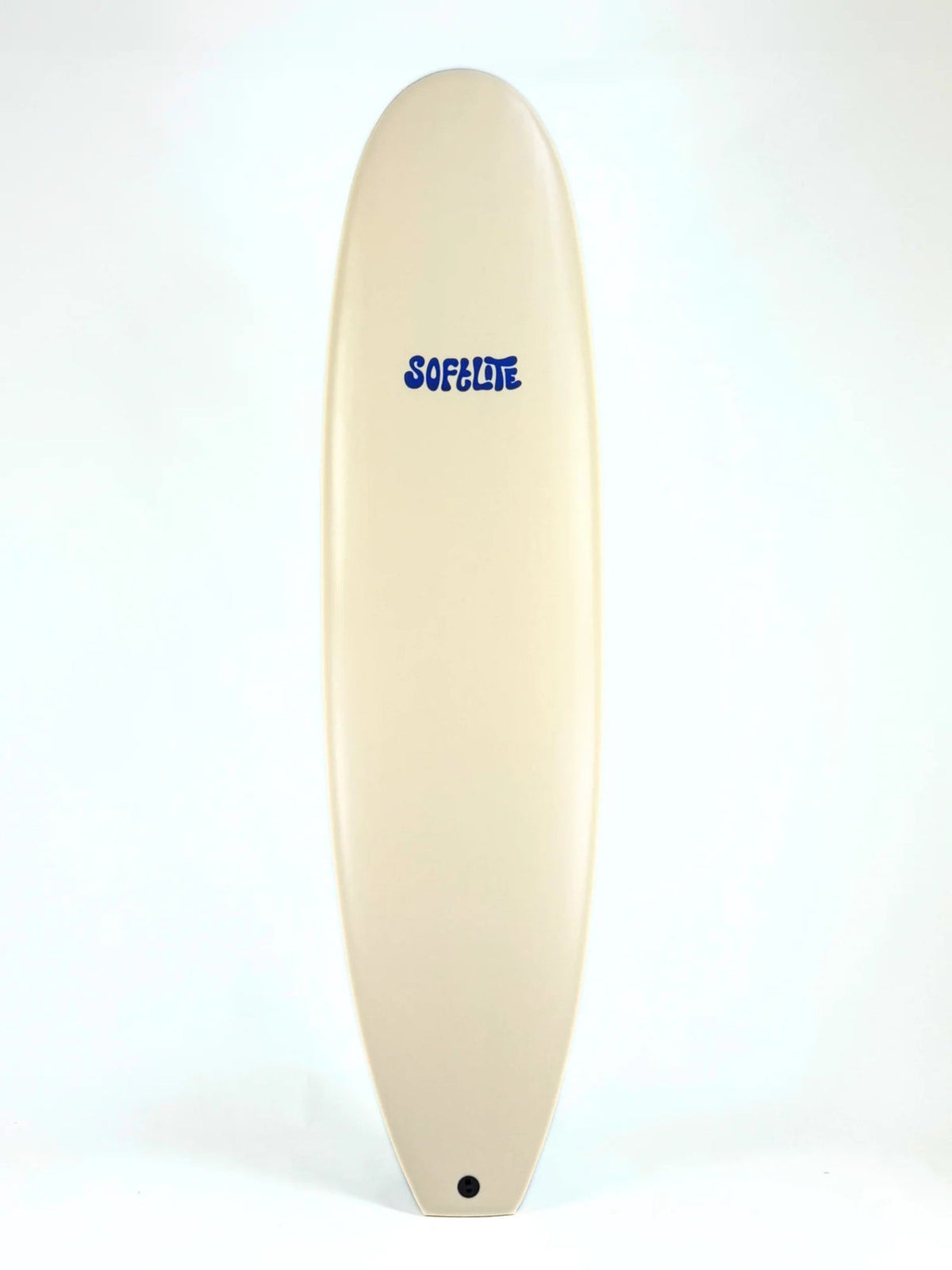
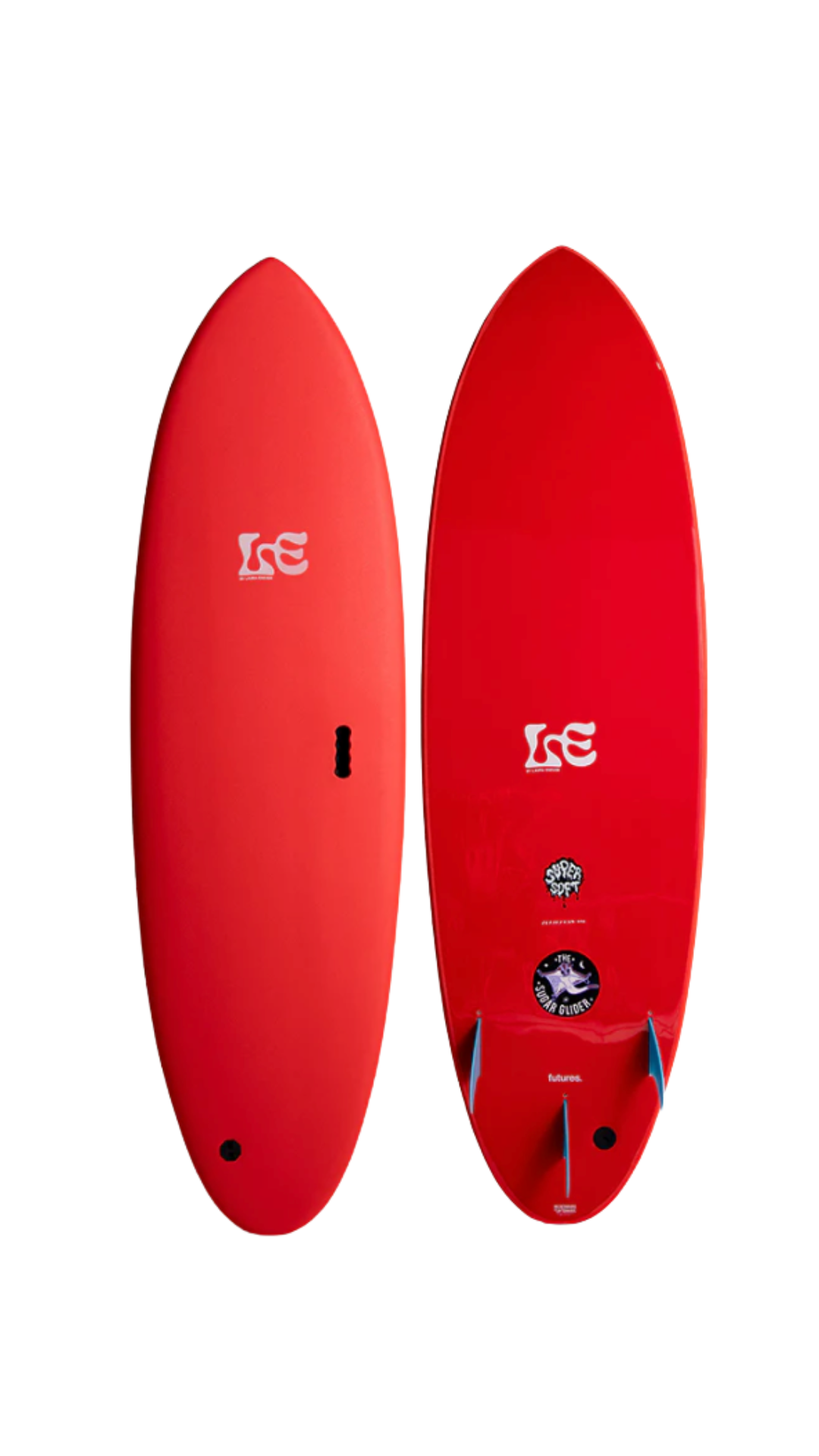
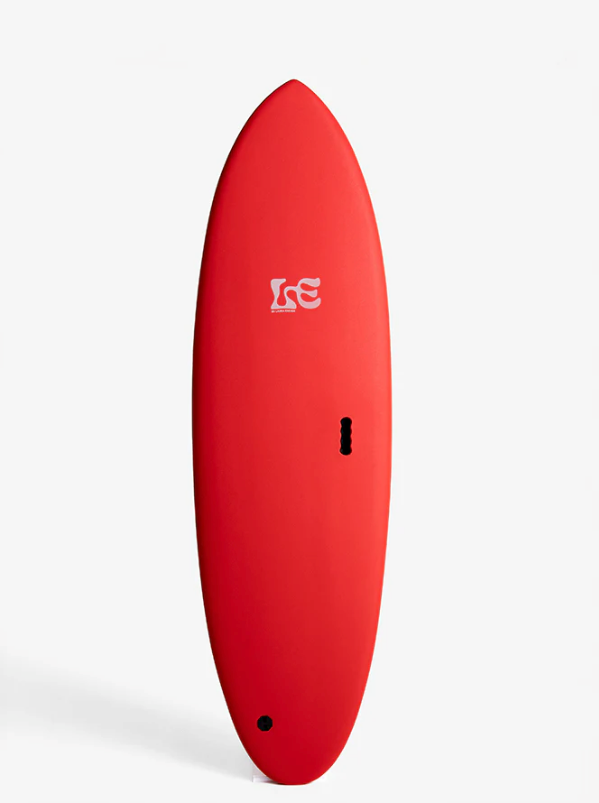
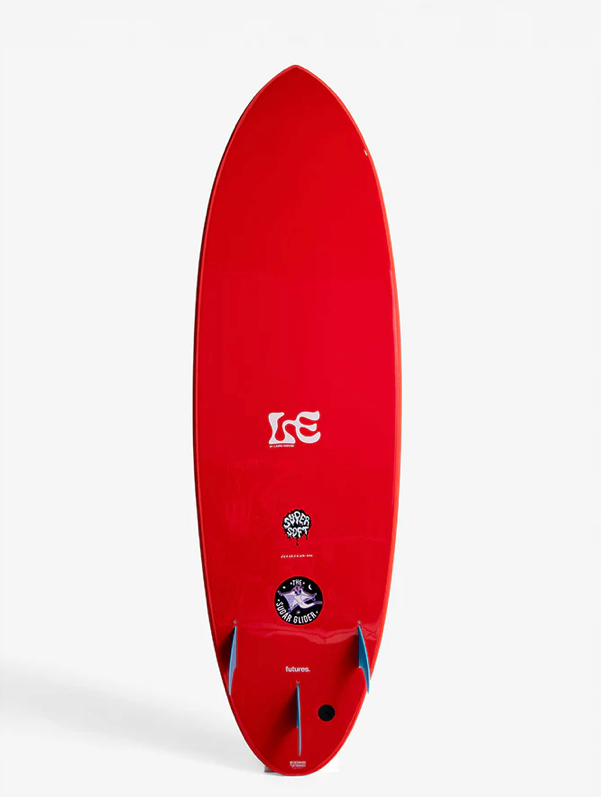
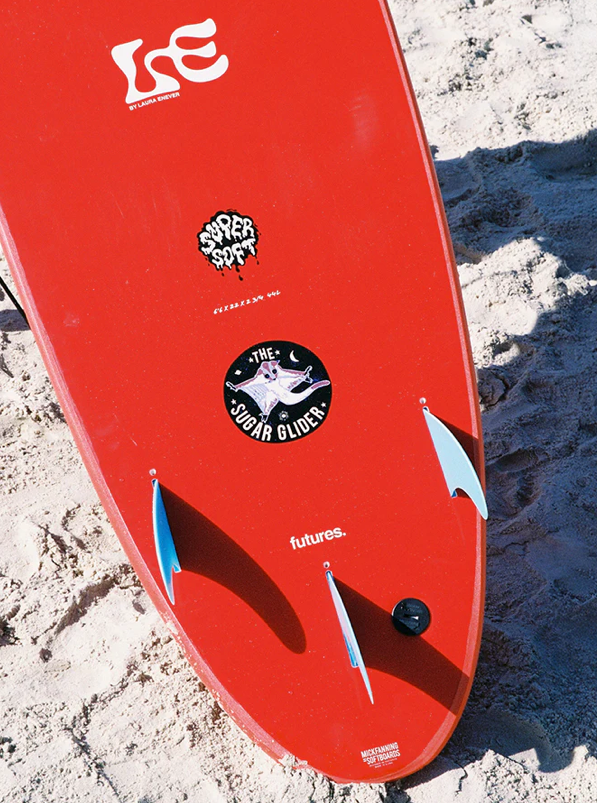
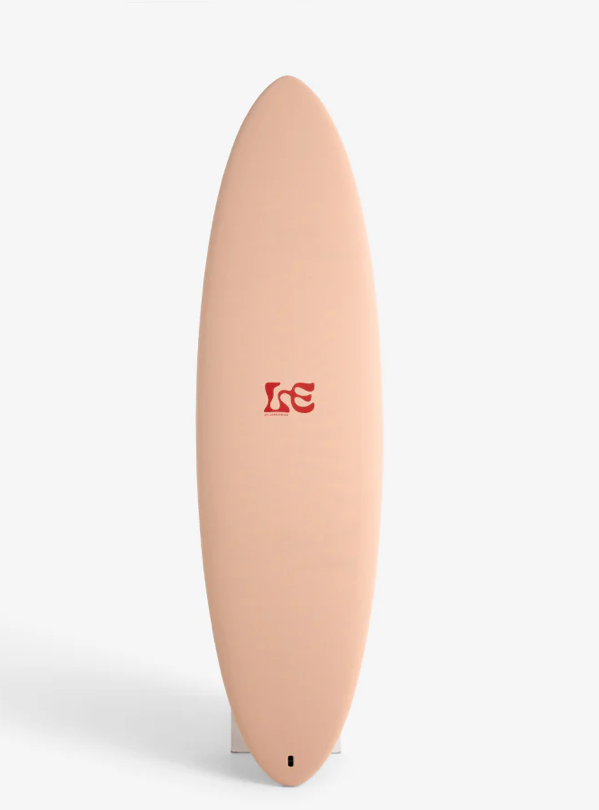
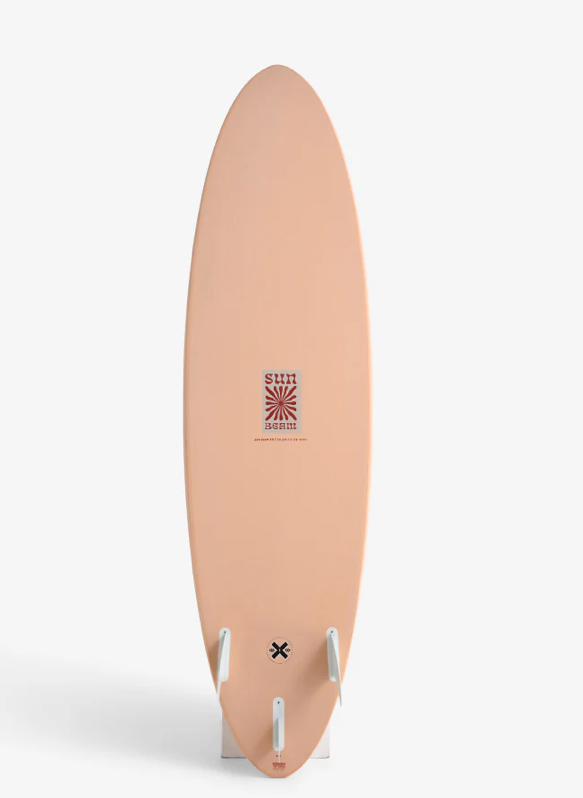
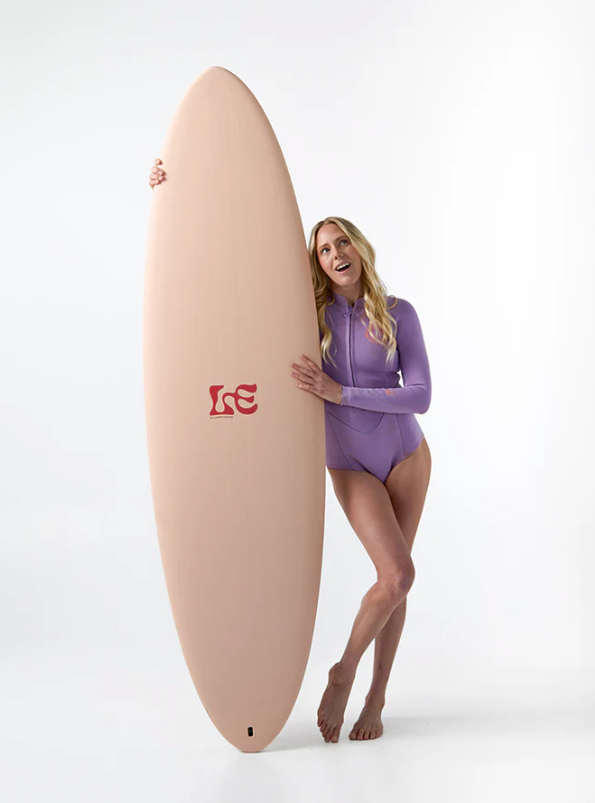
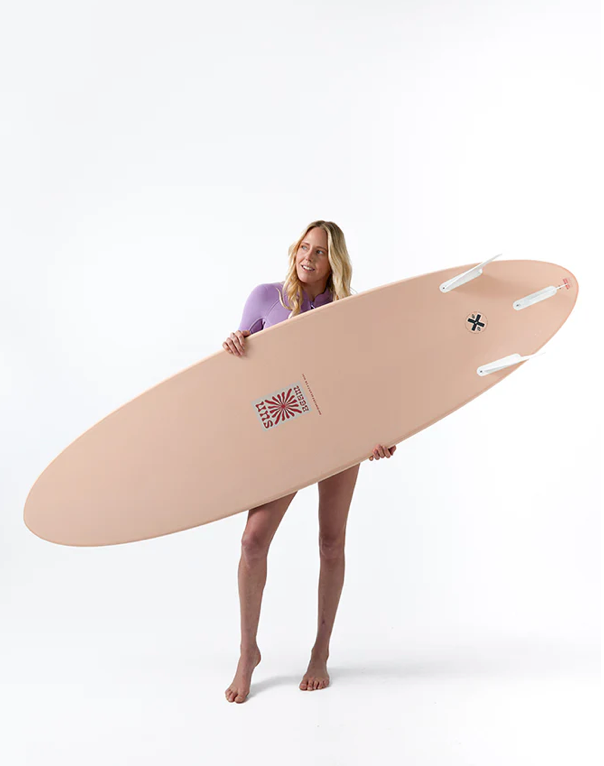
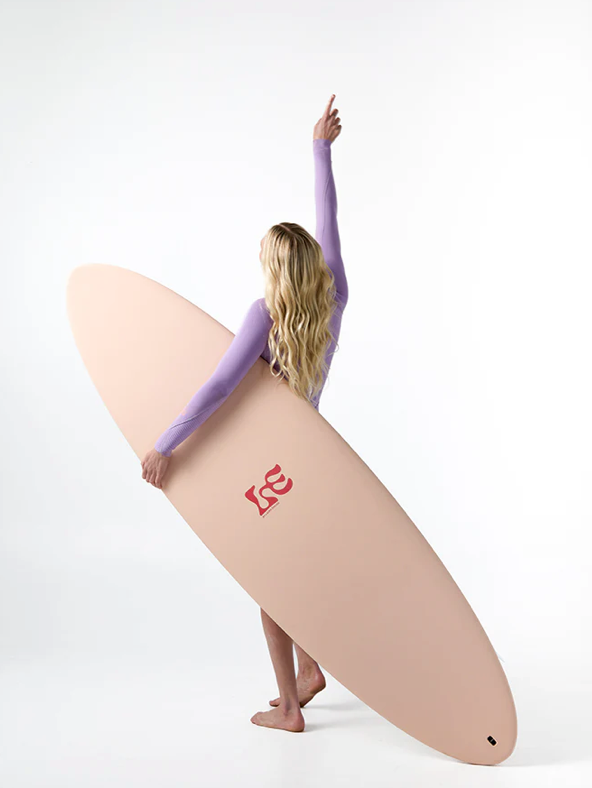
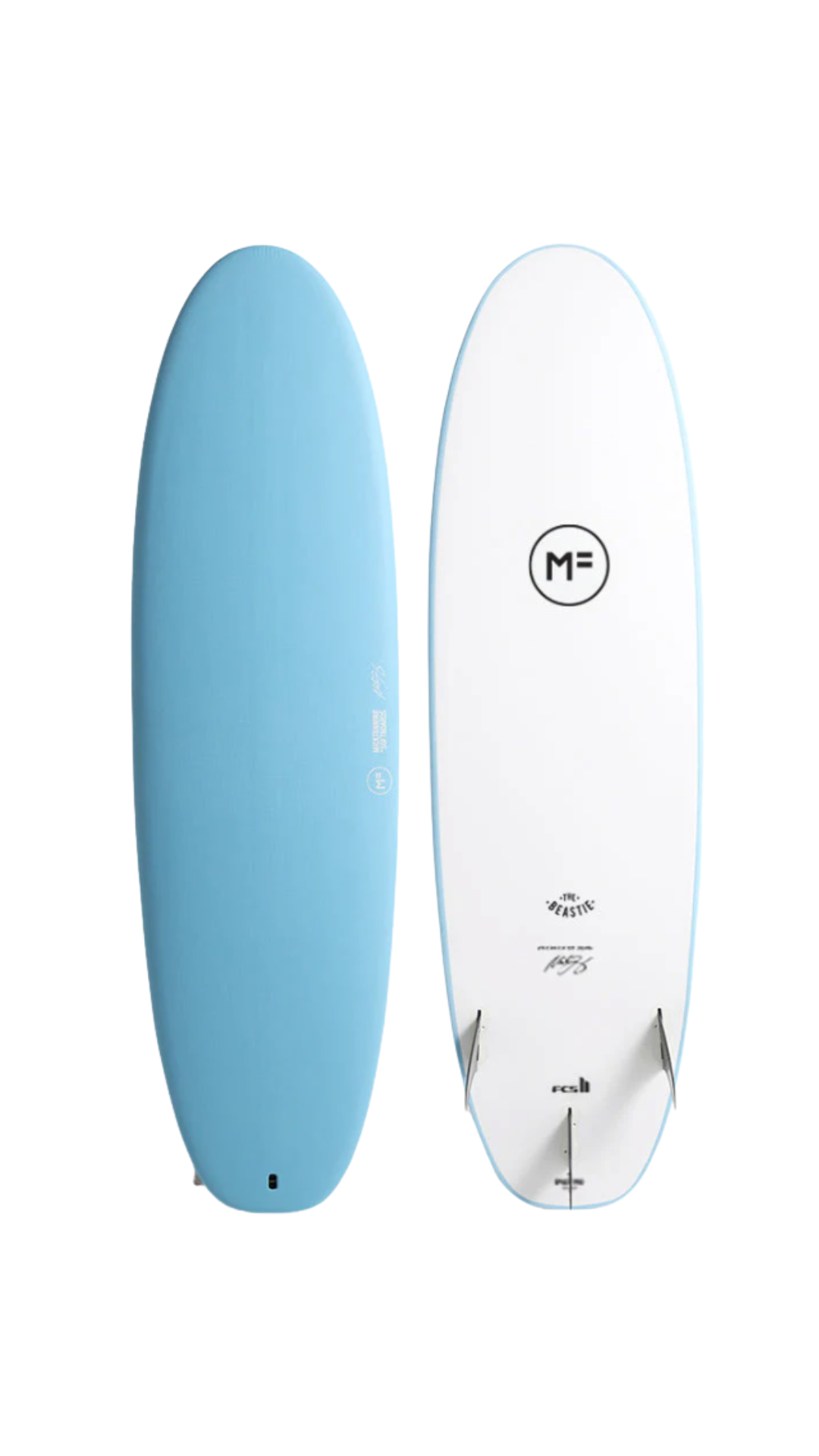
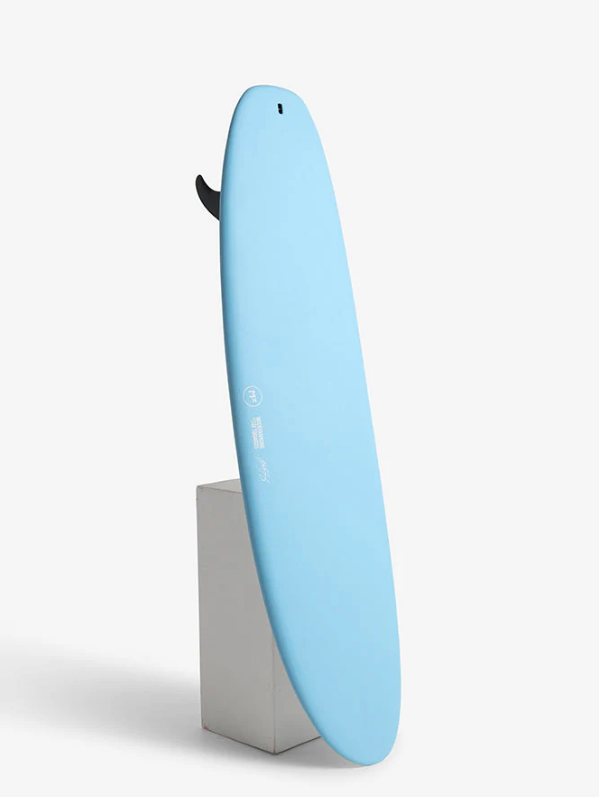
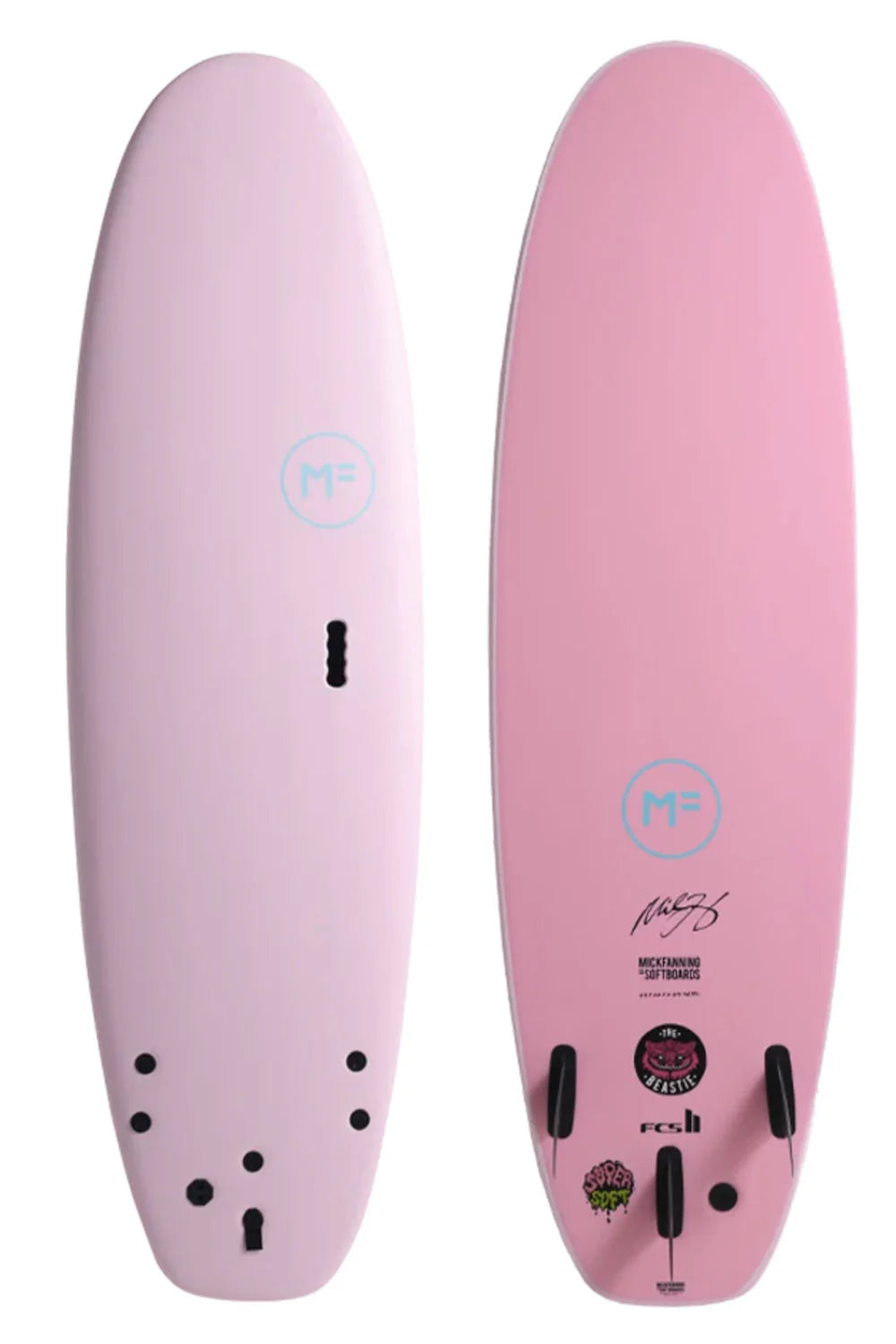
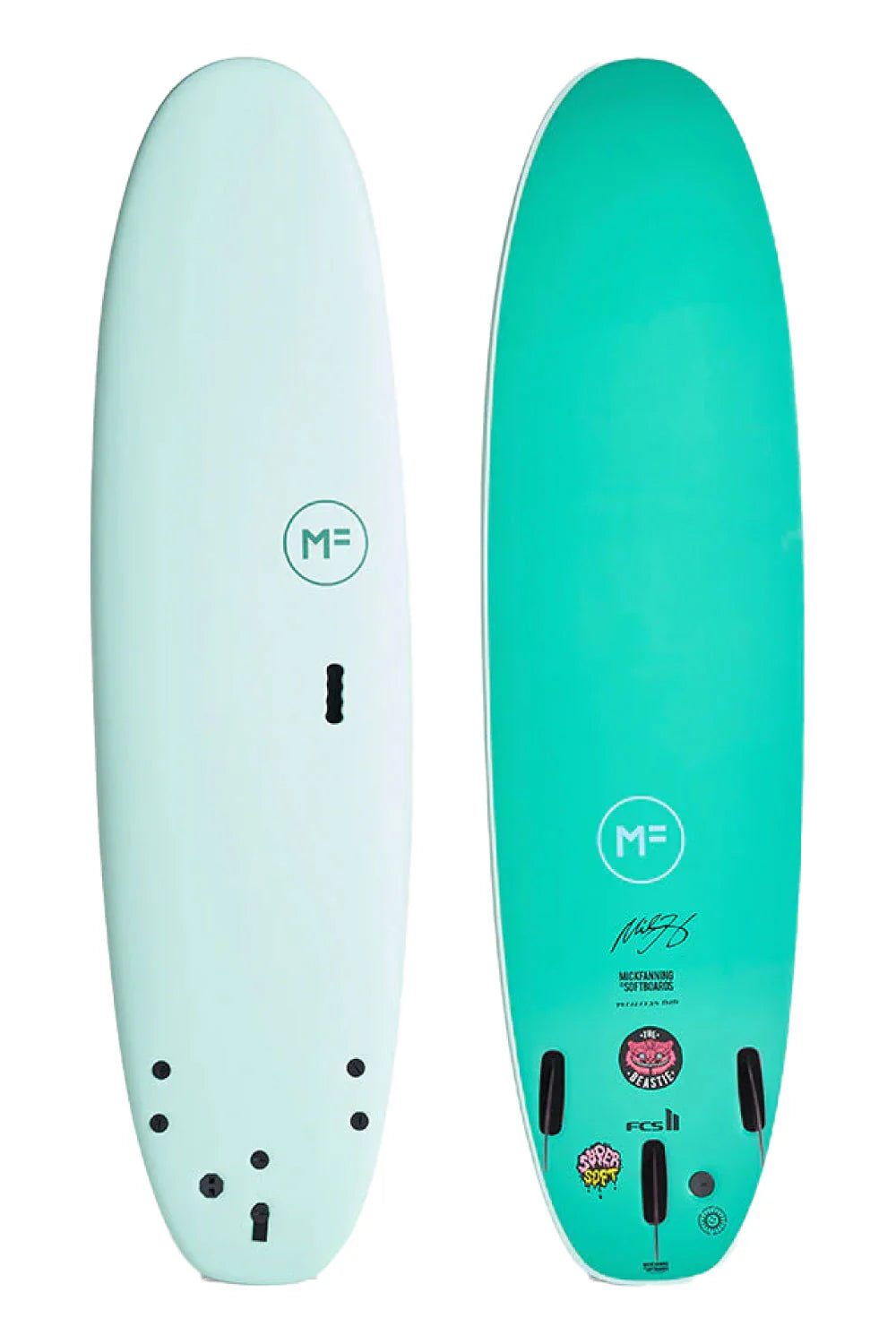
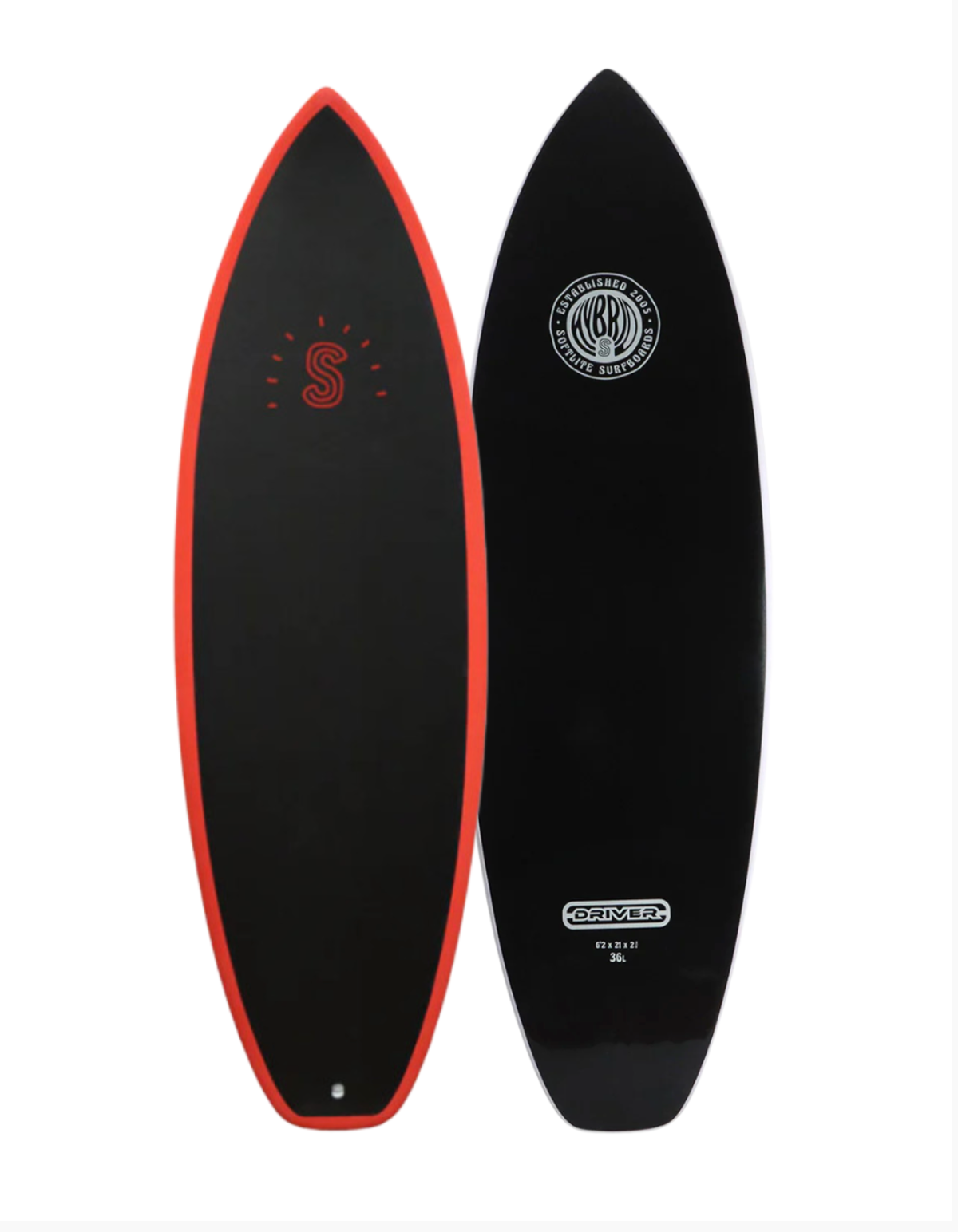
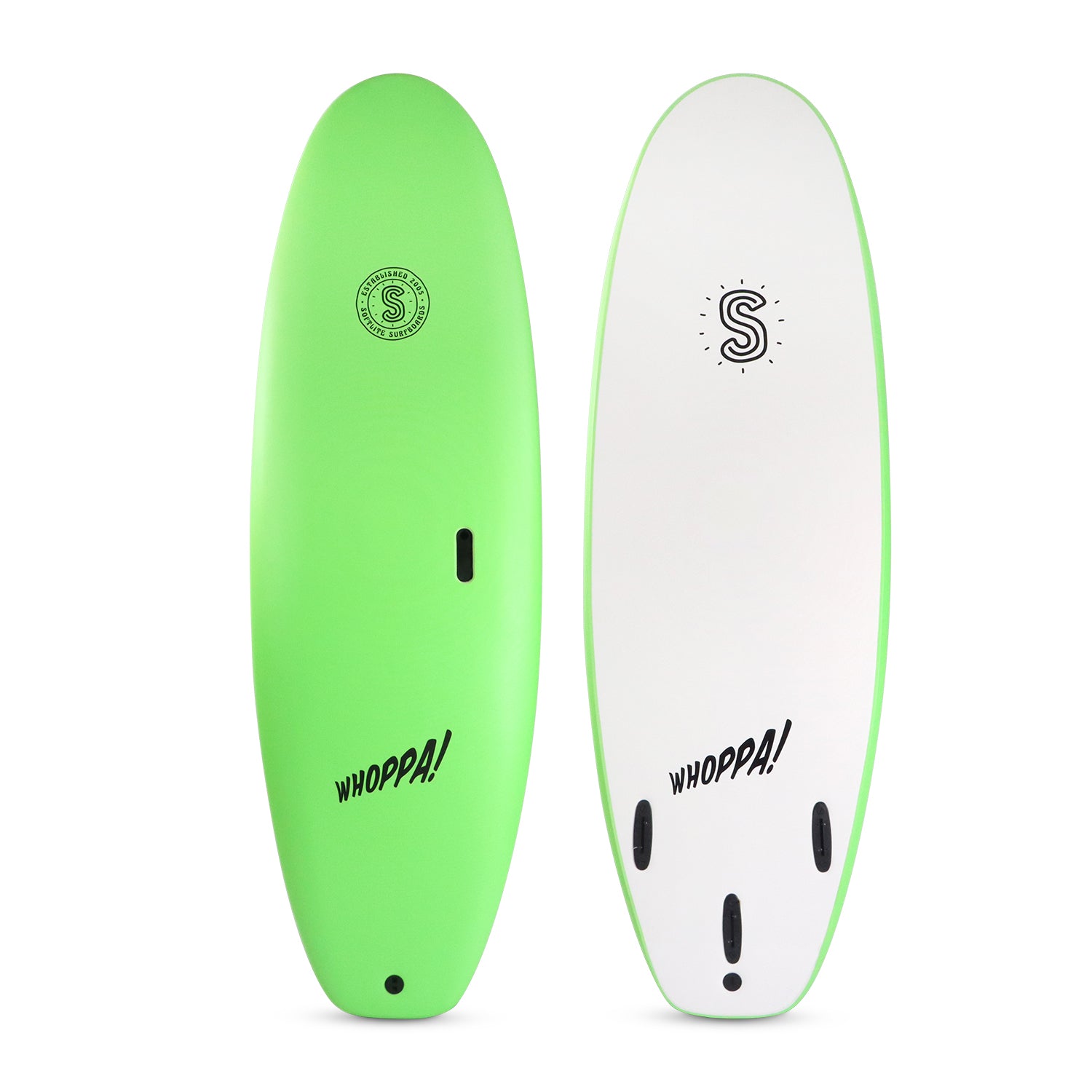
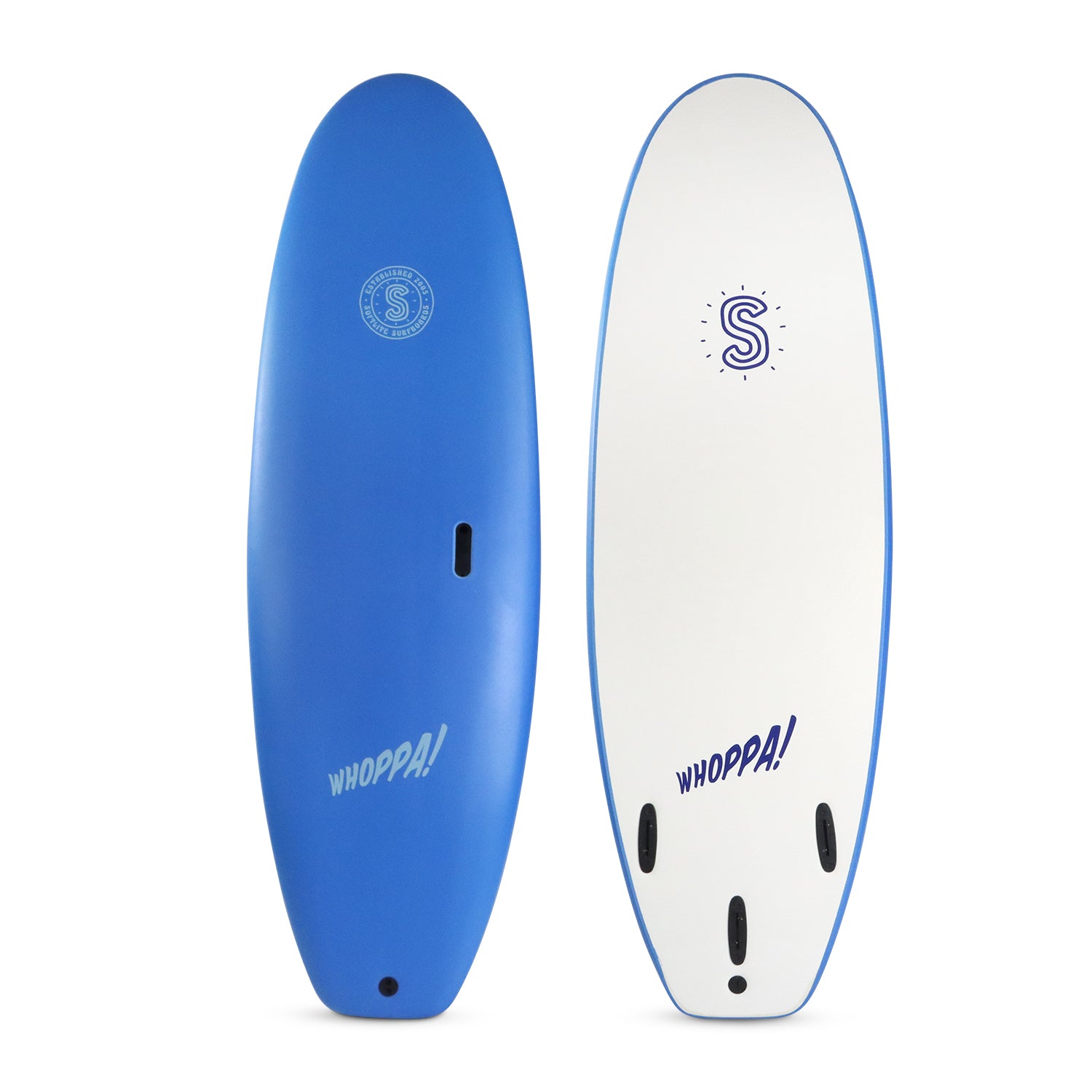
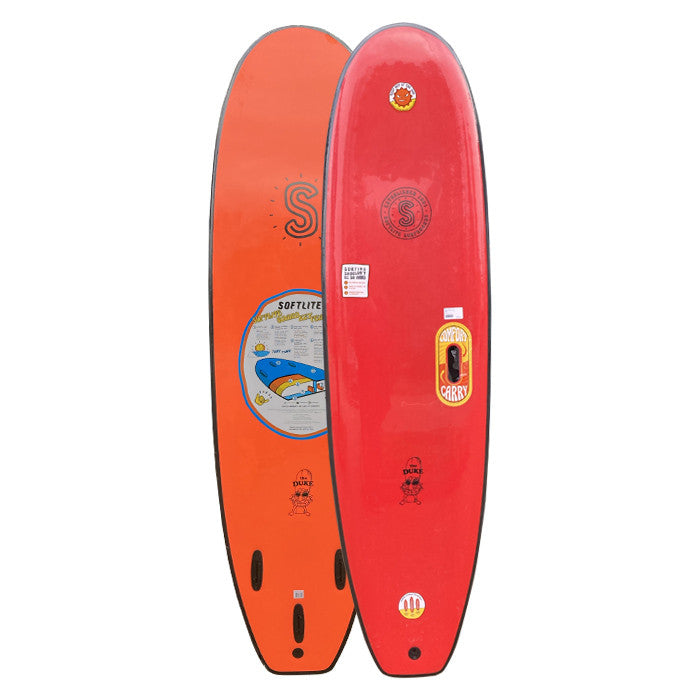
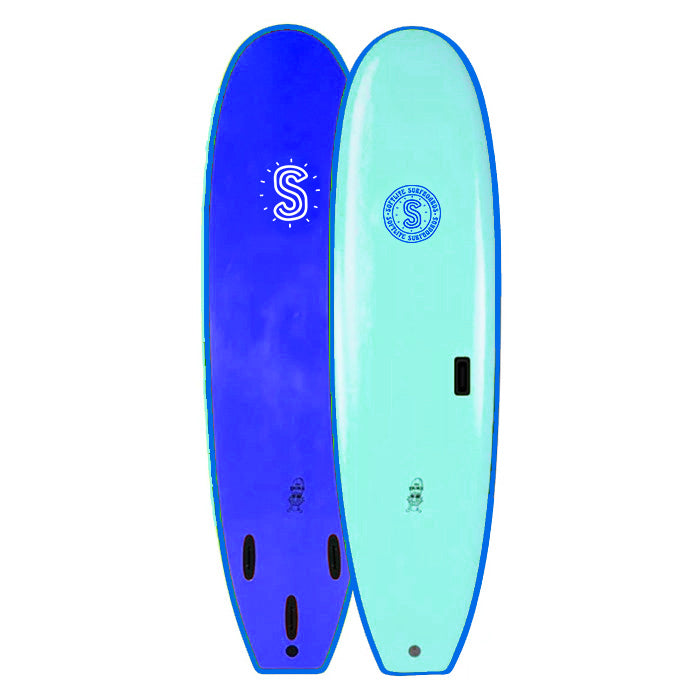
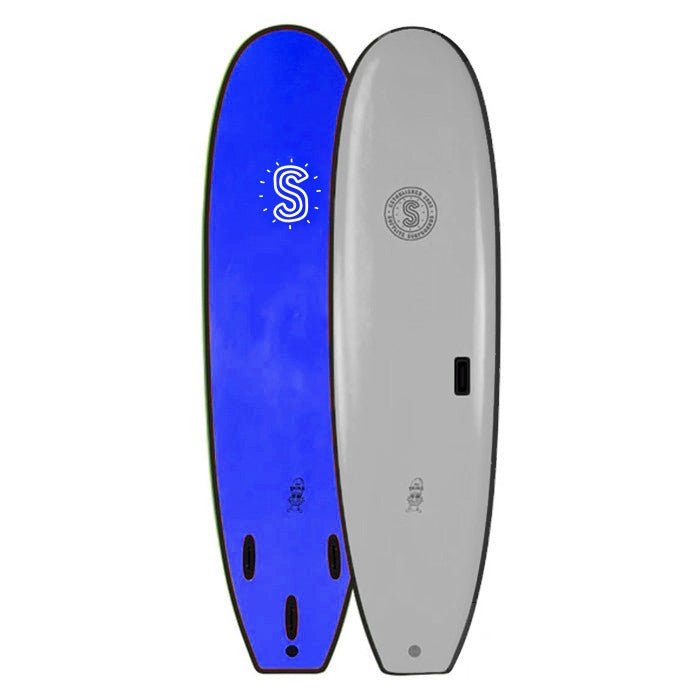
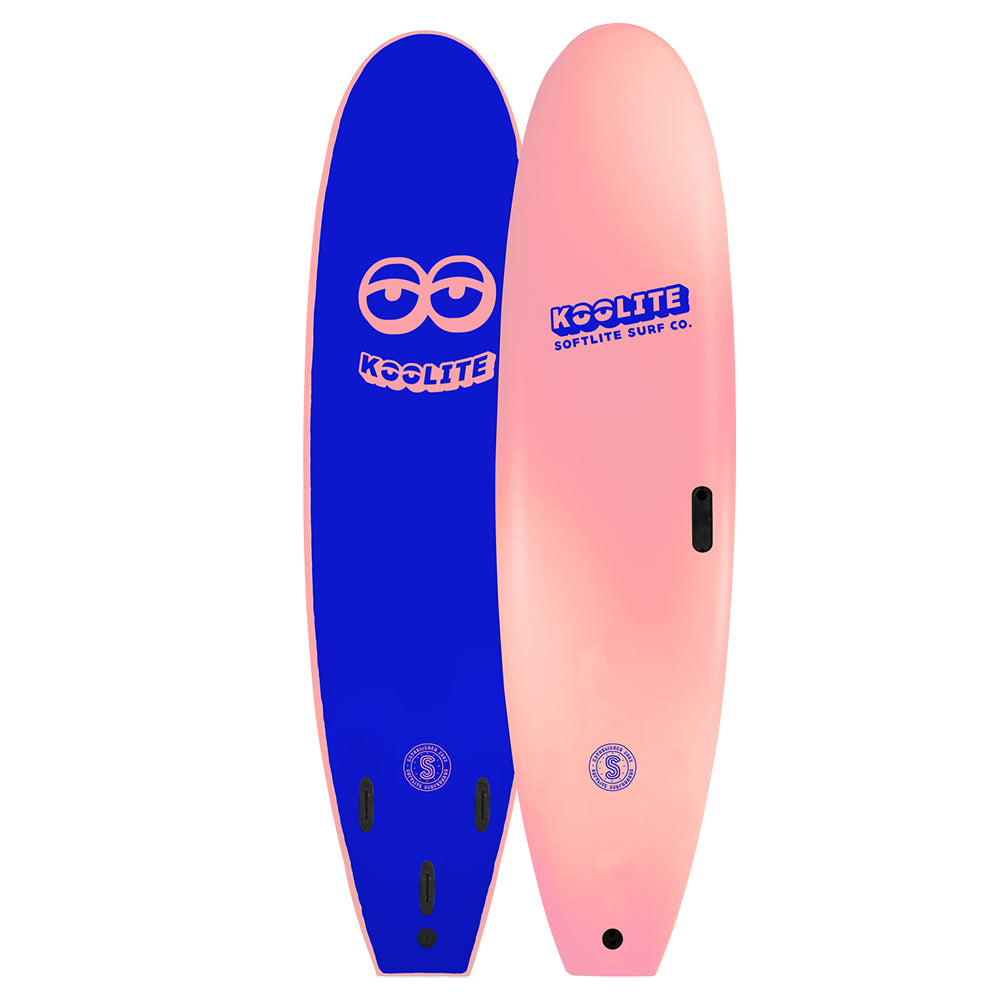
On the equipment side, a board with volume helps enormously at this stage. A soft-top gives you the stability to commit to that first turn without getting caught out, before you move to something livelier. The right volume for your level makes a real difference on your first manoeuvres.
Frequently asked questions
What is a bottom turn in surfing?
A powerful turn made at the bottom of the wave that converts the energy of the drop into speed along the shoulder. It is the foundation manoeuvre of surfing.
When should you learn the bottom turn?
Once you can pop up and ride the shoulder of an unbroken wave. It is the first manoeuvre in the progression.
Is frontside easier than backside?
Yes: frontside you face the wave and can see it, which makes the turn more intuitive. Backside comes afterwards.
Pour aller plus loin
Reste fléchi, regarde vers l’épaule, appuie sur le rail intérieur puis redresse-toi pour accélérer. Commence en frontside, le backside viendra ensuite. Et attaque le virage à pleine vitesse, jamais en attendant que la planche remonte seule.
En amont, tout dépend d’un take-off propre et d’une bonne lecture de la vague. Pour les paliers de progression, va voir progresser en softboard. Tous nos guides sont réunis sur cette page.
Voir les softboardsLes autres guides
Ramer
Le moteur du surf : placement sur la planche, gestuelle des bras et cadence. Lire le guide
Lire les vagues
Observer le plan d’eau, reconnaître les vagues et choisir la bonne. Lire le guide
Se placer au line-up
Où te positionner et les règles de priorité à respecter à l’eau. Lire le guide
Take-off
Le geste clé : passer de la position couchée à debout sur la planche. Lire le guide
Progresser
Les trois paliers de la progression et des repères de temps réalistes. Lire le guide
Apprendre à surfer
Tous les gestes dans l’ordre, de la rame au premier virage. Lire le guide