

How to Fix a Foam Surfboard
A rail clash with a mate, a board badly wedged in the boot, a stone on the way out of the water. On a softboard it happens fast, and it is rarely dramatic. What is dramatic is letting water get in. This guide gives you the method that actually suits foam, which is not the one for a hard board.
The essentials in 30 seconds
- Dry the board before you touch anything, 24 to 48 hours in the shade. A repair laid onto damp foam never holds.
- Never use polyester resin on a foam board, it attacks the polystyrene core and makes the damage worse.
- A flexible filler, masking tape and a knife are enough in the vast majority of cases.
- Allow 24 hours of full curing before going back in the water.
First, look at where it is and how big it is
The deck, the face you stand on, is soft foam. It is the most commonly damaged area and the simplest to treat. It flexes under your weight, so it needs a product that stays flexible once cured.
The bottom, the smooth slick underside, is made of hard plastic. It takes fewer knocks but bonds poorly, so this is where cleaning matters most. The fin box is the special case: if it moves or is cracked, water goes straight into the core.
On size, under 2 cm it is simple damage and you can surf the next day. Between 2 and 10 cm you need to work in two coats. Beyond that, or as soon as the white foam looks waterlogged, the board needs a long dry-out before any work.

The trap: standard resin destroys a foam board
This is the most common mistake and it cannot be undone. Polyester resin dissolves the expanded polystyrene that makes up a softboard core. You apply it, it foams, it eats in, and you end up with a crater wider than the original hole.
Epoxy resin is compatible with polystyrene, but it cures into a rigid surface. On the deck, the foam deforms under your feet while the repair does not move, and the joint eventually cracks. Hence the rule: on the foam deck, a flexible product, with epoxy kept for the rigid bottom and around the fin box.
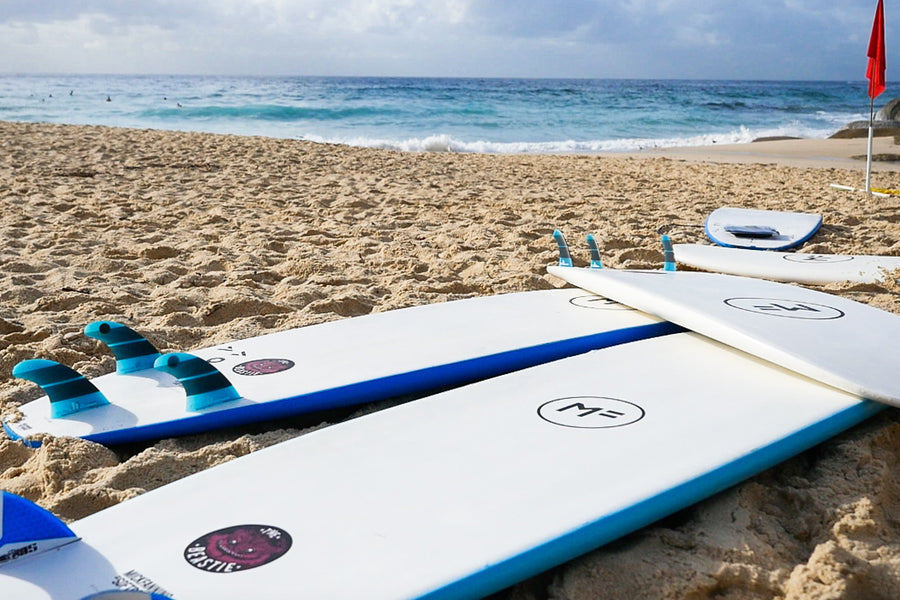
What you need
The list is short and you probably already own half of it: a softboard-specific flexible filler or glue, a knife, masking tape, methylated spirit or white vinegar, a clean cloth and medium-grit sandpaper.
The one item not to improvise on is the filler itself. It has to stay flexible as it cures and must not attack the polystyrene.
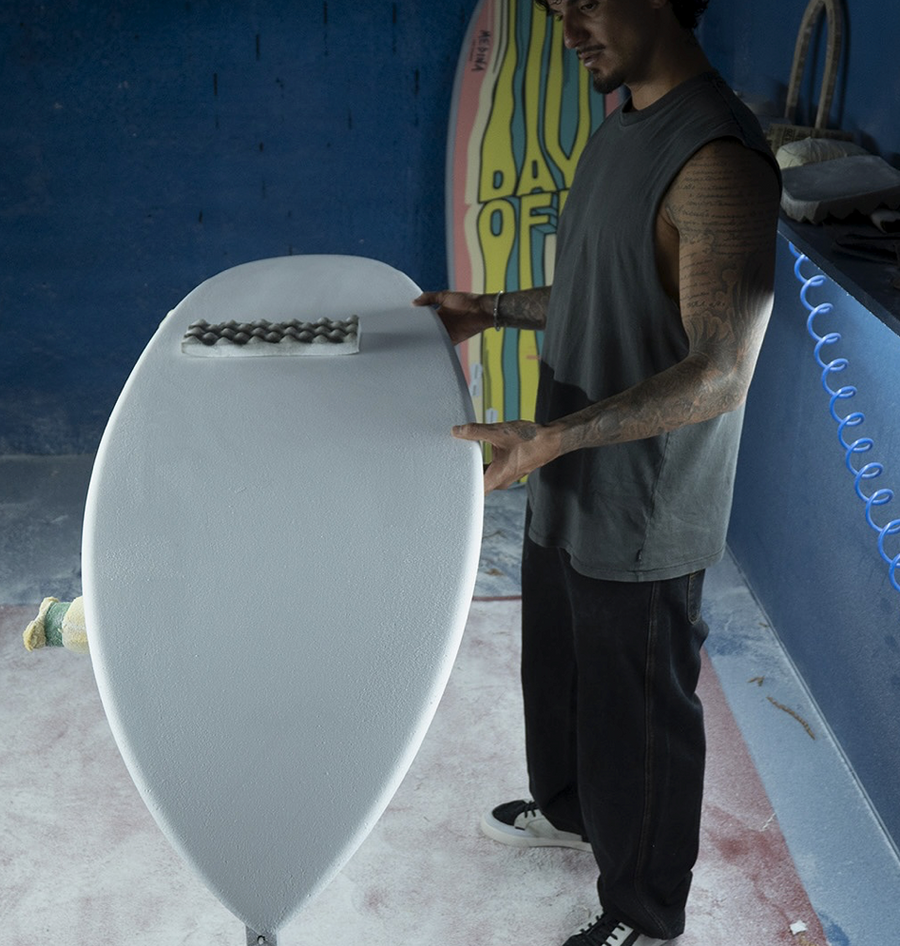
Our kit brings together what you need, designed for foam.
See the Soft Phix kitThe method, step by step
Rinse and dry
Fresh water to clear salt and sand, then 24 to 48 hours in the shade, damage facing up. Never in full sun: heat expands the air trapped in the core and blisters the skin around the impact.
Clean and prepare
Strip the wax around the area, trim off loose flaps of foam with a knife, degrease with spirit or white vinegar. A clean, dry surface does most of the work in making it hold.
Mask it off
A tape frame a few millimetres from the edge stops you smearing onto healthy foam. On a rail, overlap two strips to form a small gutter.
Apply
Fill slightly proud then smooth in a single pass. For a deep hole, two passes beat one thick coat. Pull the tape off while the product is still fresh.
Cure and sand
24 hours at room temperature, out of direct sun. Level it off with sandpaper without overdoing it, re-wax, and you are good to go.
Special cases
The fin box moves or leaks. This is the top priority, water gets in continuously every session. Dry it thoroughly, remove the fin, clean the inside then seal around it without getting product into the slot. If the box has torn away from the core, take it to a workshop.
The nose is crushed. As long as the skin is not split, there is nothing to do. It looks bad, it has no consequence, and absorbing that kind of impact is precisely what the foam is there for.
The board has snapped in two. To be straight with you, there is no satisfying home repair. The core and the stringer are severed and no filler will restore the board stiffness. Check first whether the damage is covered by your warranty.

When you are better off not repairing it yourself
We would rather tell you than sell you product for nothing. Hand it over if the core is waterlogged over a large area and refuses to dry, if the fin box has come away, if the board has lost its overall stiffness, or if it is still under warranty. In that last case, a home repair can void your warranty.
For everything else, a deck impact, an open rail, a chip in the bottom, a home repair holds up very well and will buy you several more seasons.
Frequently asked questions
How do you repair a foam surfboard?
Dry the board for 24 to 48 hours in the shade, clean and degrease the area, mask it off with tape, apply a flexible foam-compatible filler slightly proud, then let it cure for 24 hours before sanding and re-waxing.
Can you use Solarez resin on a foam board?
Not the polyester ones, which attack the polystyrene core. Some ranges offer softboard-specific products that stay flexible once cured. Always check for the softboard or EPS-compatible marking on the tube before applying.
How long should it dry before you surf again?
24 hours of curing at room temperature after applying, on top of the 24 to 48 hours of drying the board before you start. If the core had taken on water, extend the initial drying until the foam turns white and light again.
Do you need to remove the wax before repairing?
Yes, across the whole area around the damage. Wax stops anything bonding and the repair will lift on the first session. Strip it off, then degrease with methylated spirit or white vinegar.
Can a surfboard snapped in two be repaired?
On a foam board, not satisfyingly at home. The core and the stringer are severed and no filler restores the stiffness. A workshop repair exists but often costs more than the board is worth. Check your warranty first.
What should you do if the fin box leaks?
Deal with it first, because water gets in continuously. Dry it thoroughly, remove the fin, clean inside the box then seal around it without getting product into the slot. If the box has torn away from the core, take it to a workshop.
How much does repairing a foam surfboard cost?
A home repair costs you the price of the kit, which covers several repairs. A workshop job runs into tens of euros depending on the area and the extent, and only makes sense for a torn-out fin box or a waterlogged core.
Going further
How to choose a surfboard
The complete guide to finding the volume, size and shape that suit you. Read the guide
Which fins for a foam board
Understanding sizes and setups, and replacing a damaged fin. Read the guide
What leash for a foam board
The right diameter and length to avoid the knocks you end up repairing. Read the guide
All our surf guides
Learning to surf and choosing your gear properly. See the guides
La planche de l’enfant
Taille, volume et niveau pour choisir le bon softboard enfant. Lire le guide

Diagnosis: which repair does your damage need?
Two questions are enough to know what to do, and above all what not to do.


