Which Fins for a Foam Surfboard?
On the vast majority of foam surfboards, the fins are supplied and already fitted, so there is nothing to choose when you are starting out. When a choice does come up, it rests on three simple things: the fin box on your board, your weight and your ability. This guide covers both soft-tops and hard boards.
What does a surfboard fin actually do?
The fin sits under the tail of the board. It provides stability, control and direction, and stops the board sliding sideways when you drop into a wave. Without it, holding a line is impossible. It is a discreet part that decides how the board rides.
Do soft-tops come with fins to choose?
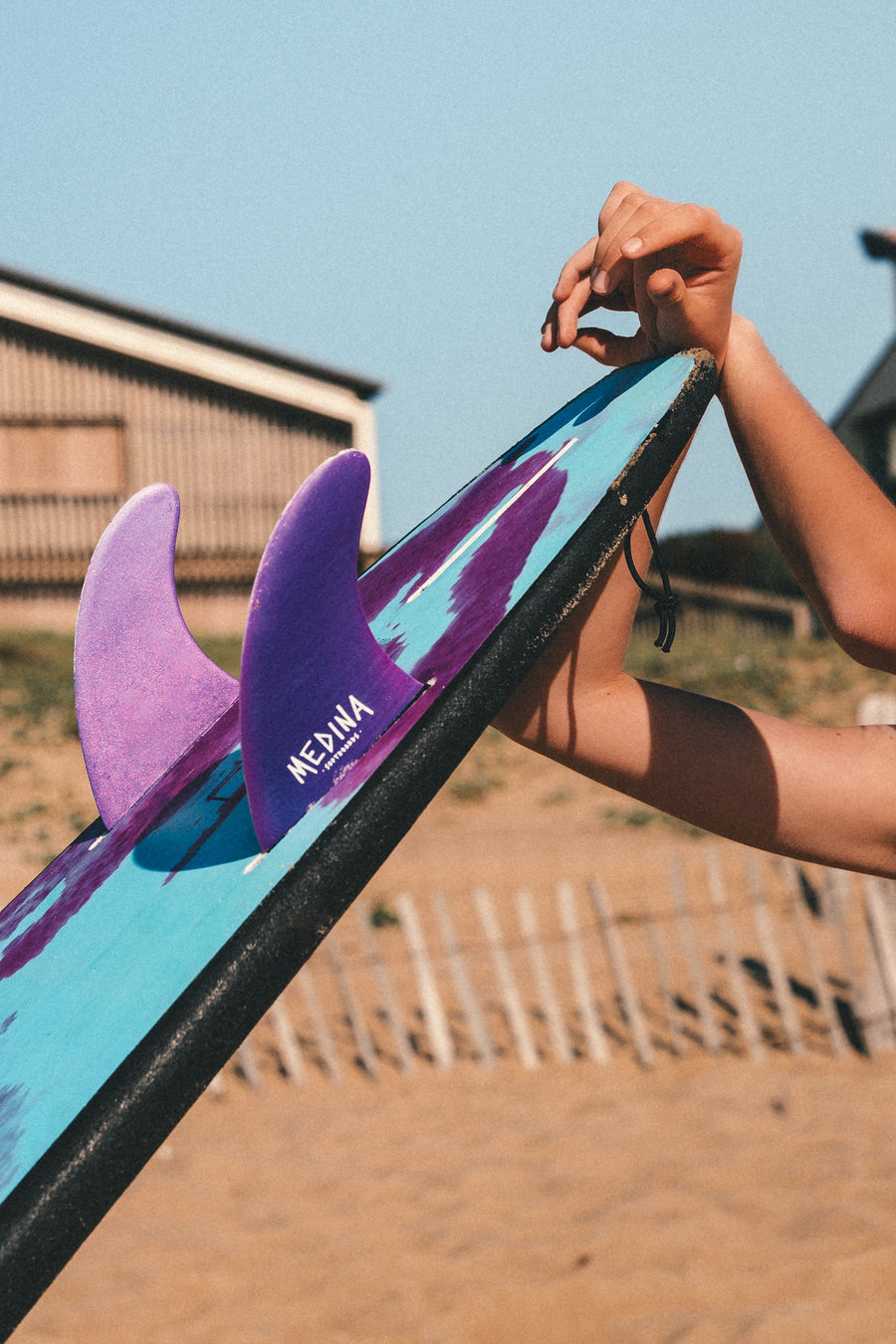
This is the key question when you start on foam, and the answer is reassuring: most foam surfboards ship with their fins, usually in flexible plastic, often fitted at the factory. There is nothing to buy or set up for your first sessions.
From there, two cases. Some soft-tops have screw-in soft fins, which you can remove for transport or replace if they get damaged. Others have fins moulded straight into the board, so they are not replaceable. If in doubt, just look under your board: screws and boxes mean the fins come out.
Fin systems, or fin boxes
If your board takes removable fins, everything depends on the fin box. Four are common.
- FCS I: held by two grub screws, one on each side.
- FCS II: fins click in with no screws, the most widespread system today.
- Futures: a single grub screw on top.
- US Box: a long rail used on longboards and progression boards.
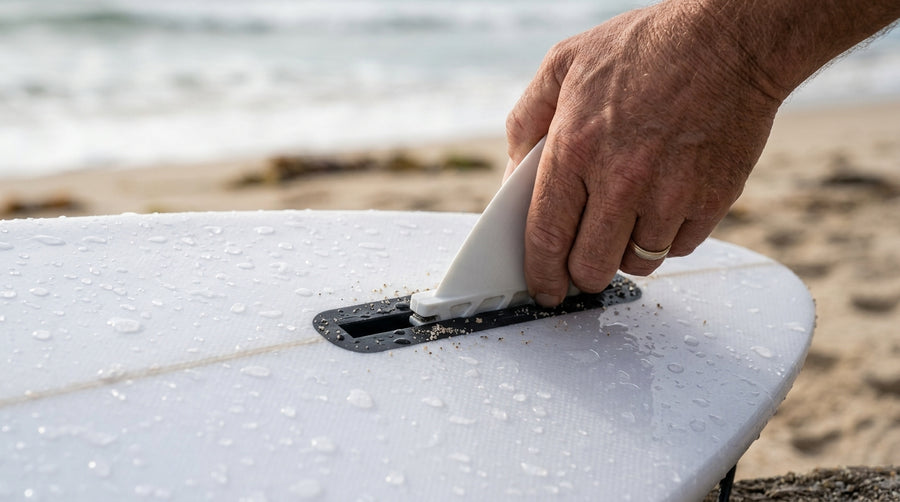
A fin only fits the box your board is built with, so always check that before you buy.
Single, twin, thruster or quad: which setup?
The number of fins changes how the board behaves.
- Single, one fin: long, smooth lines, typical of longboards and many soft-tops.
- Twin, two fins: speed and glide in small waves.
- Thruster, three fins: the most versatile setup, ideal while you are improving.
- Quad, four fins: grip and speed in hollow or powerful waves.
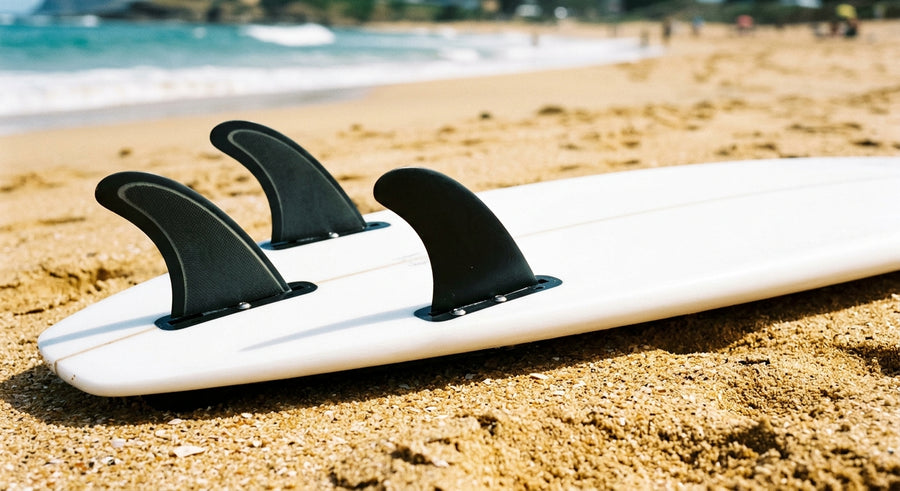
To start out on foam, a single or thruster setup is more than enough.
What fin size for your weight?
When fins are yours to choose, size is set by your weight first. This is the reference most brands use.
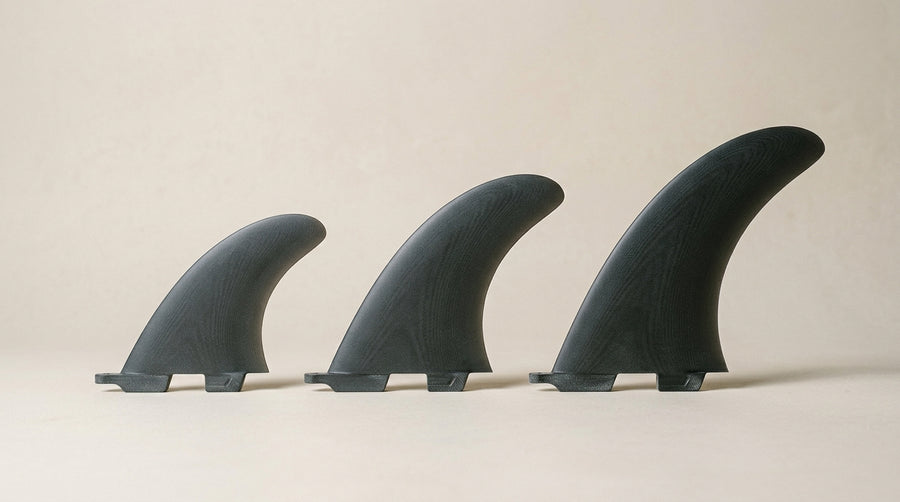
| Your weight | Fin size |
|---|---|
| Under 55 kg (120 lb) | XS |
| 55 to 70 kg (120 to 155 lb) | S |
| 65 to 80 kg (145 to 175 lb) | M |
| 75 to 90 kg (165 to 200 lb) | L |
Single, twin and quad fins are generally sold without a weight bracket.
Flexible or stiff?
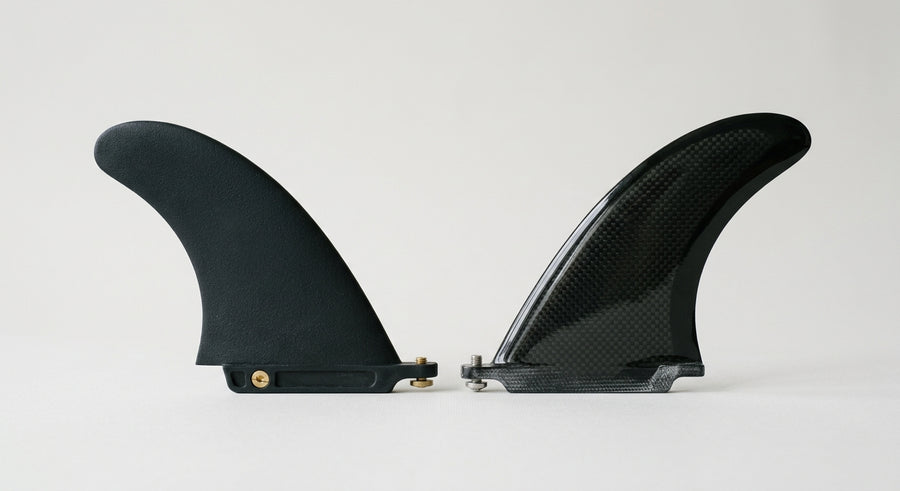
Construction changes the feel directly. A flexible fin forgives mistakes in foot placement and suits beginners perfectly. A stiff fin is sharper and more reactive, aimed at experienced surfers chasing performance. On foam, while you are learning, always go for flex.
How do you change a fin?
On a screw system, loosen the screws, pull the old fin out, slide the new one in and tighten without forcing. On FCS II, you simply click it in. It takes under a minute and needs no tool beyond the key supplied.
Calcule ta taille de dérive
Indique ton poids et ton niveau : on te recommande la bonne taille de dérive.
Repère indicatif. Sur softboard, les dérives sont souvent fournies : vérifie le boîtier de ta planche avant tout achat.
Frequently asked questions
What is a surfboard fin?
It is the fin fitted under the tail of the board, providing stability, control and direction.
How do you choose surfboard fins?
On three things: the fin box on your board, your weight for the size, and your ability for the flex.
Can you surf without fins?
No, or barely: without fins the board slides sideways and becomes uncontrollable.
Do foam surfboards have fins?
Yes, almost always supplied, sometimes fixed, sometimes screwed in and replaceable.
What fin size for my weight?
XS under 55 kg, S from 55 to 70 kg, M from 65 to 80 kg, L from 75 to 90 kg.
Going further
On a soft-top, the fins are most often supplied and ready to surf. When a choice does come up, remember three markers: the fin box on the board, your weight for the size and your ability for the flex.
Our complete guide to choosing a foam surfboard covers the whole kit, fins included. You will also find our leash guide and all our foam surfing guides.
See our finsLes autres guides
Choisir sa planche
La méthode complète pour choisir un softboard selon ta taille, ton poids et ton niveau. Lire le guide
Choisir son leash
Longueur et diamètre du leash à retenir selon ta planche et les conditions. Lire le guide
Choisir sa combinaison
Épaisseur et type de combinaison selon la saison et la température de l’eau. Lire le guide
La planche de l’enfant
Taille, volume et niveau pour choisir le bon softboard enfant. Lire le guide
Réparer sa planche
Boucher un impact, recoller le pont, prolonger la vie de ton softboard. Lire le guide