Wetsuit Thickness Guide for Surfing: Chart by Water Temperature
A wetsuit keeps you warm, stretches your sessions and protects you. The choice comes down first to water temperature, which sets the thickness, then to the style and the fit. This guide gives you the rule, plus a calculator to find the right suit in seconds.
What a surfing wetsuit actually does
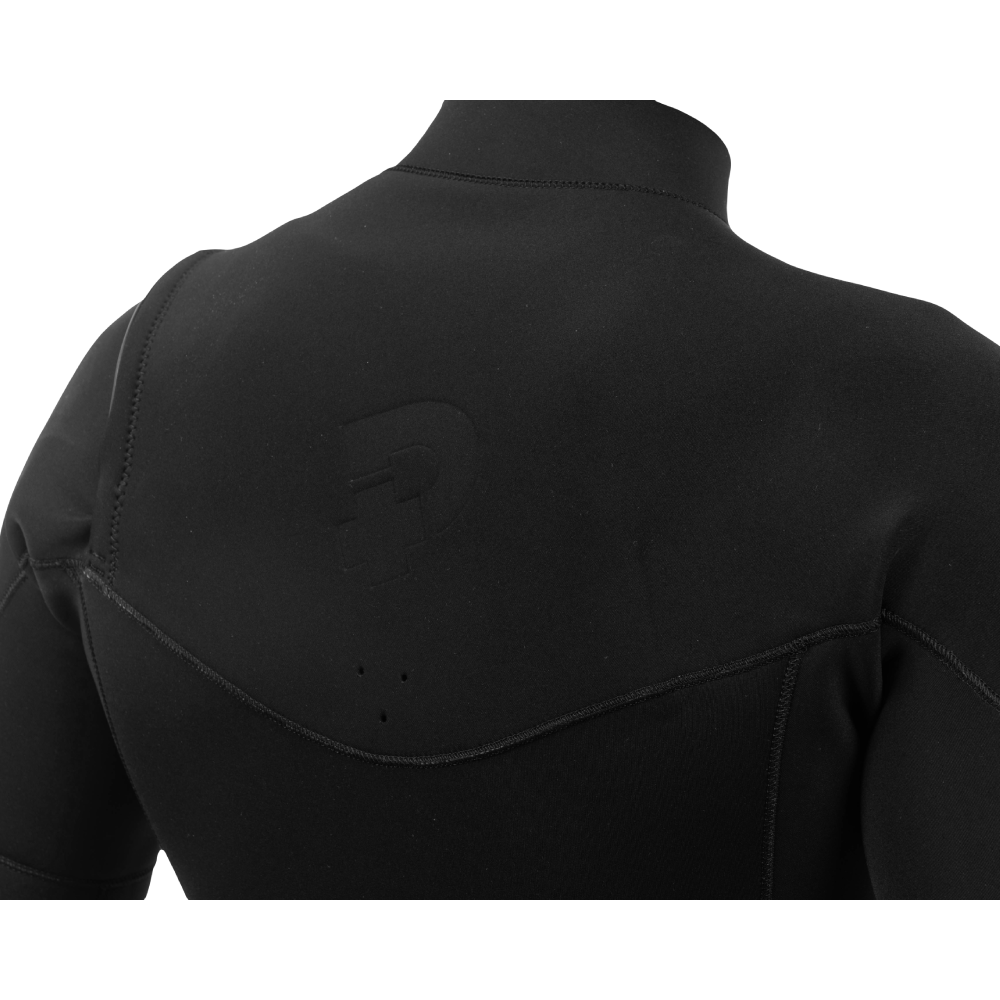
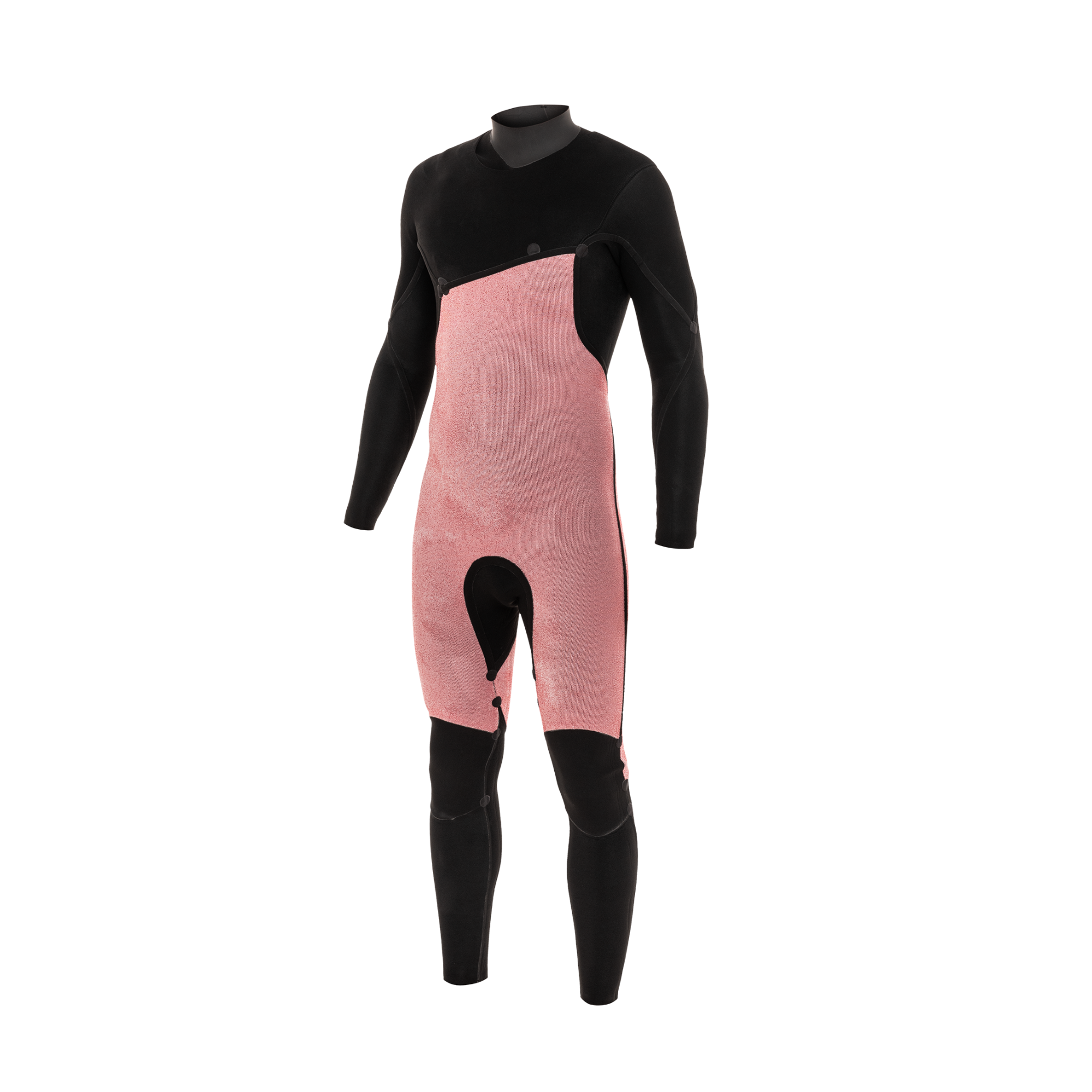
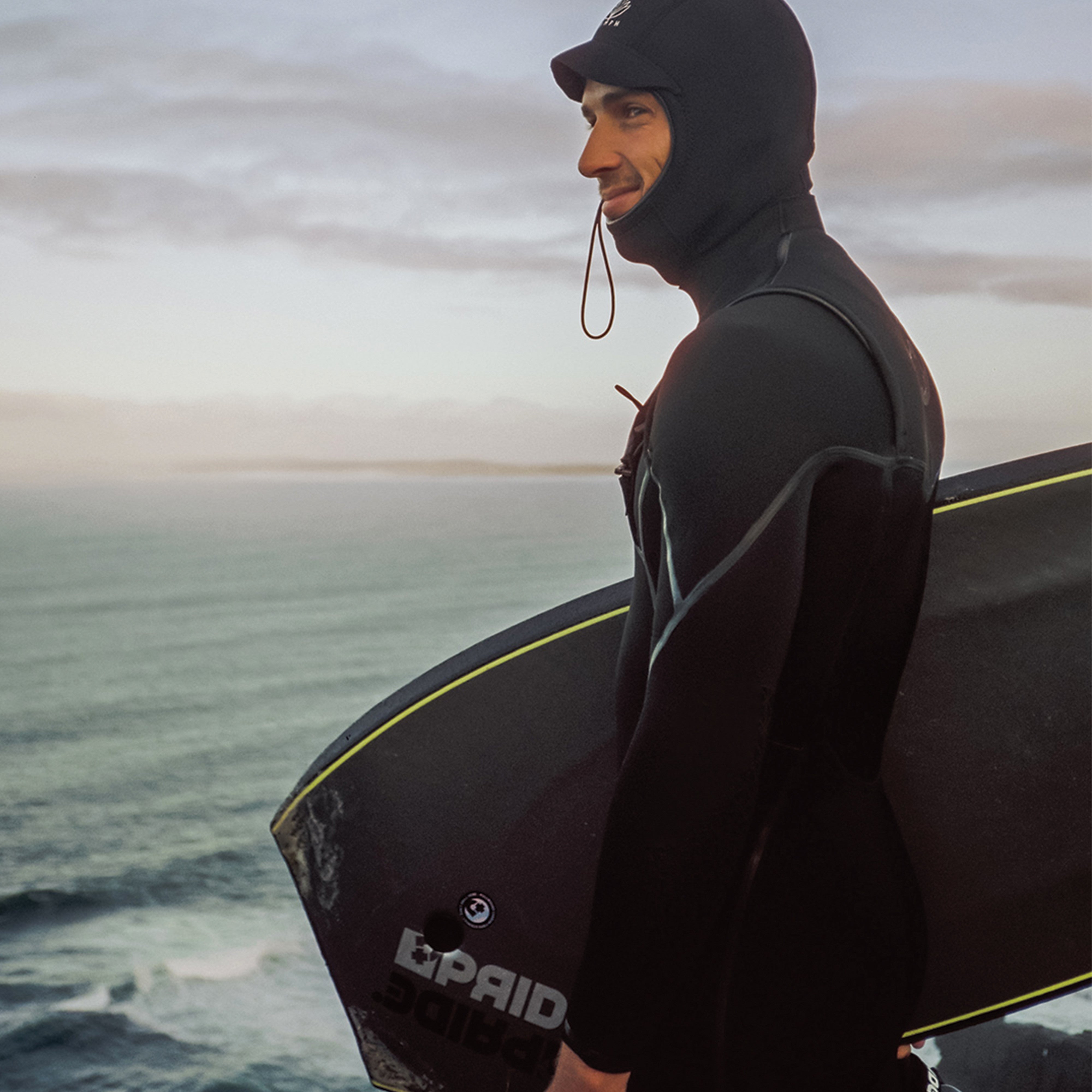
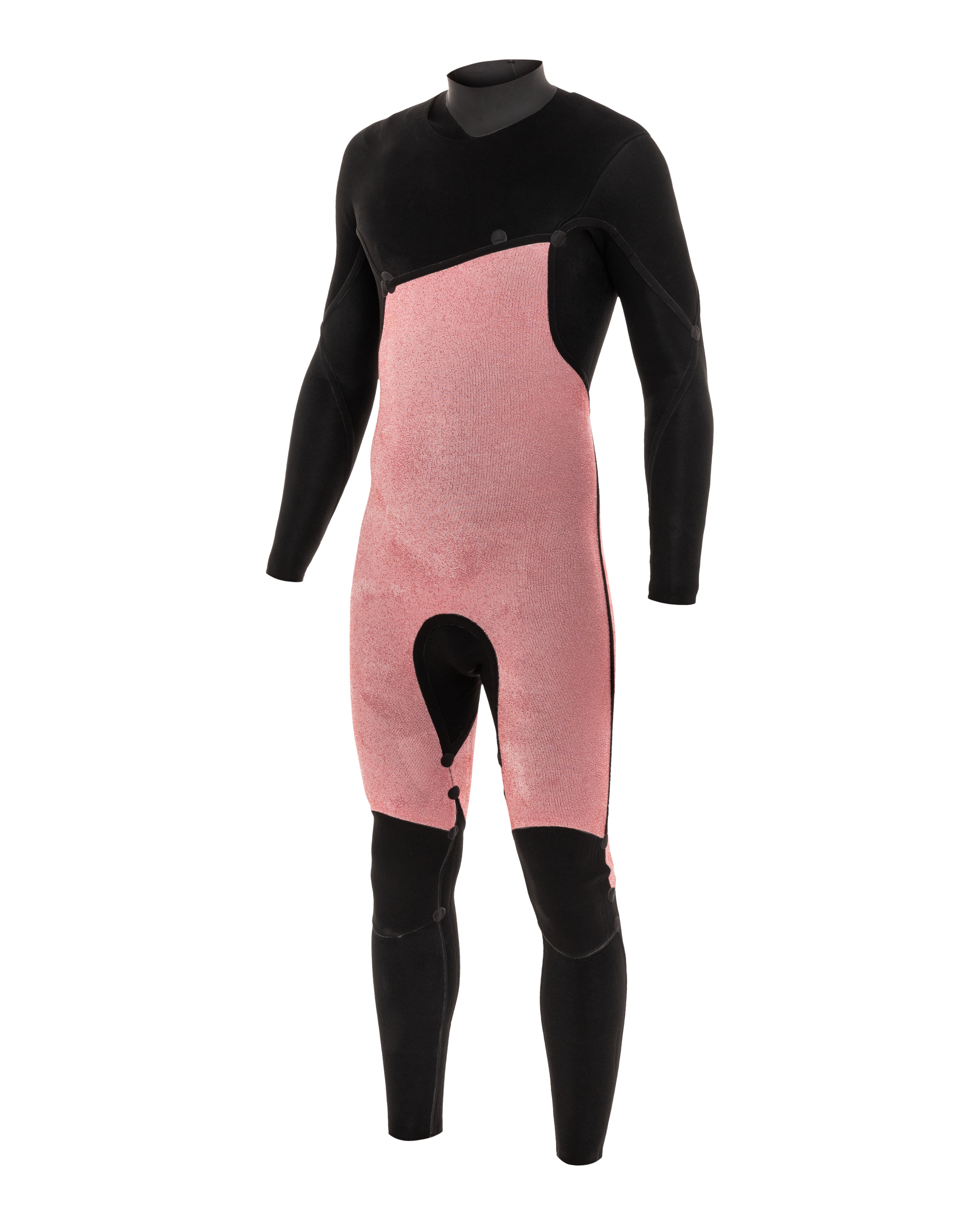
In the water, your body cools down fast. A wetsuit traps a thin layer of water against your skin, which your body warms and which then works as insulation. You stay warm longer, you surf more months of the year, and you gain comfort as well as buoyancy. On a foam board, when you are learning and spending a lot of time paddling and falling, it quickly becomes the piece of kit that separates a short session from a real one.
Wetsuit thickness by water temperature
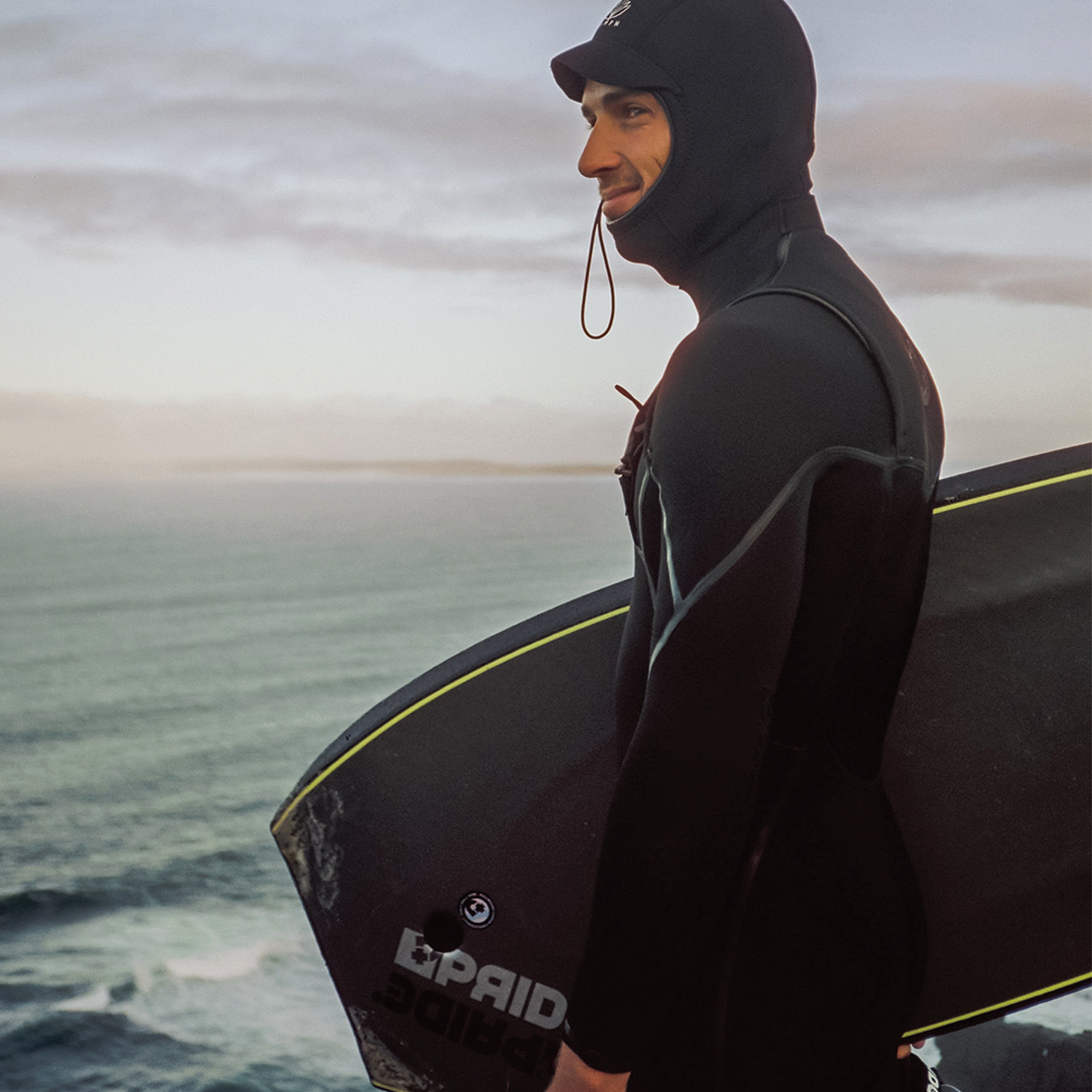
This is criterion number one. Thickness is given in millimetres, with two numbers: the first is the torso, the second the arms and legs. So a 3/2 is 3 mm on the chest and 2 mm on the limbs, keeping the core warm while leaving enough stretch to paddle.
| Thickness | Water temperature | Best for |
|---|---|---|
| 1 to 1.5 mm | Above 22 °C (72 °F) | Neoprene top or rash guard, tropical water |
| 2 mm | 18 to 22 °C (64 to 72 °F) | Shorty, mid-summer on the Atlantic coast |
| 3/2 mm | 14 to 18 °C (57 to 64 °F) | Full suit, the all-rounder from spring to autumn |
| 4/3 mm | 11 to 14 °C (52 to 57 °F) | Full suit, late autumn and early spring |
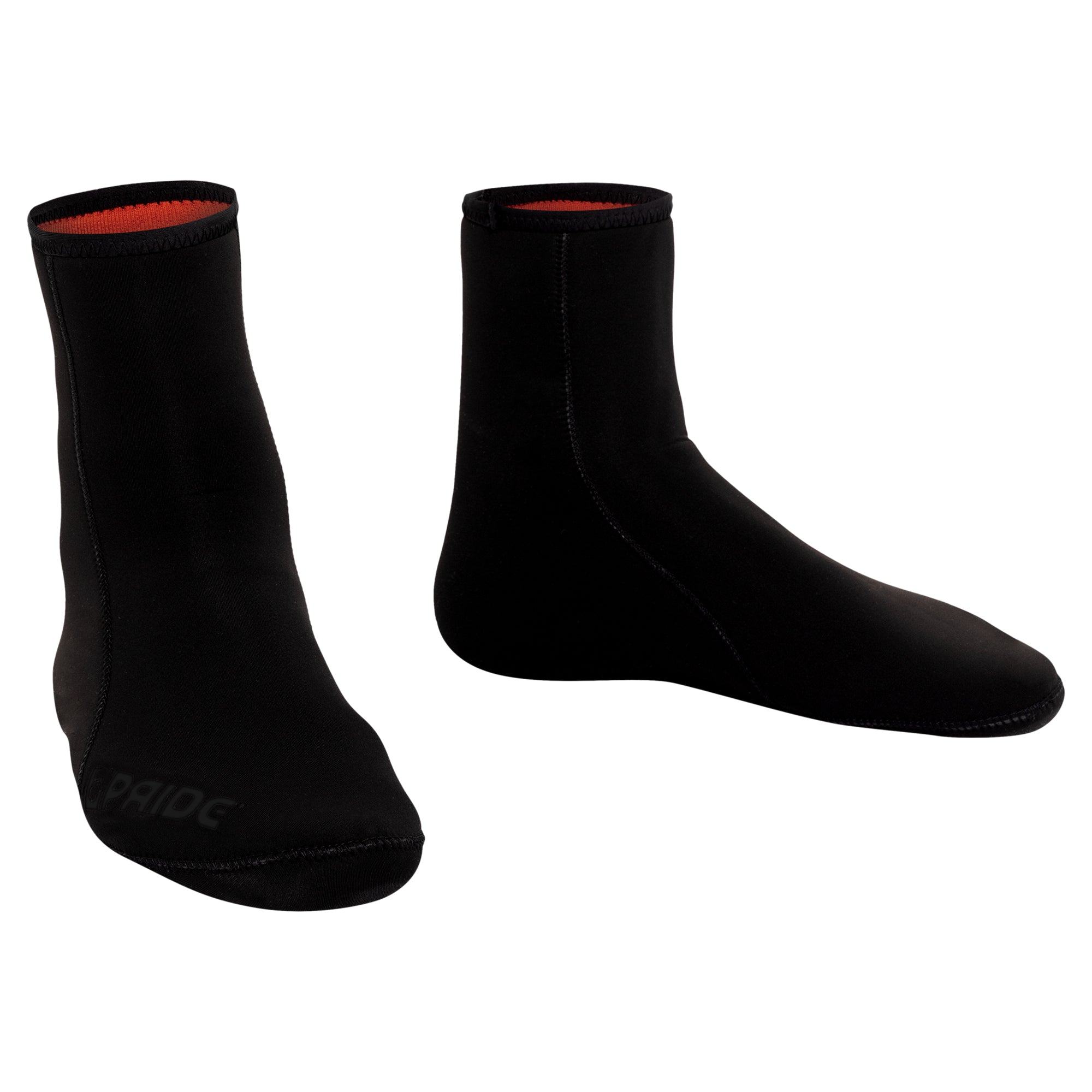
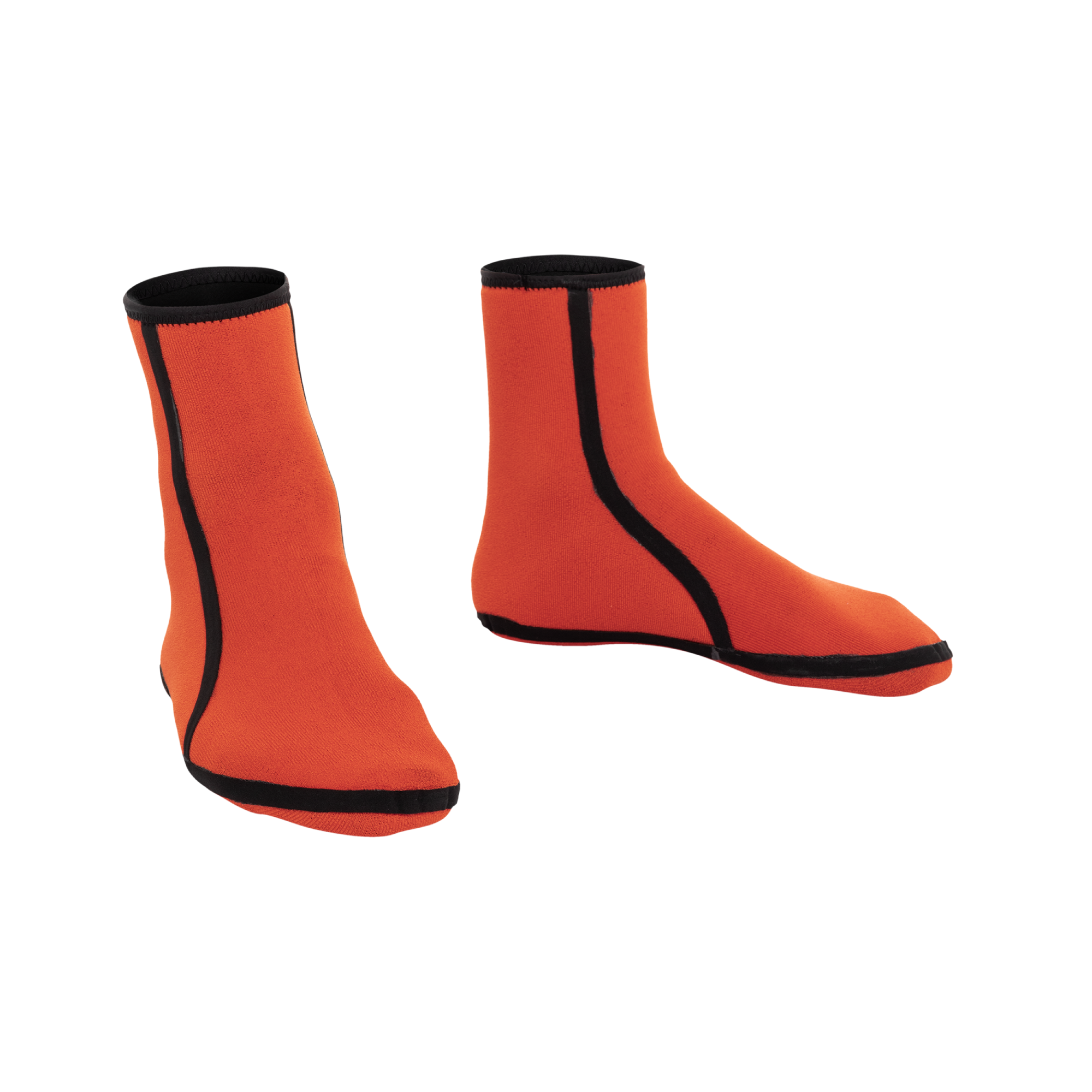
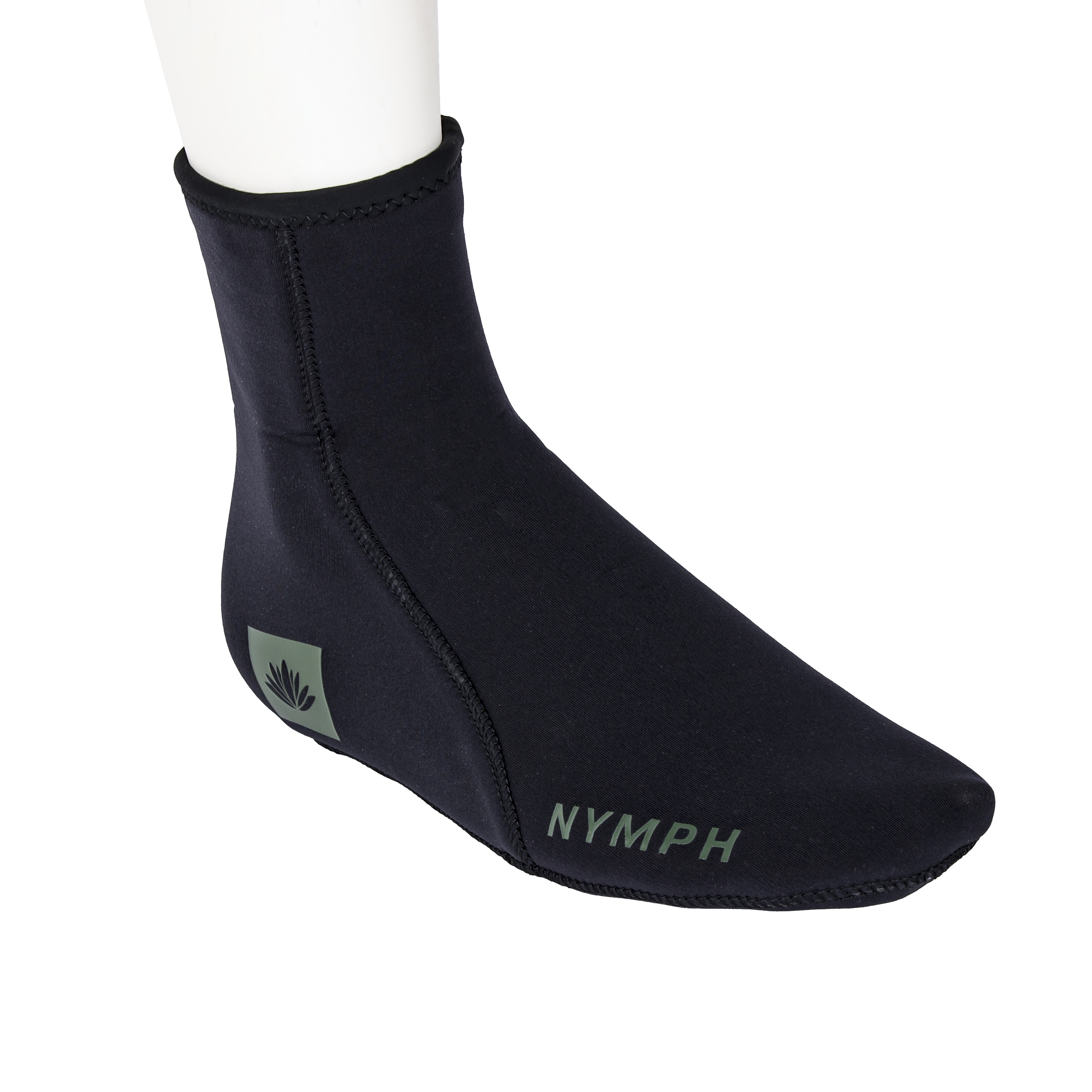
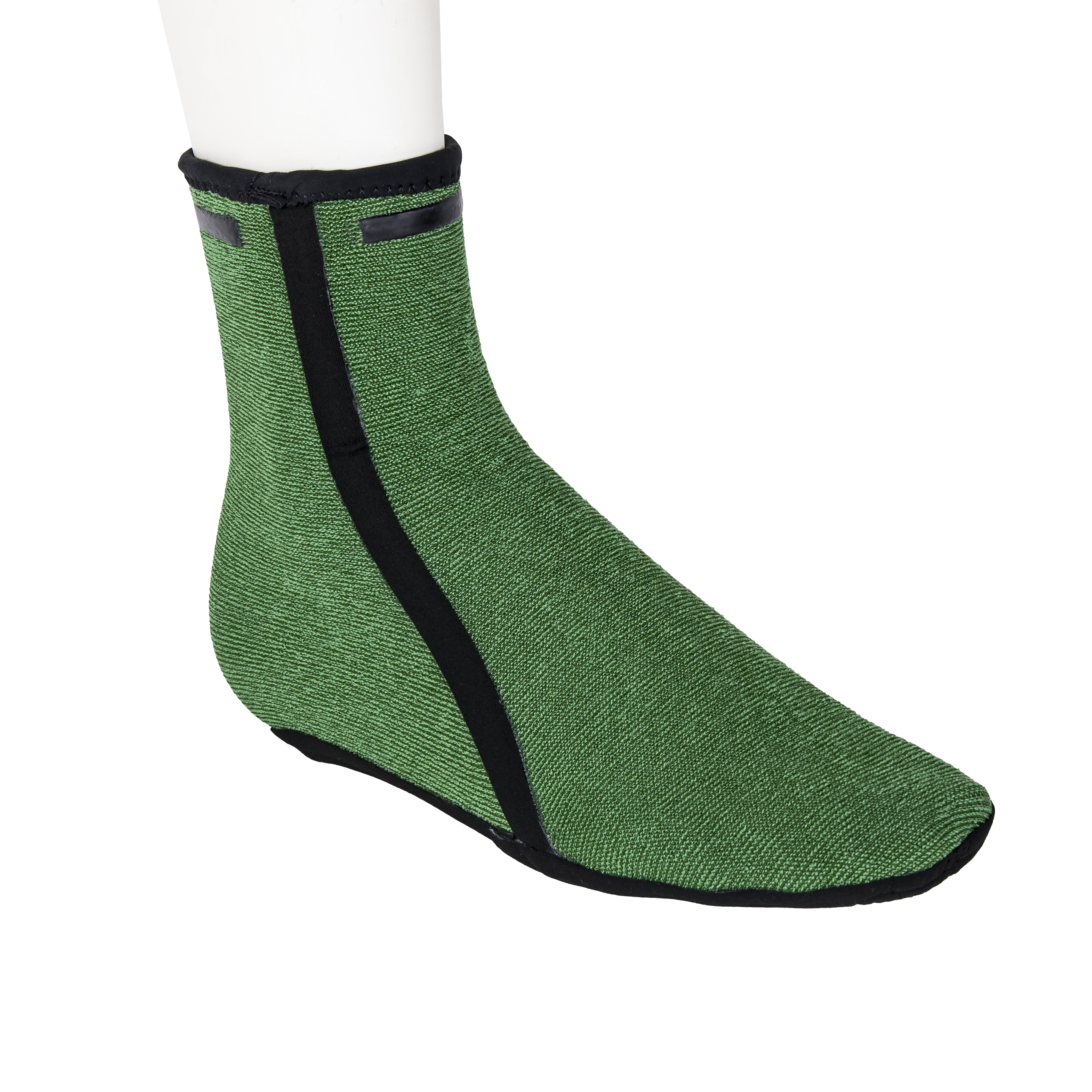
| 5/4 mm or 5/3 mm hooded | 7 to 11 °C (45 to 52 °F) | Hooded full suit, winter, with boots and gloves |
| 6/5 mm and above | Below 7 °C (45 °F) | Hooded full suit, cold water, full kit |
On the French Atlantic coast, a 3/2 mm covers most of the year from spring to autumn. To surf through winter you need to move up to a 4/3 or a 5/4, depending on your region and how well you handle the cold.
Full suit, shorty or top: which style to pick
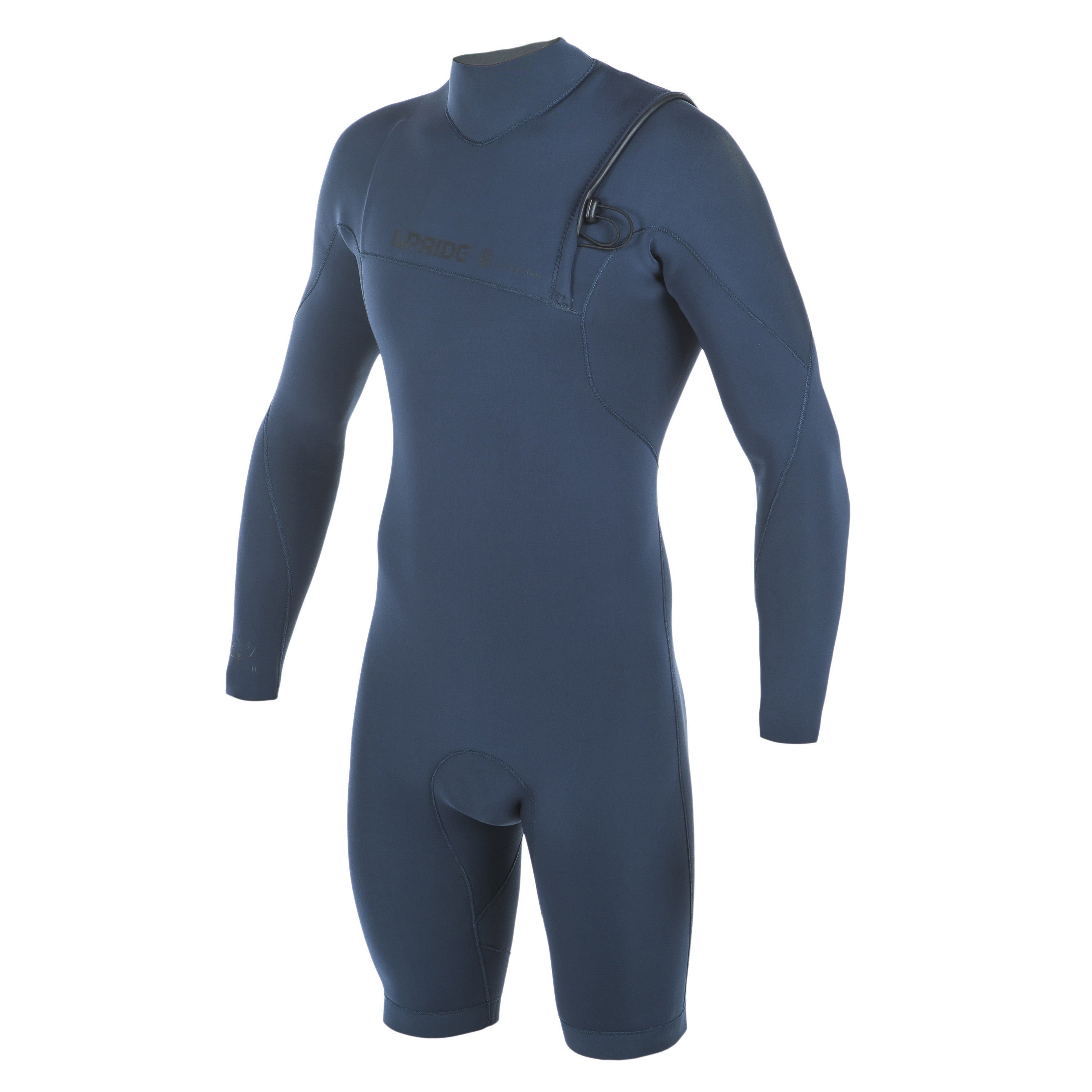
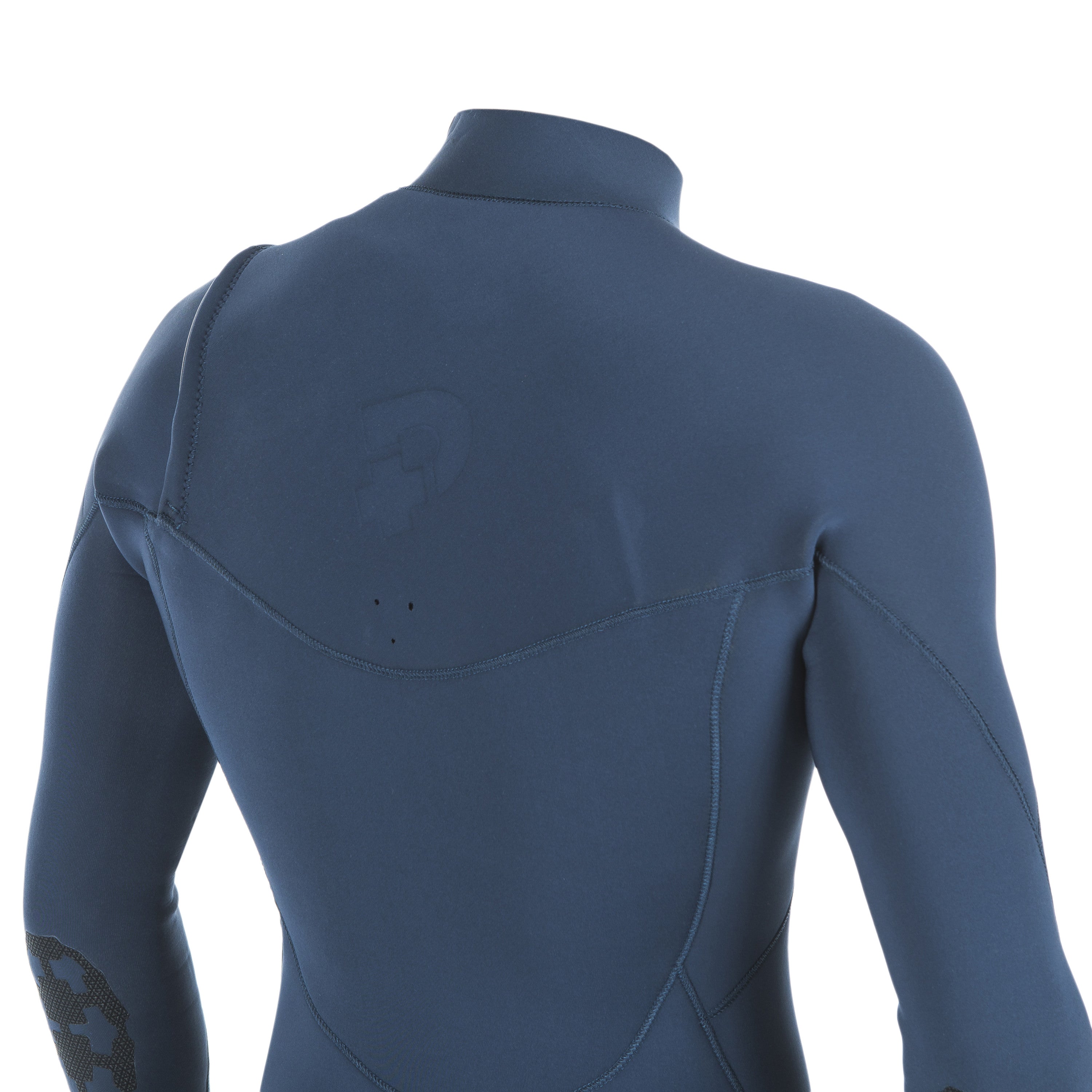
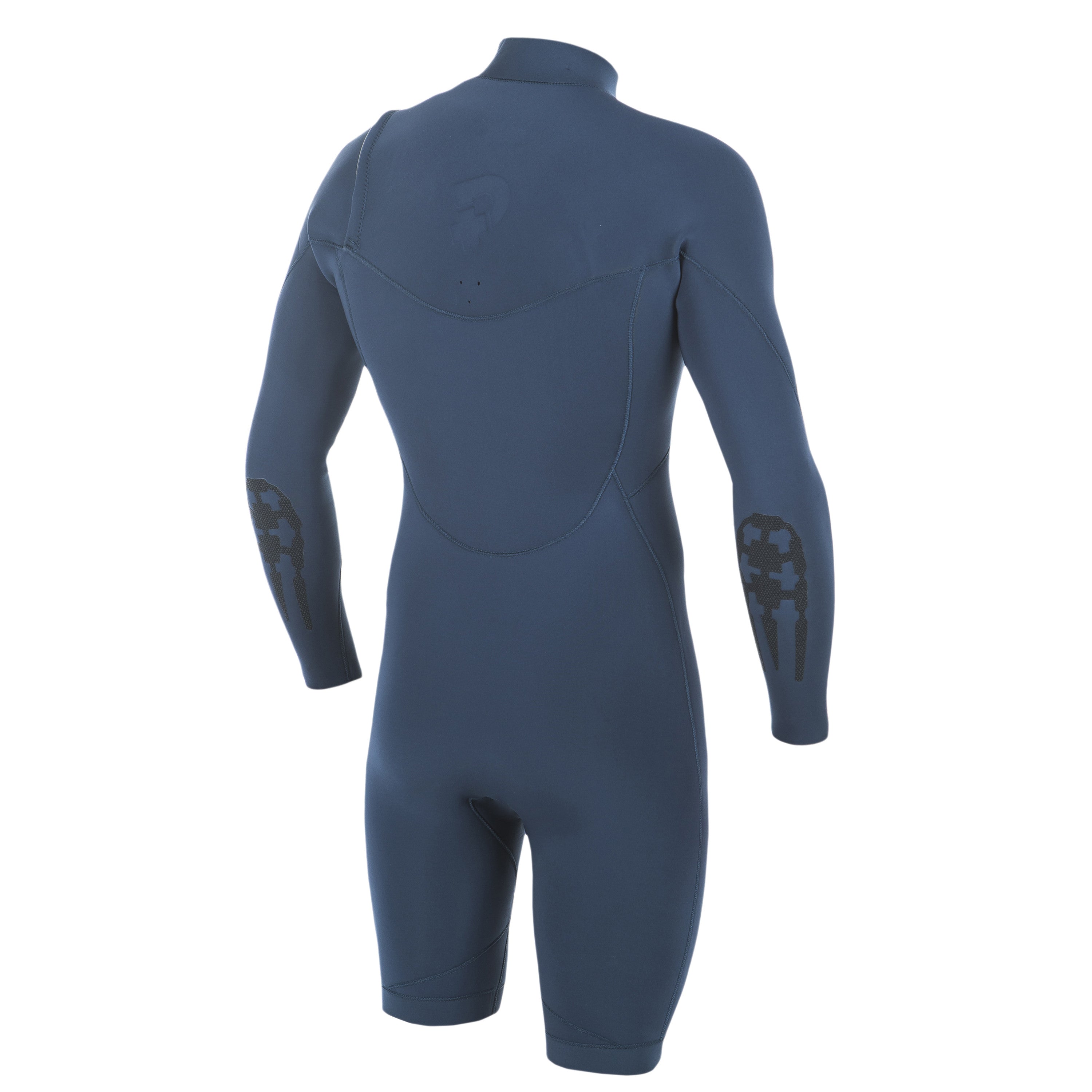
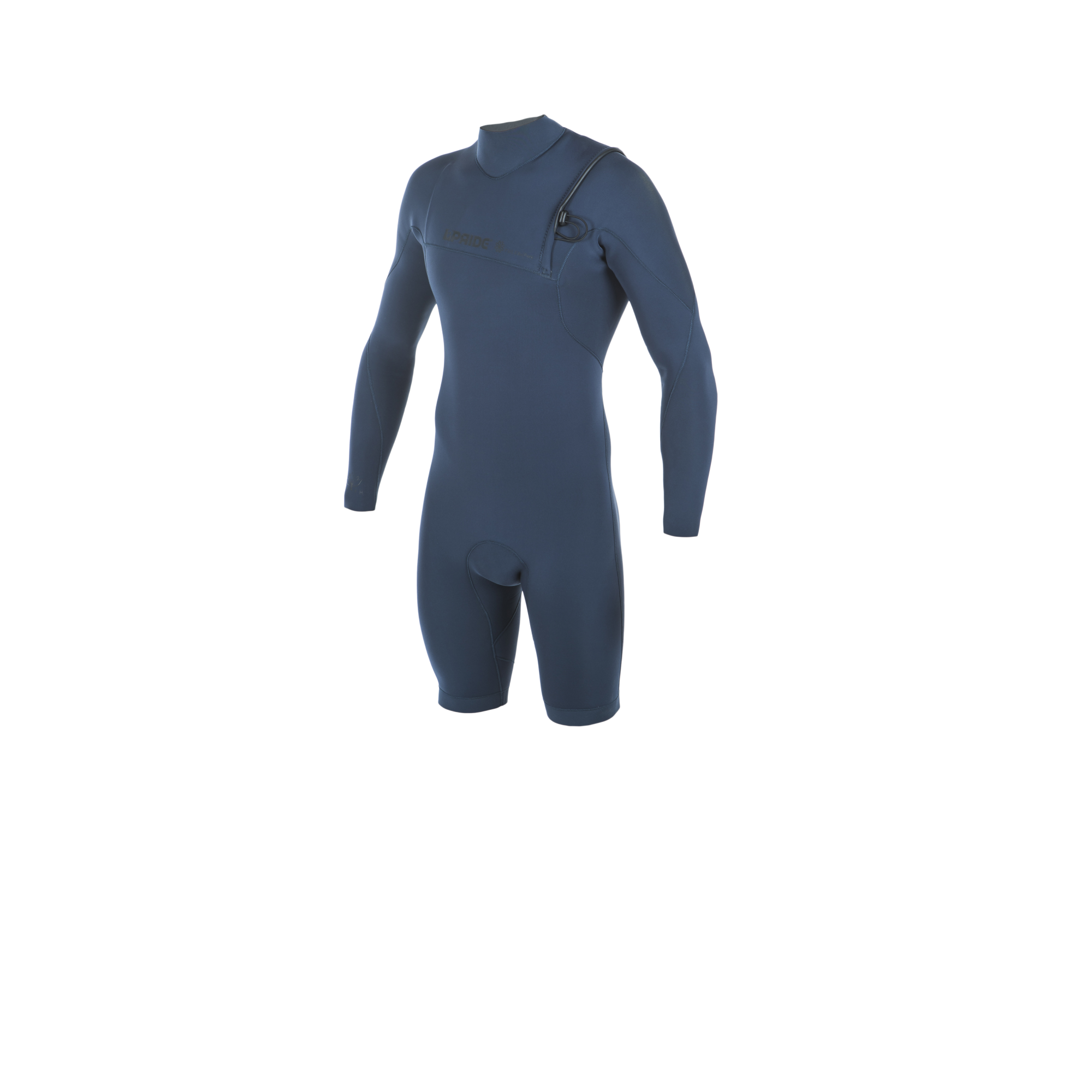
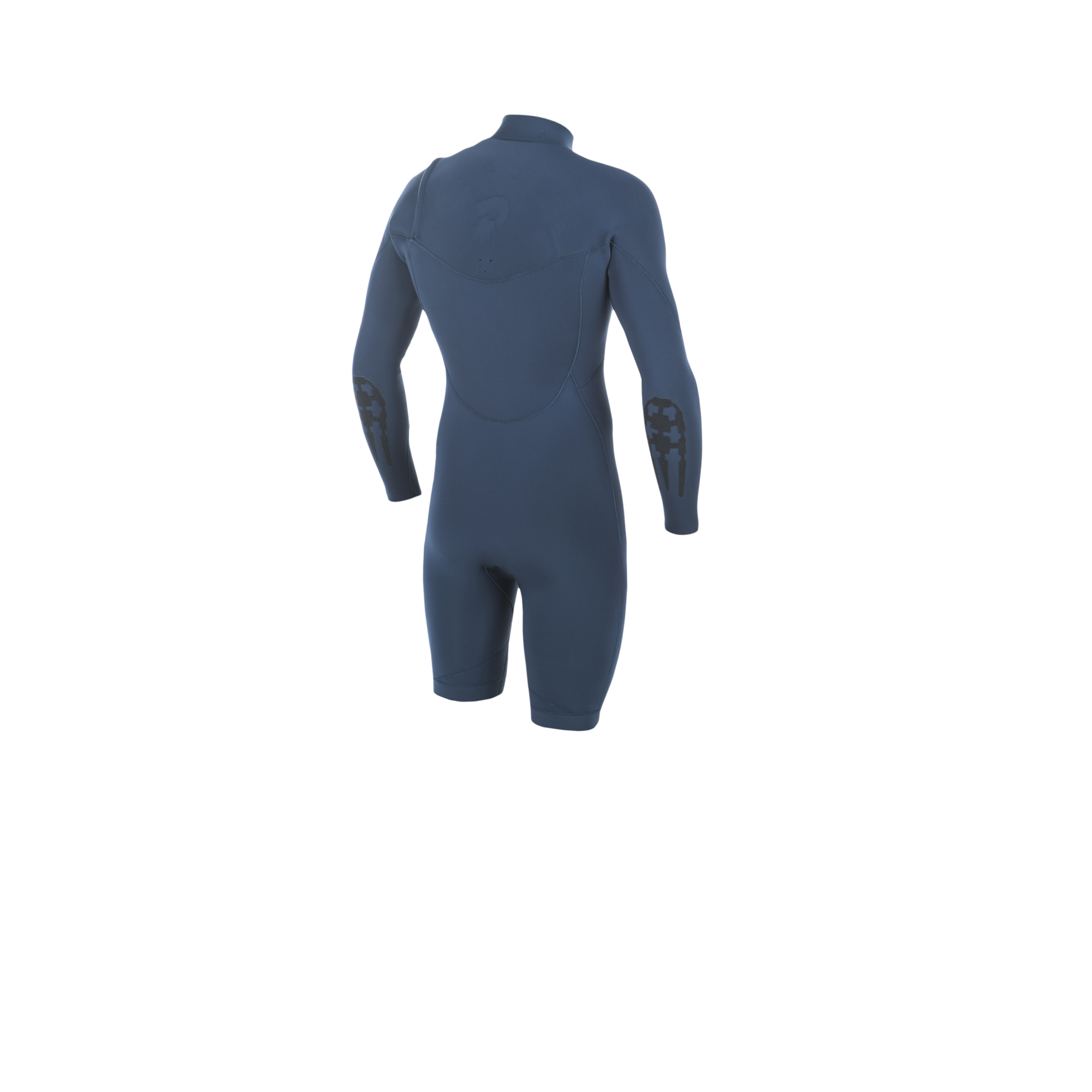
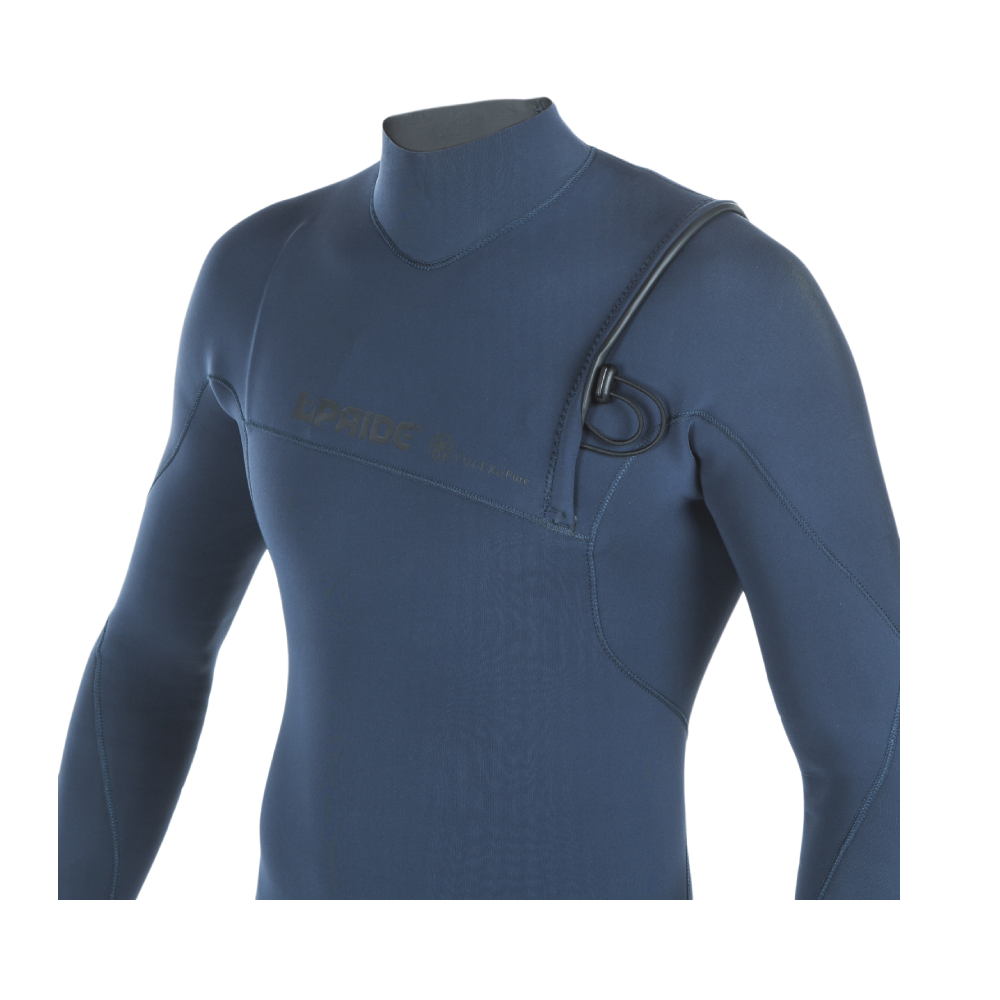
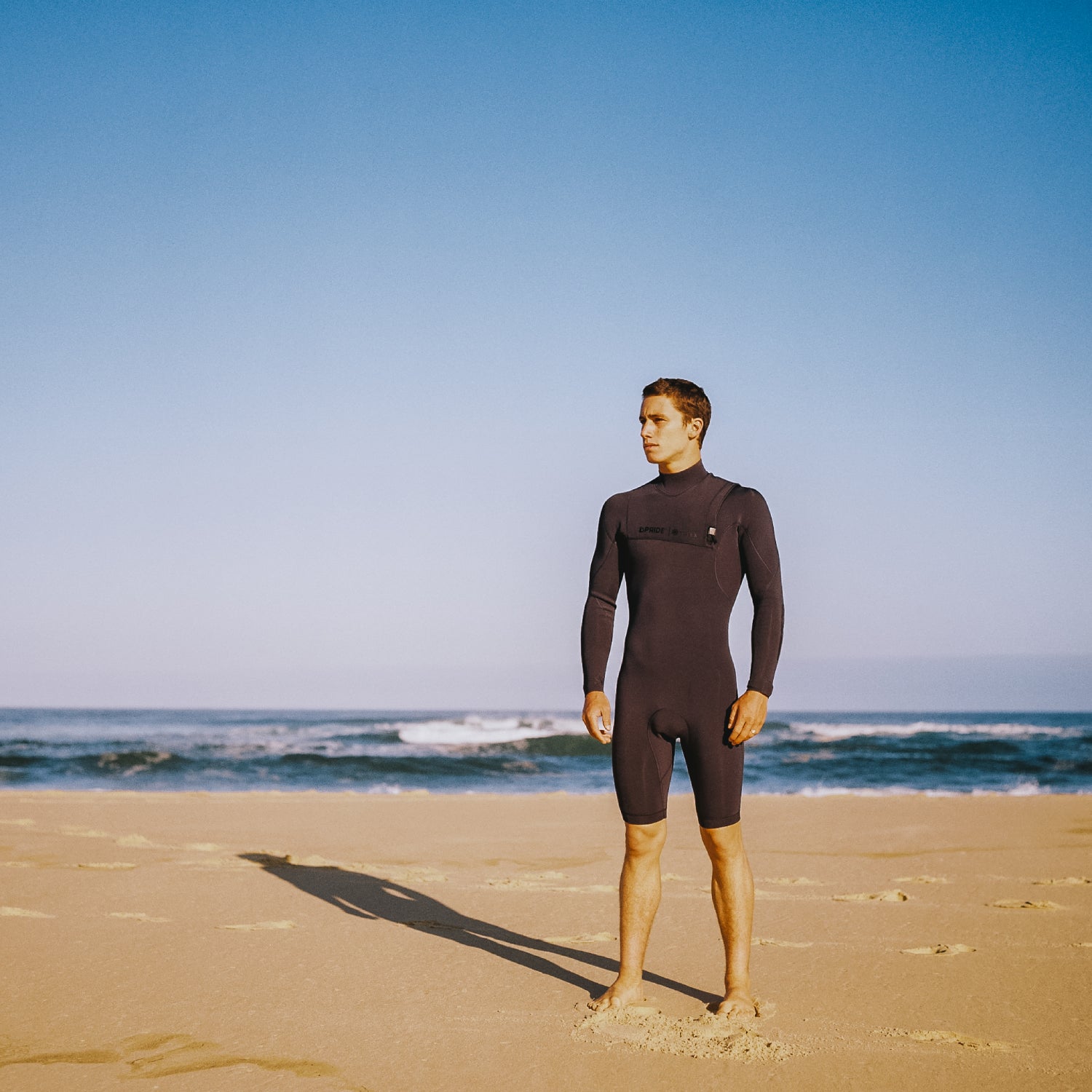
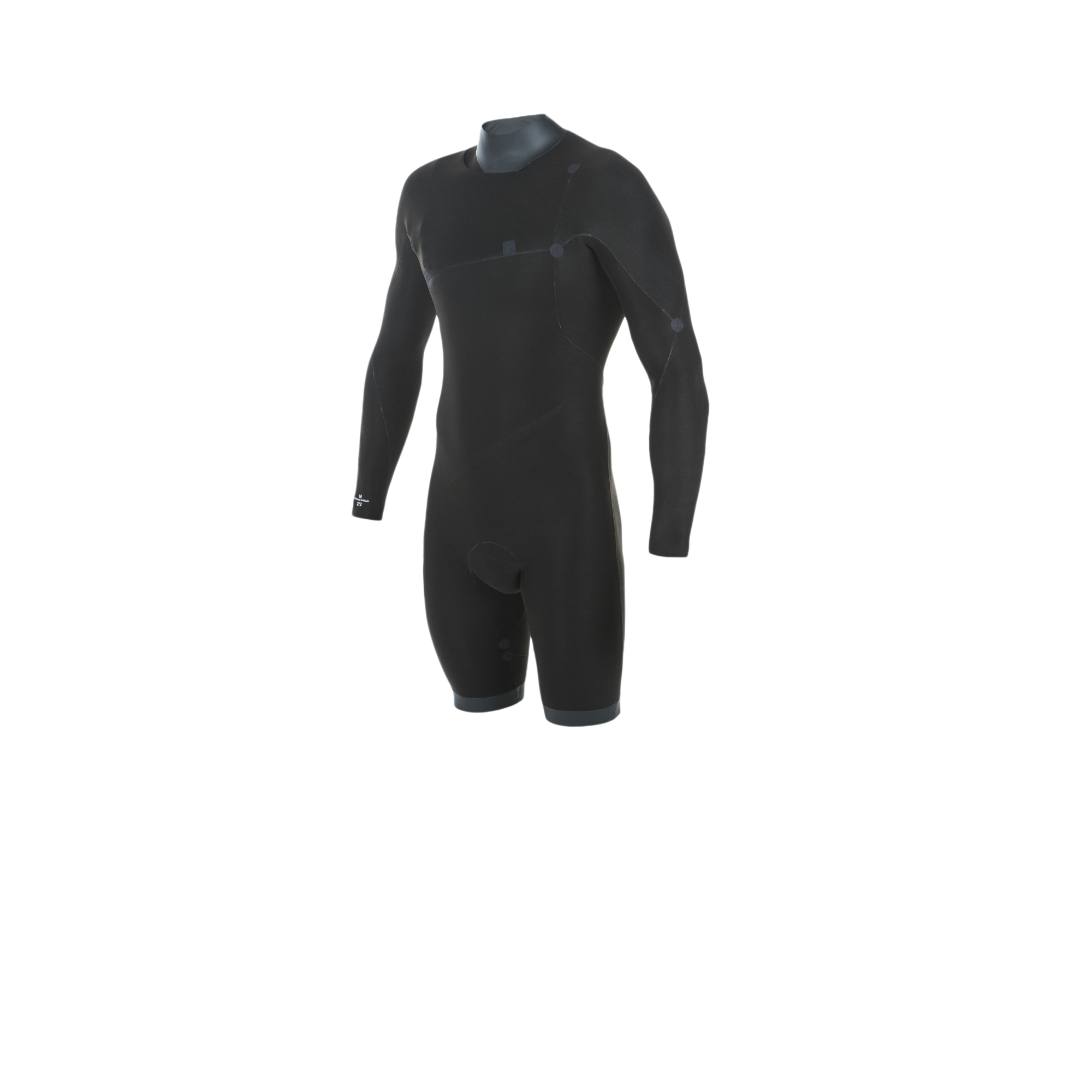
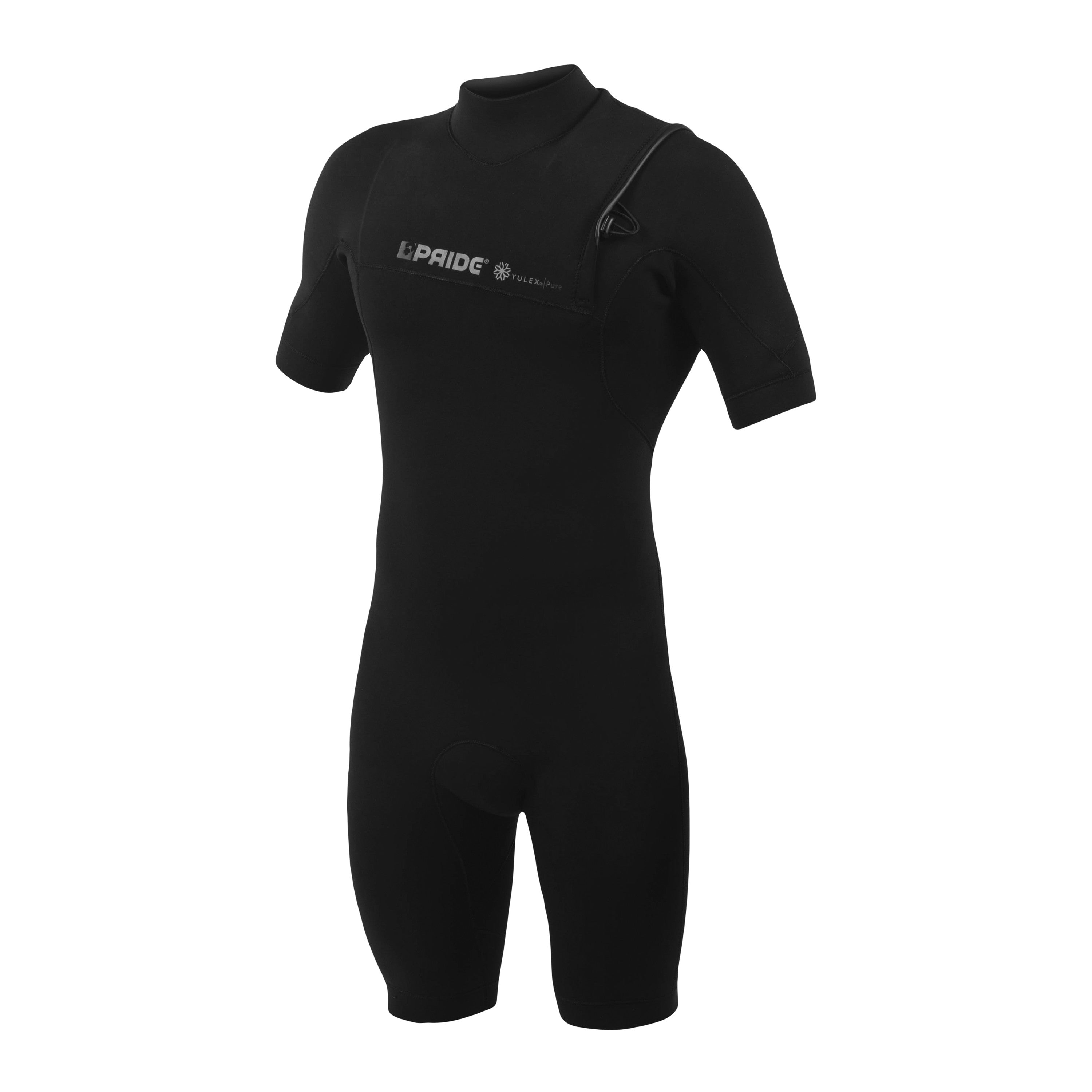
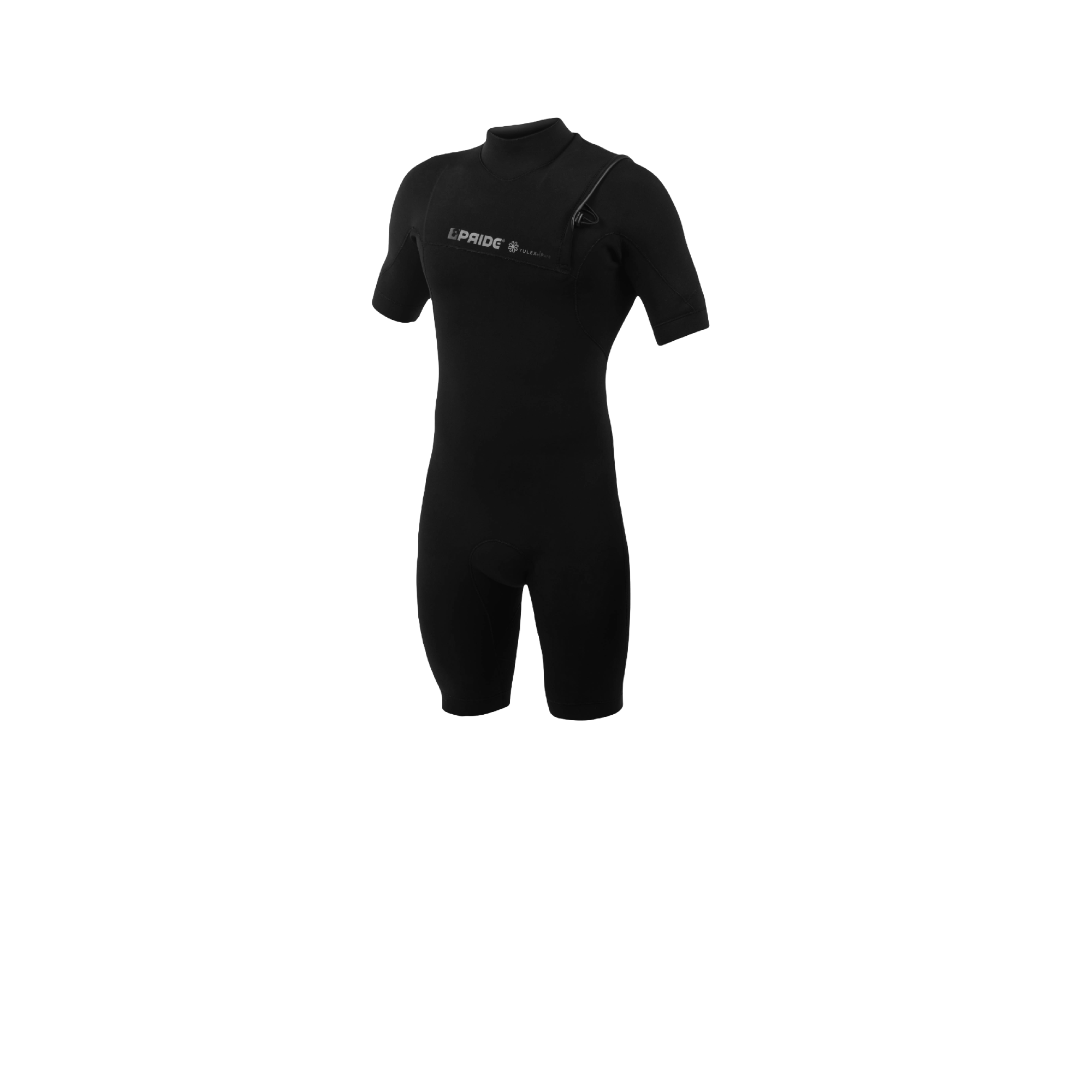
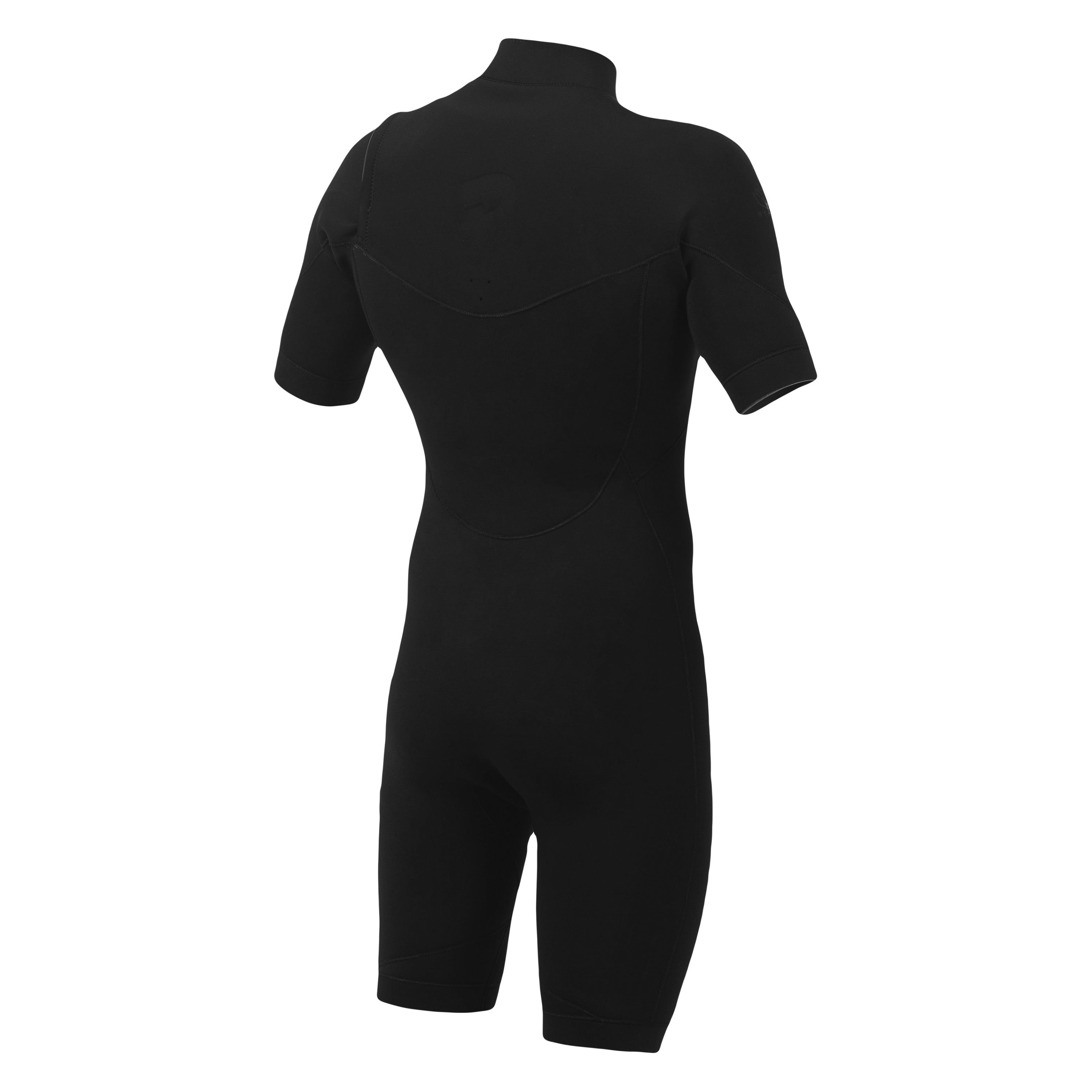
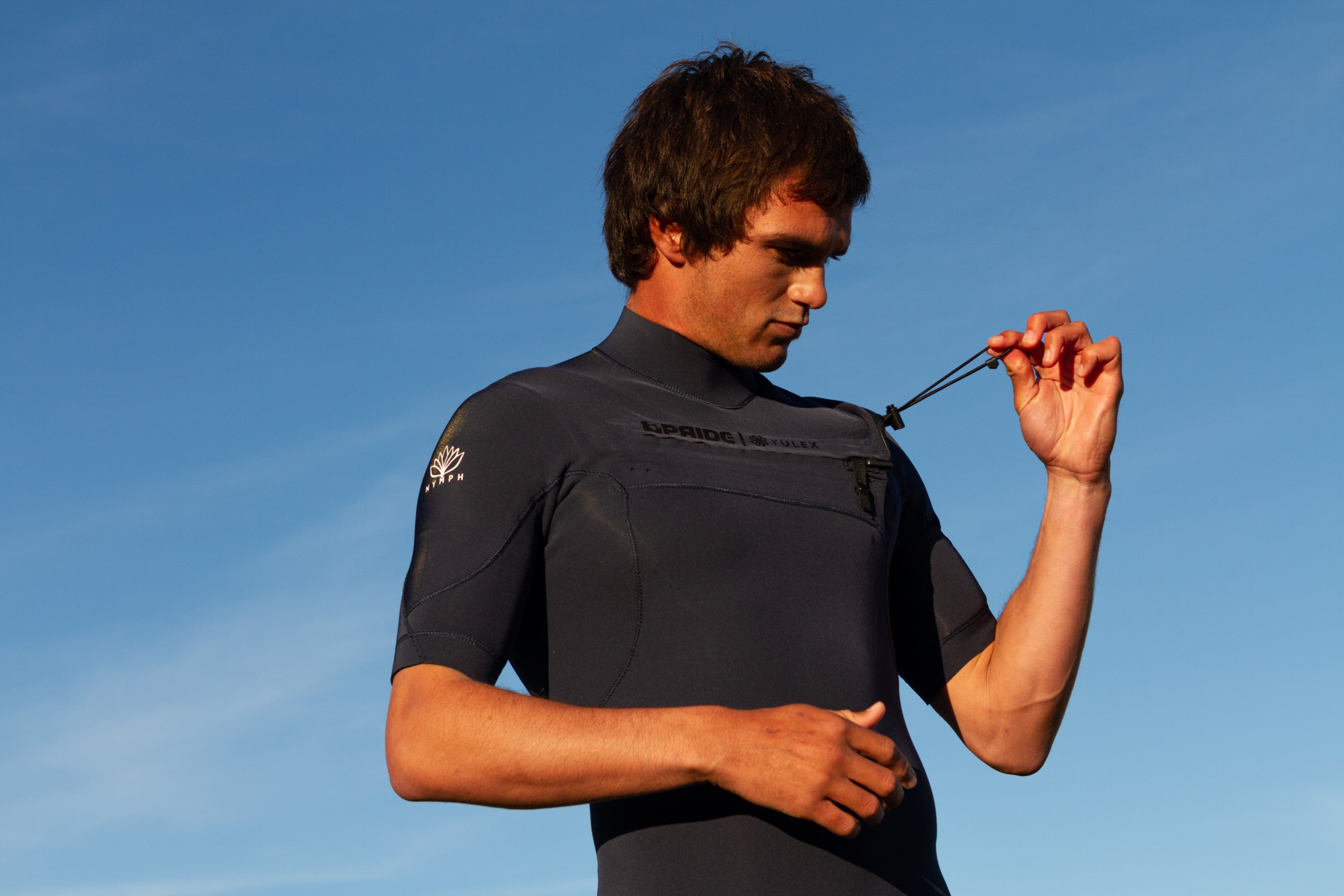
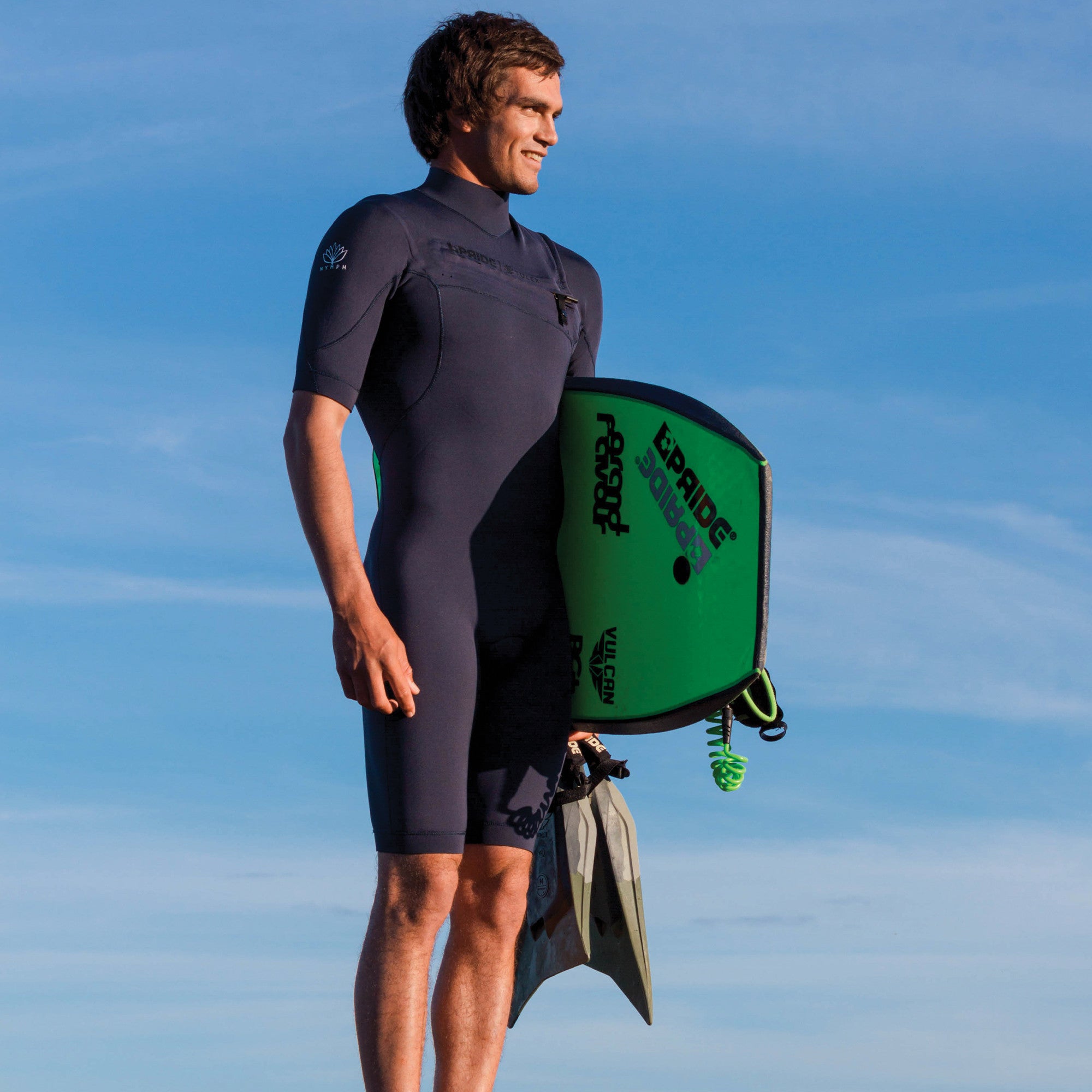
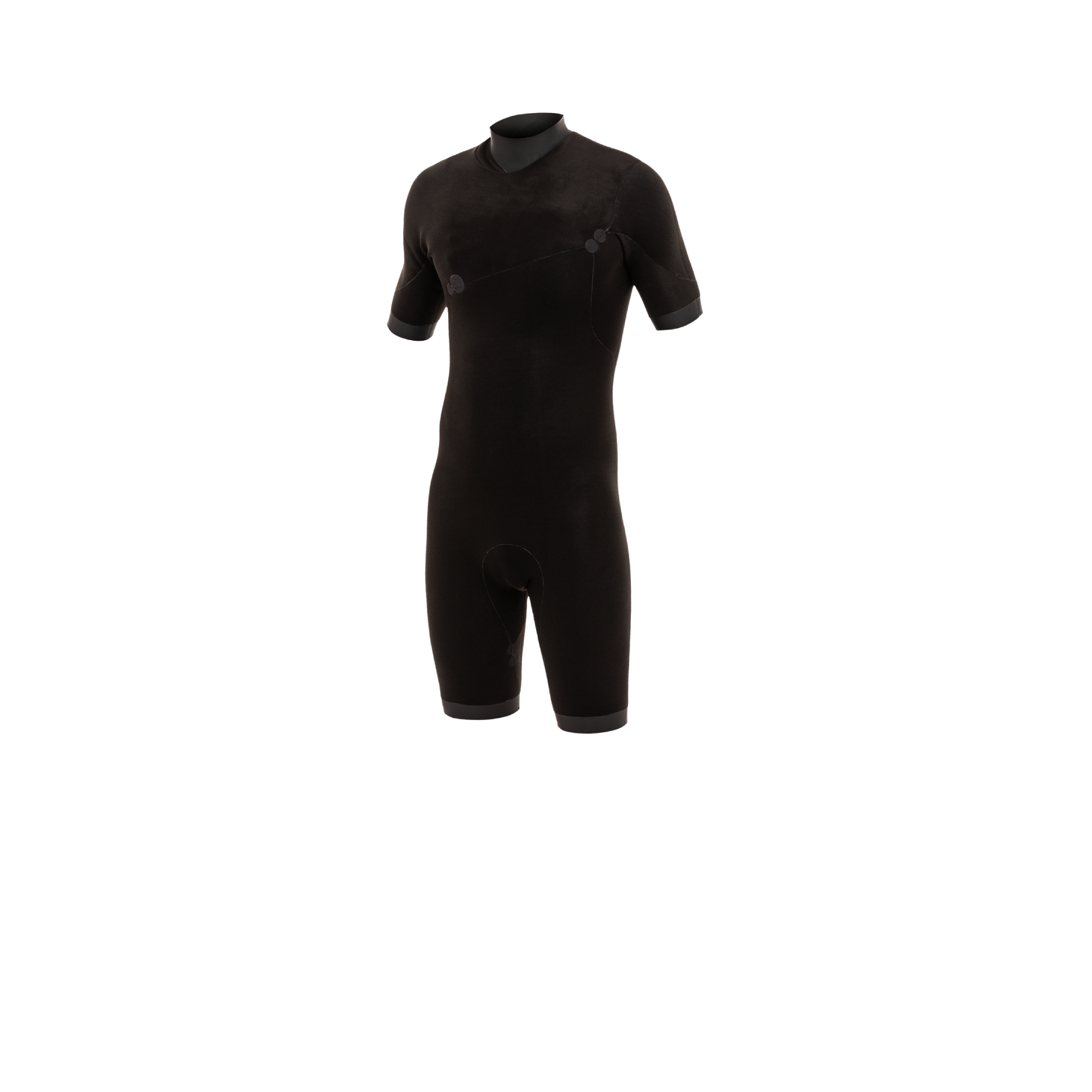
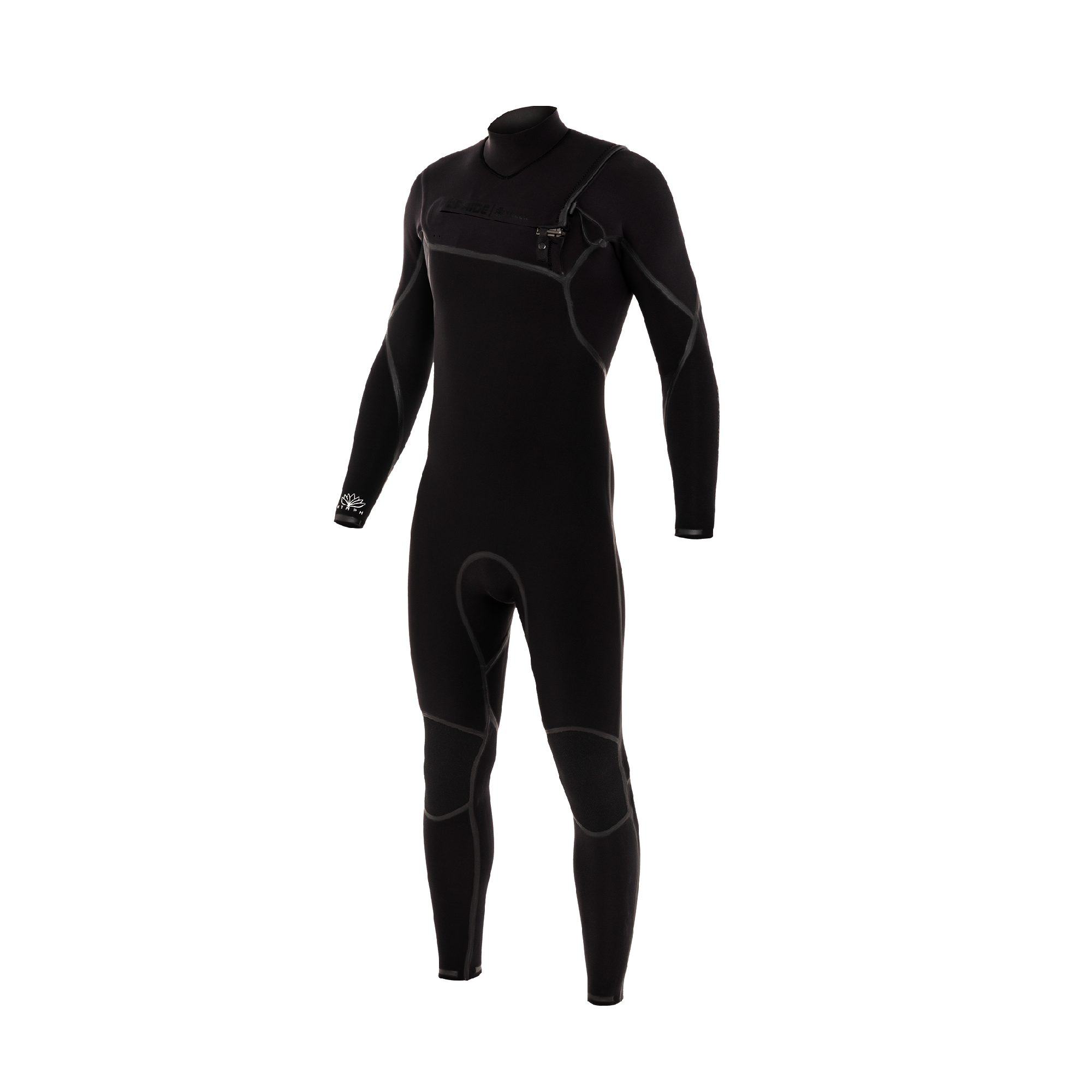
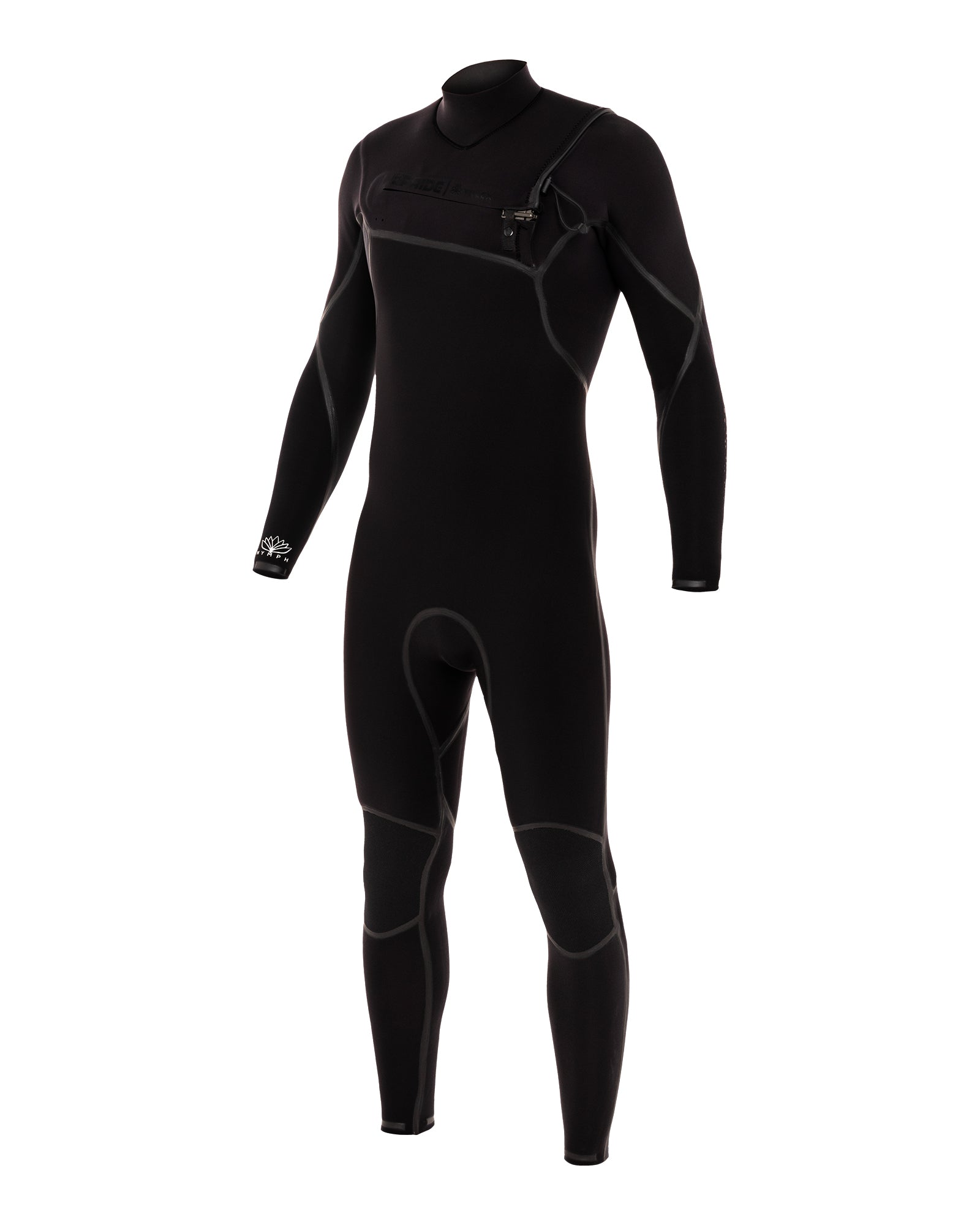
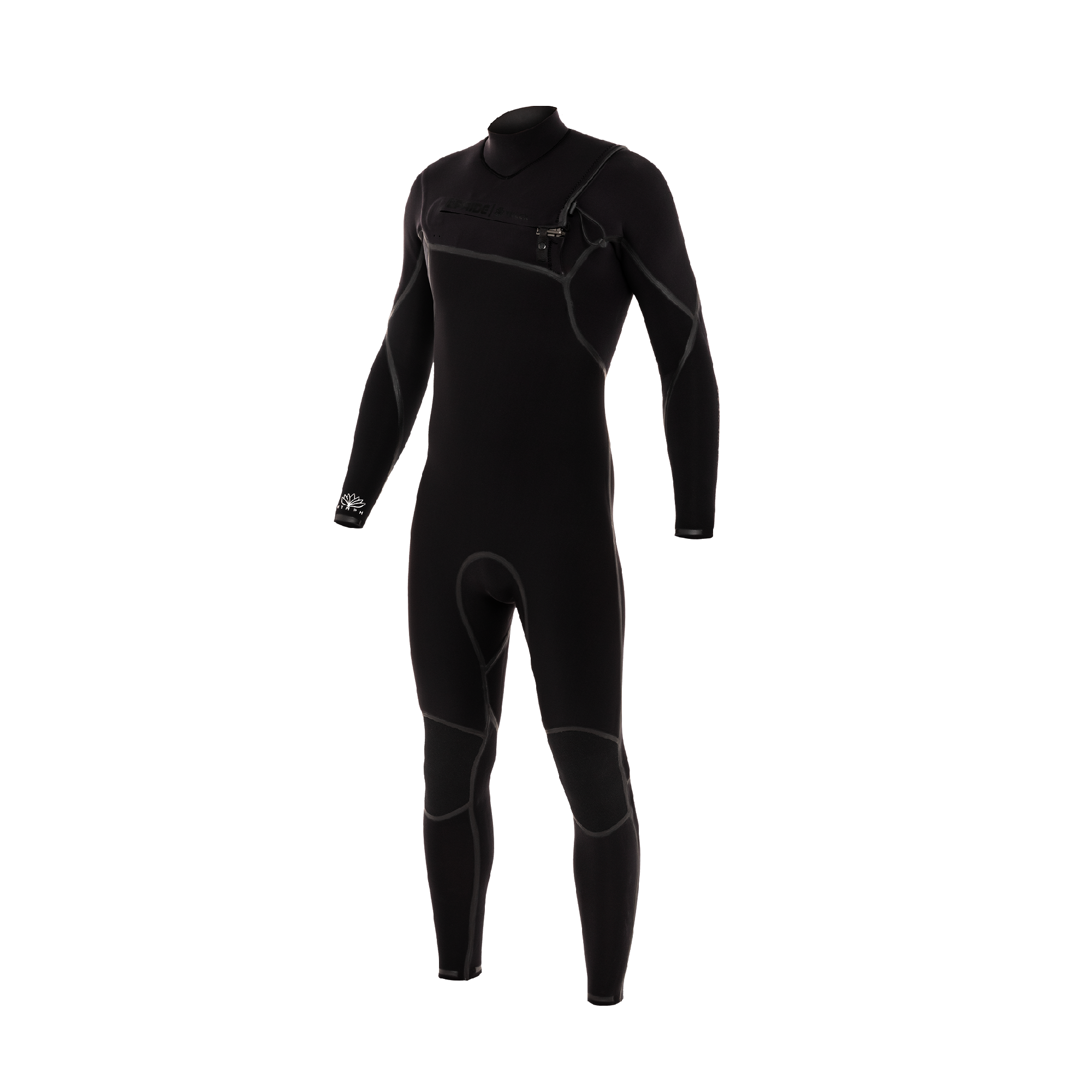
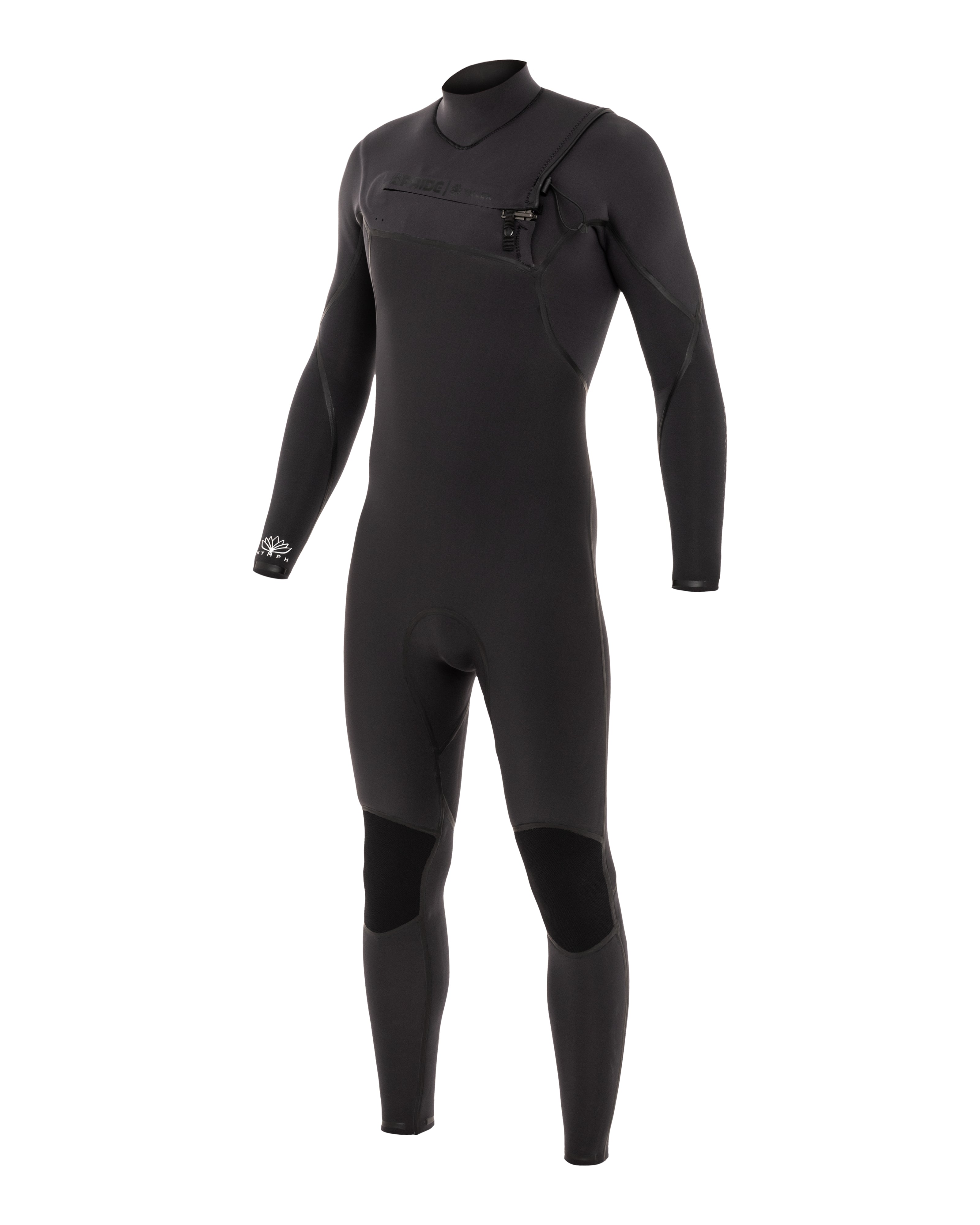
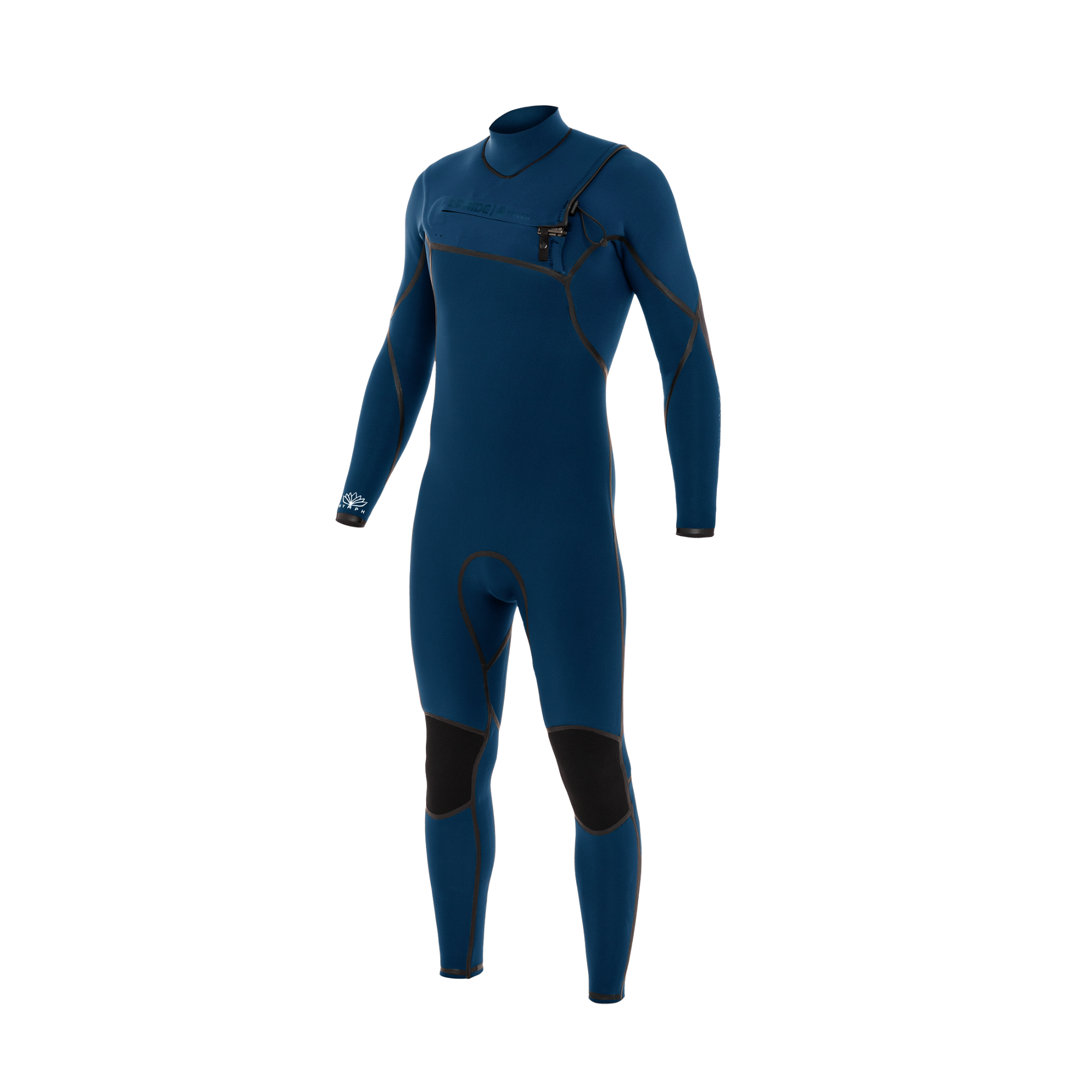
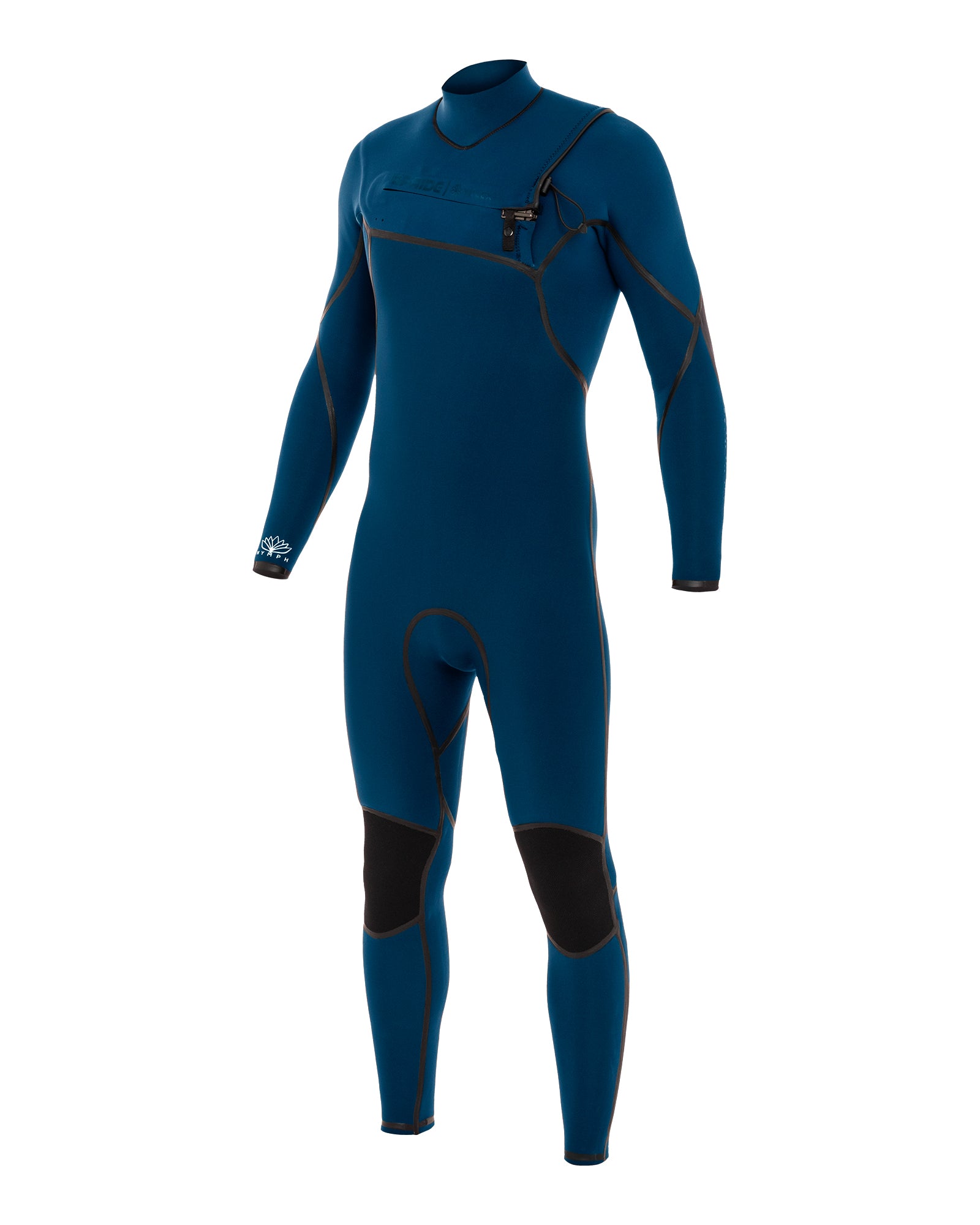
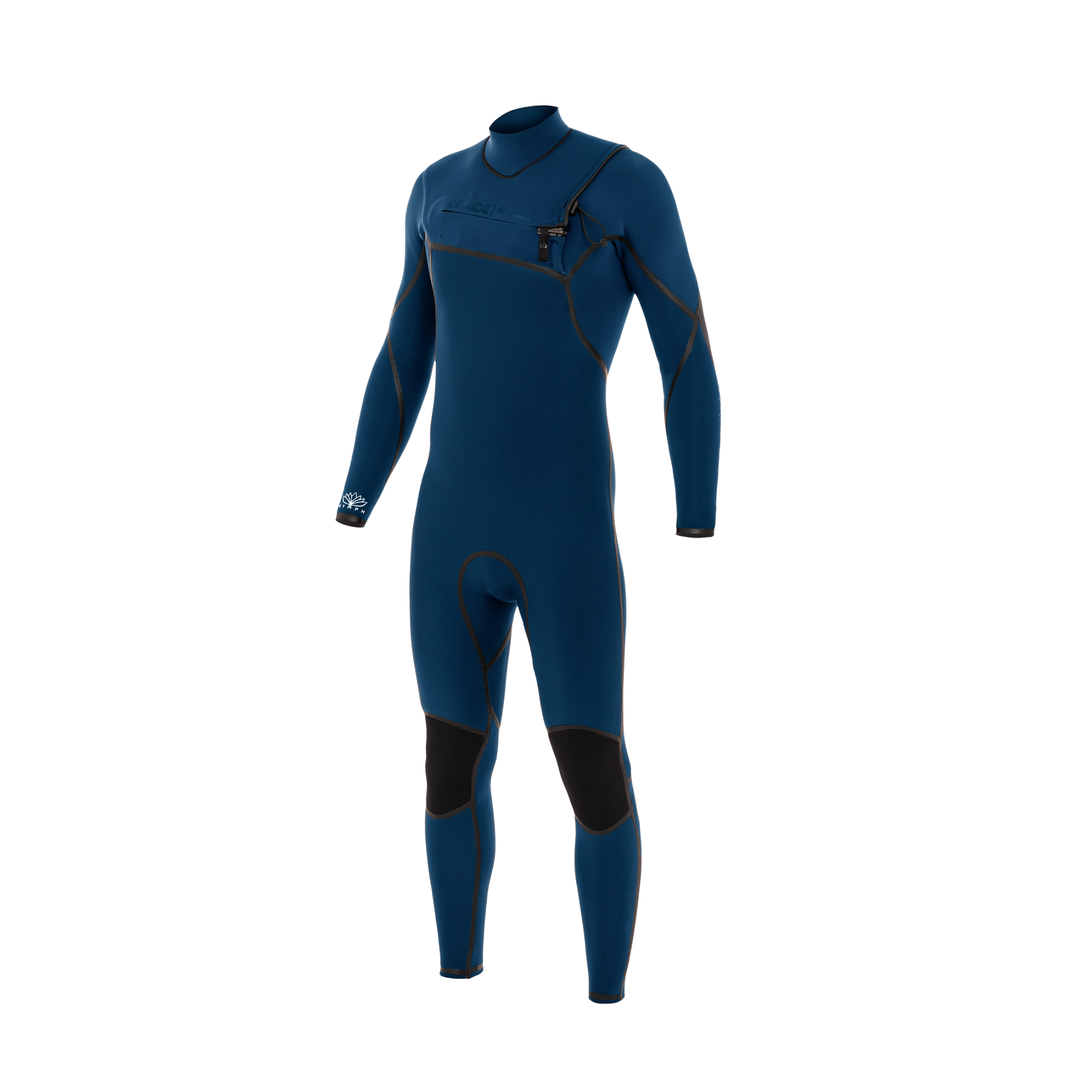
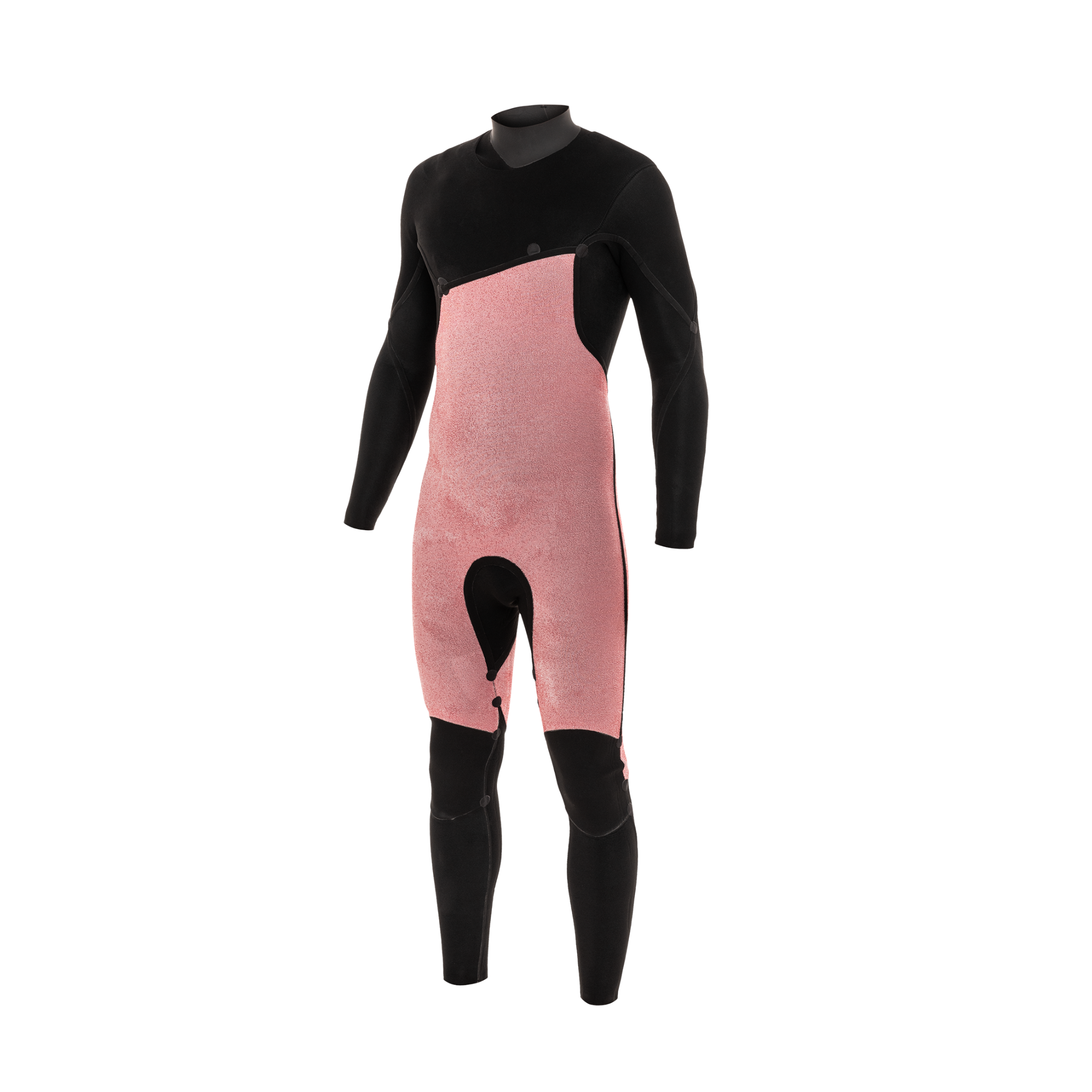
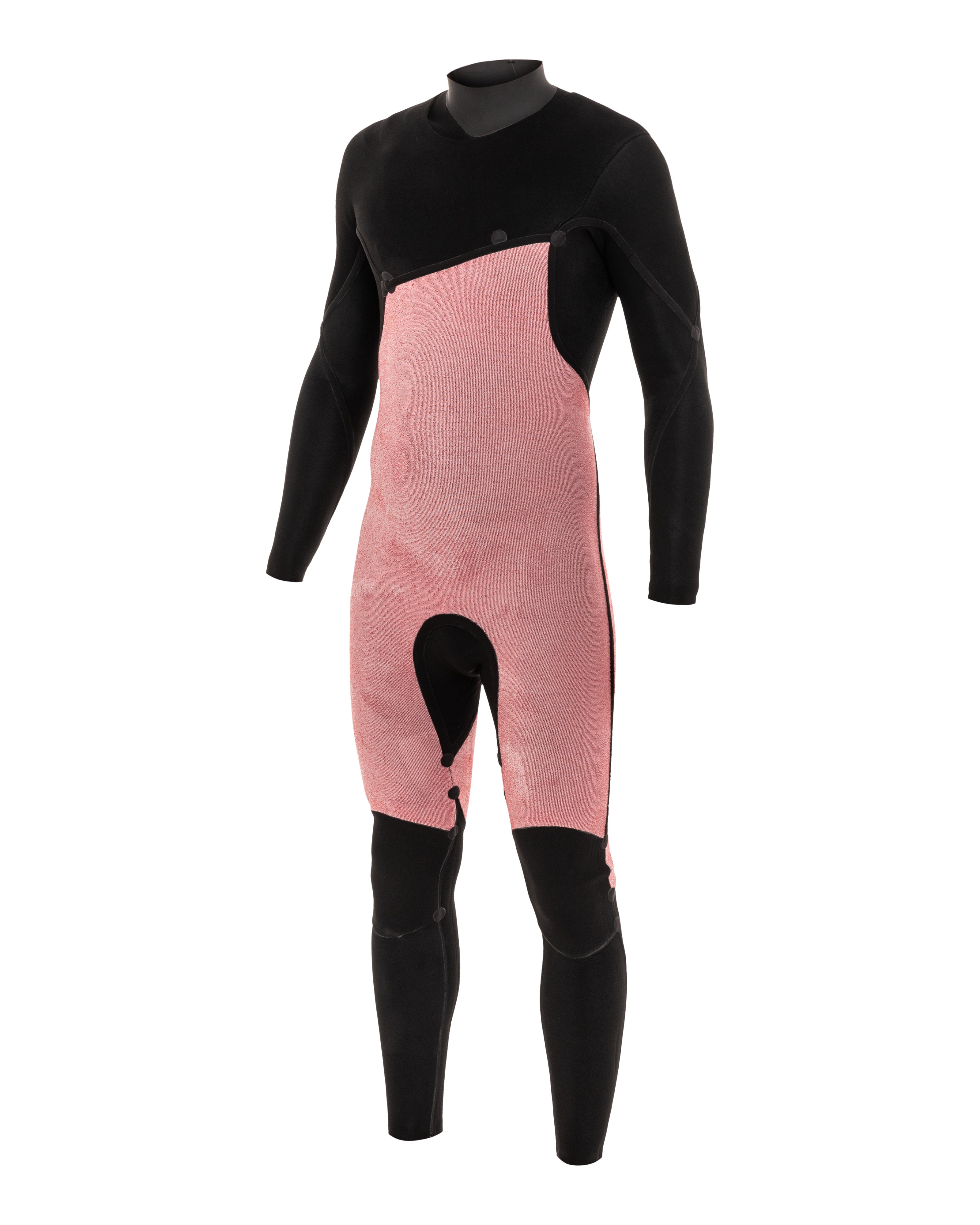
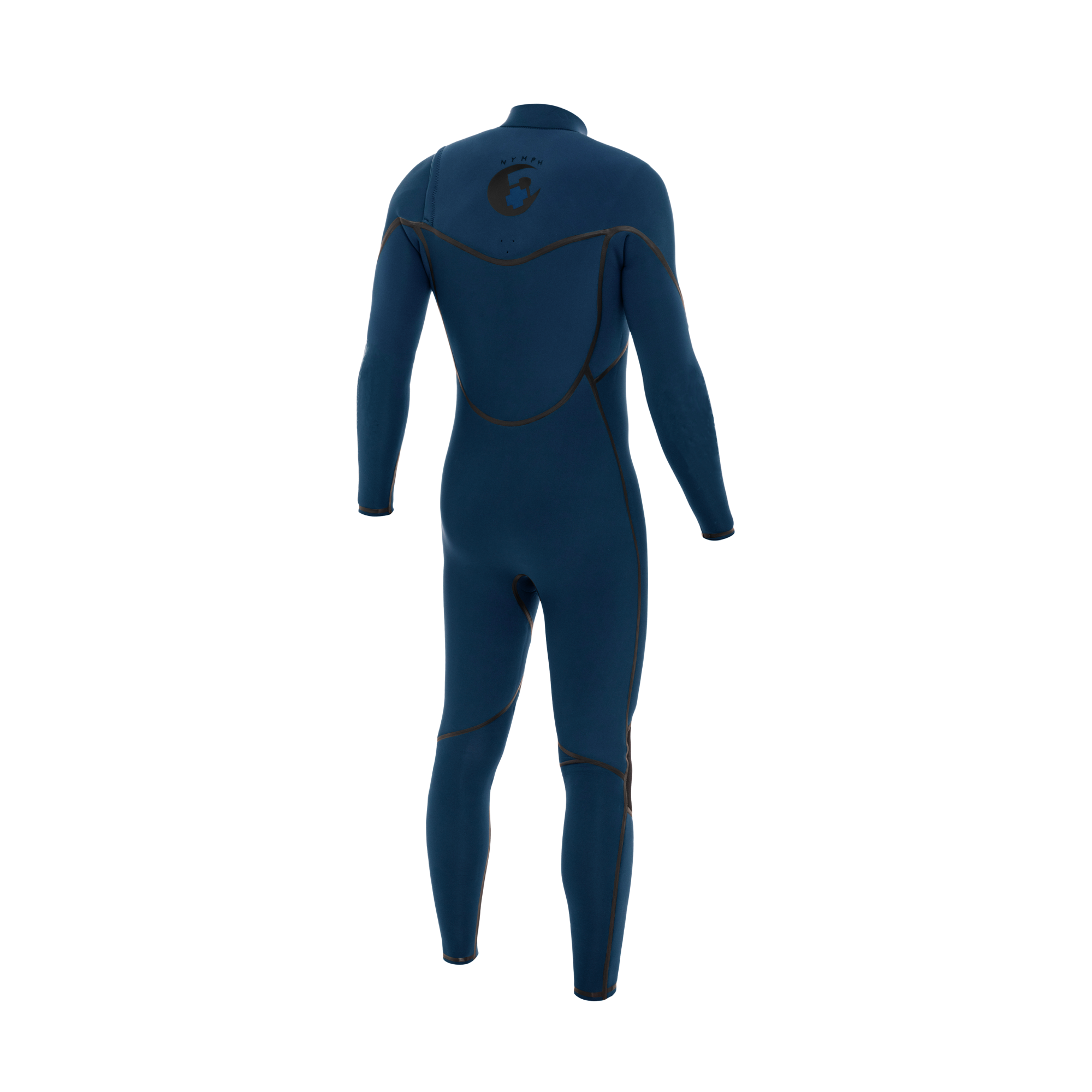
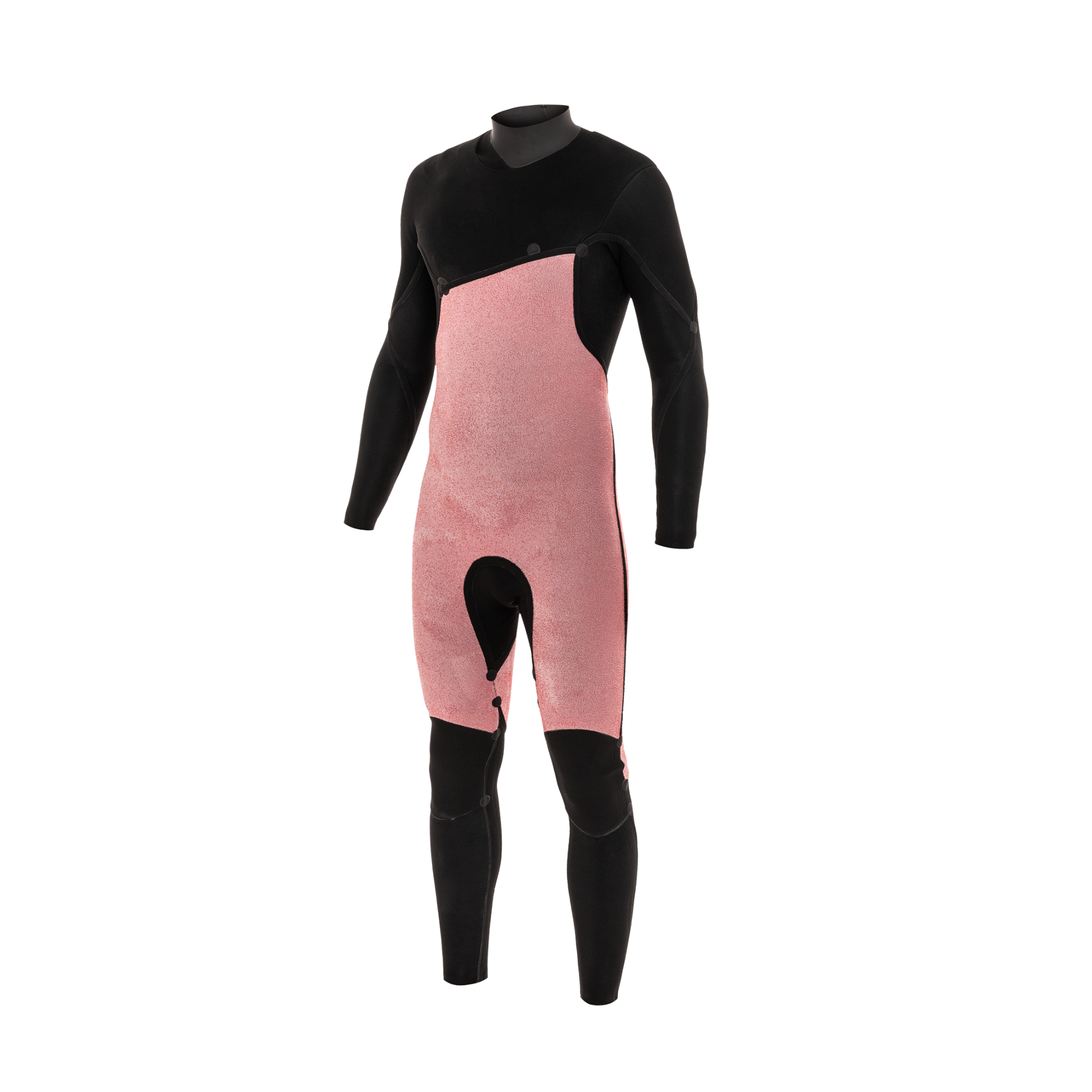
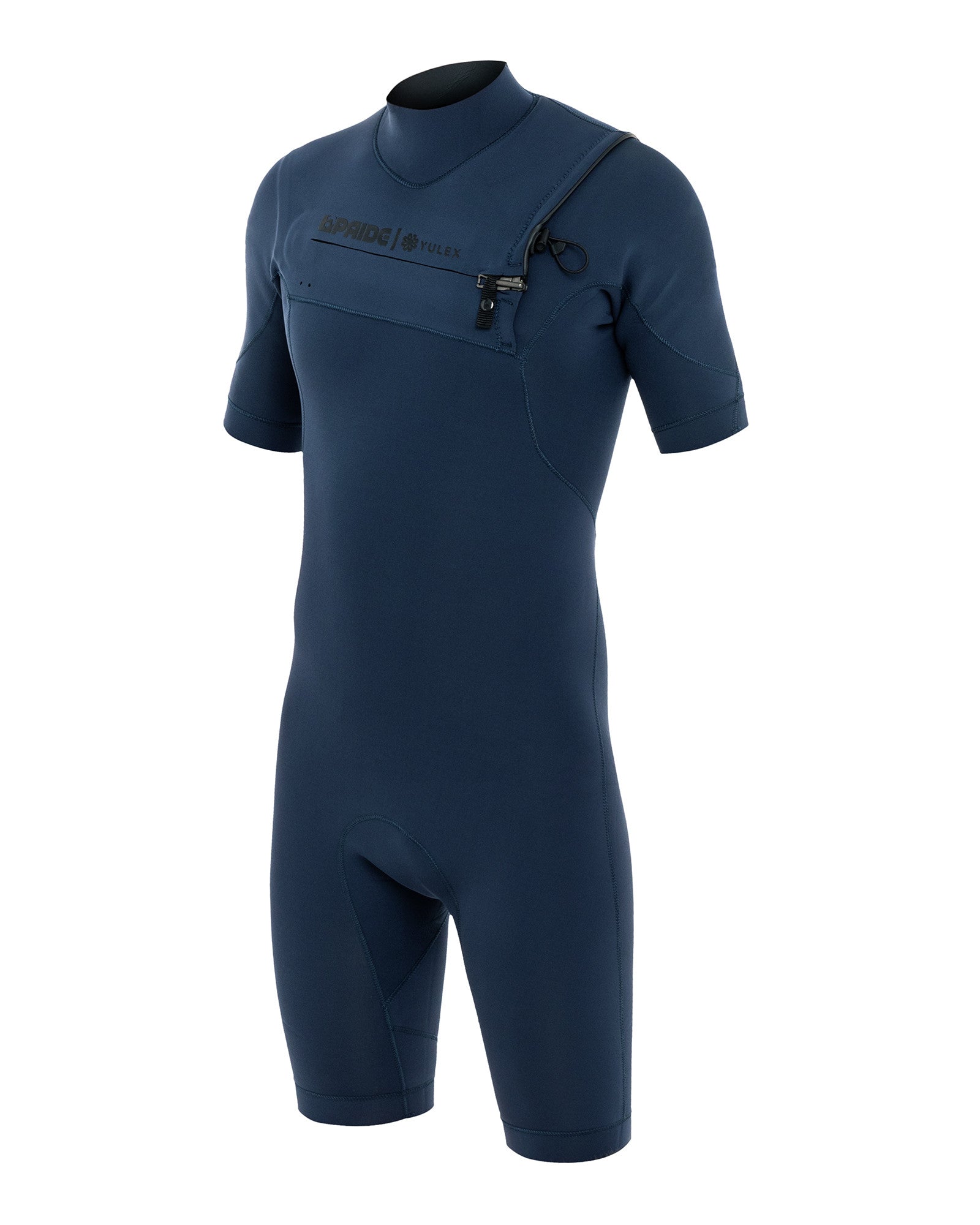
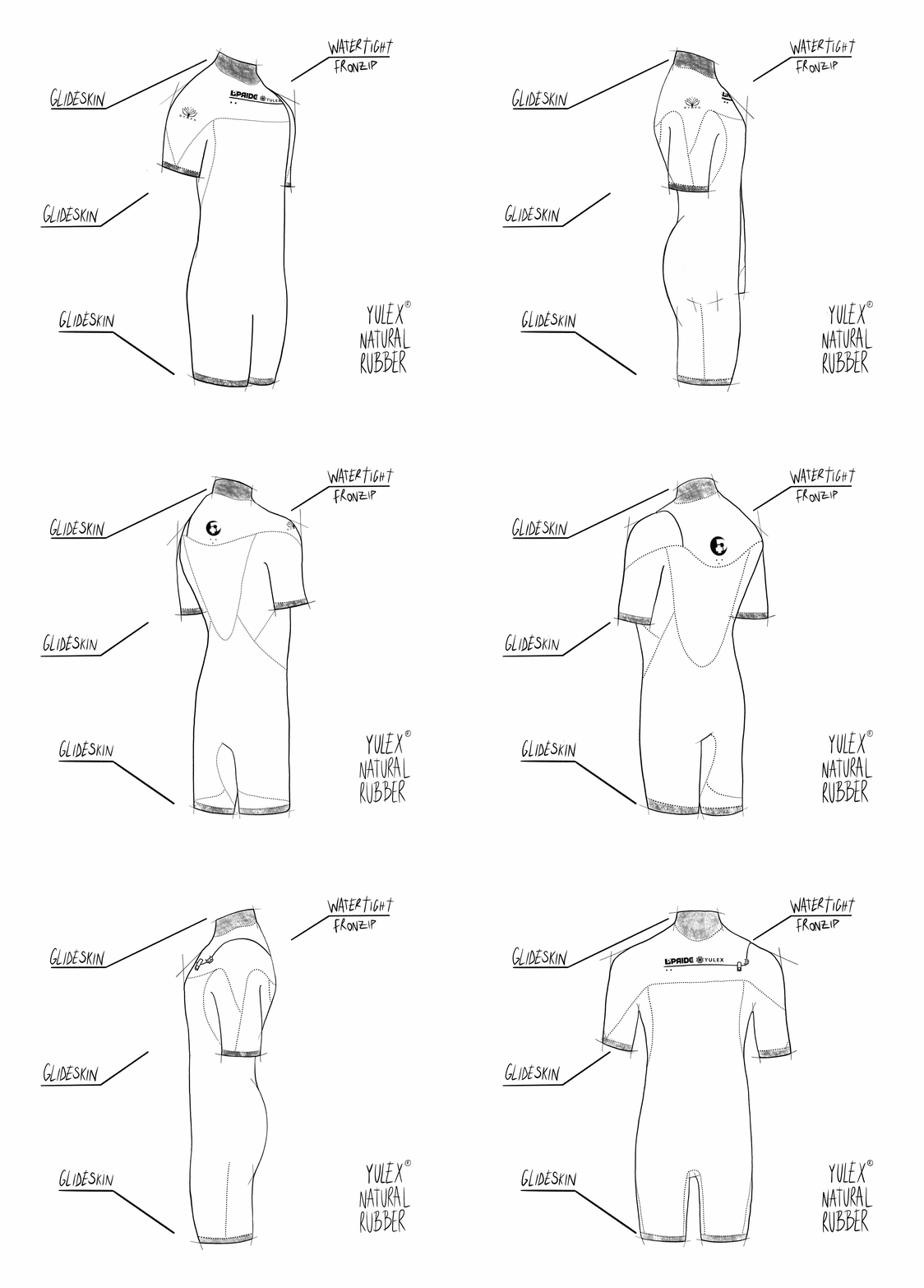
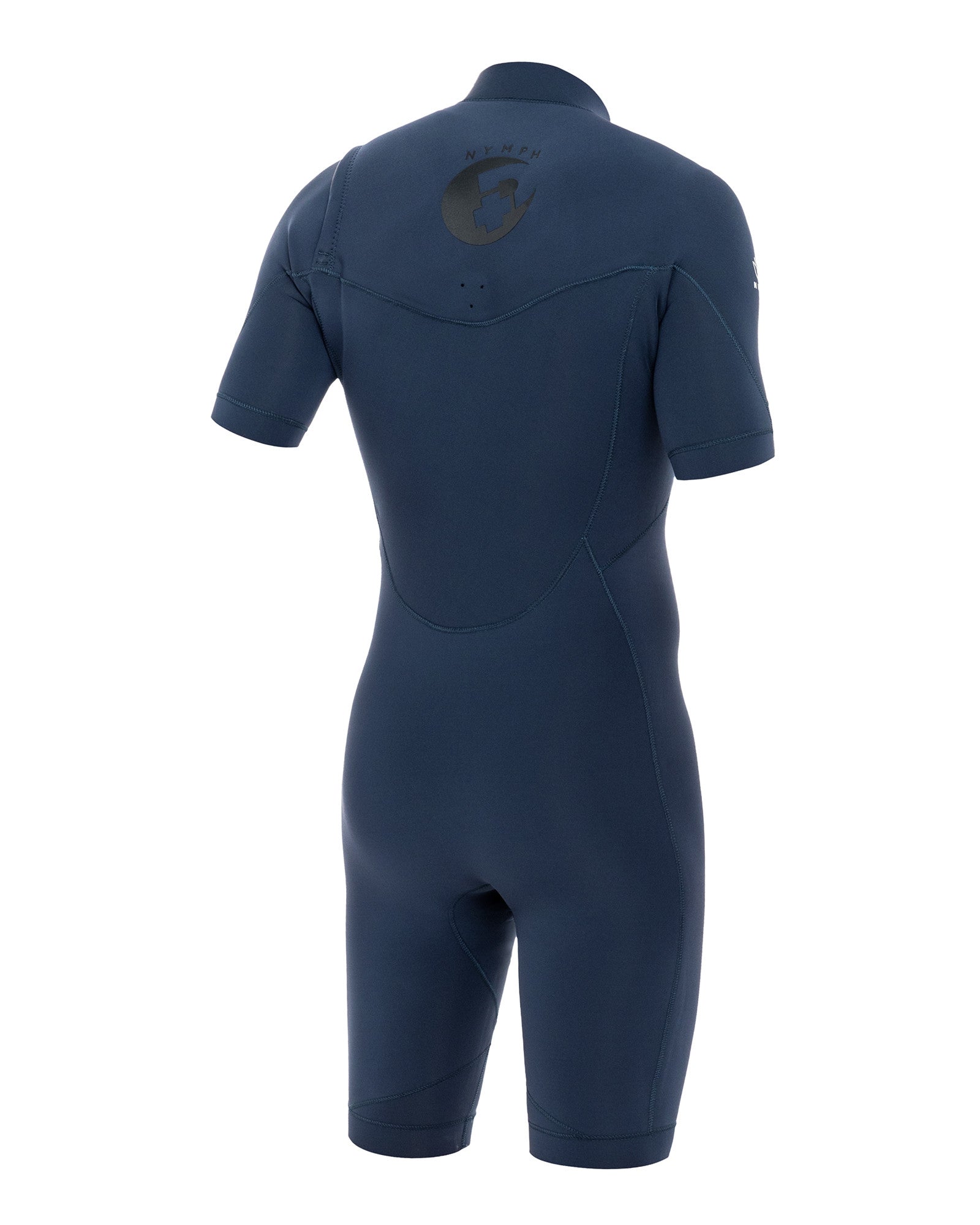
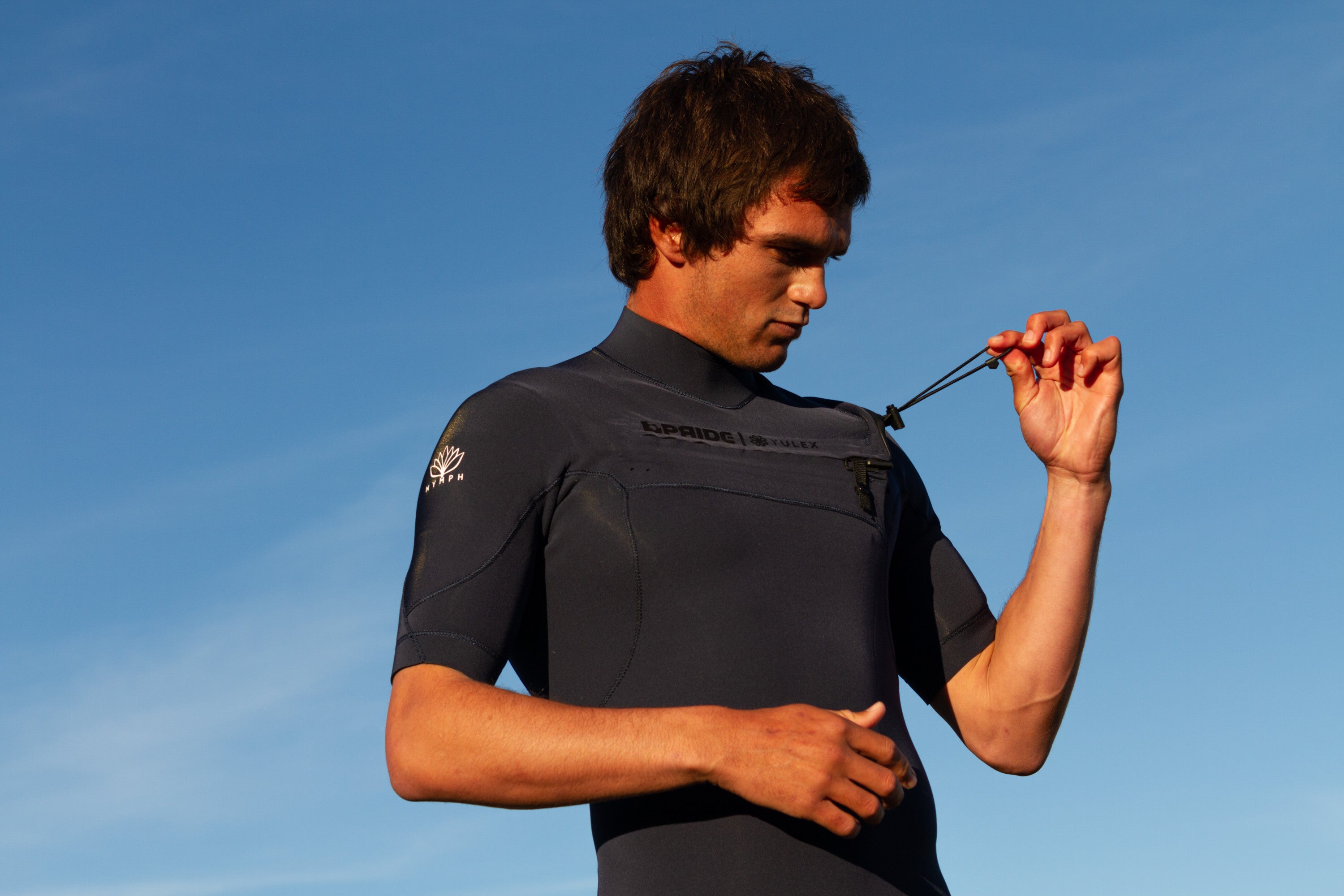
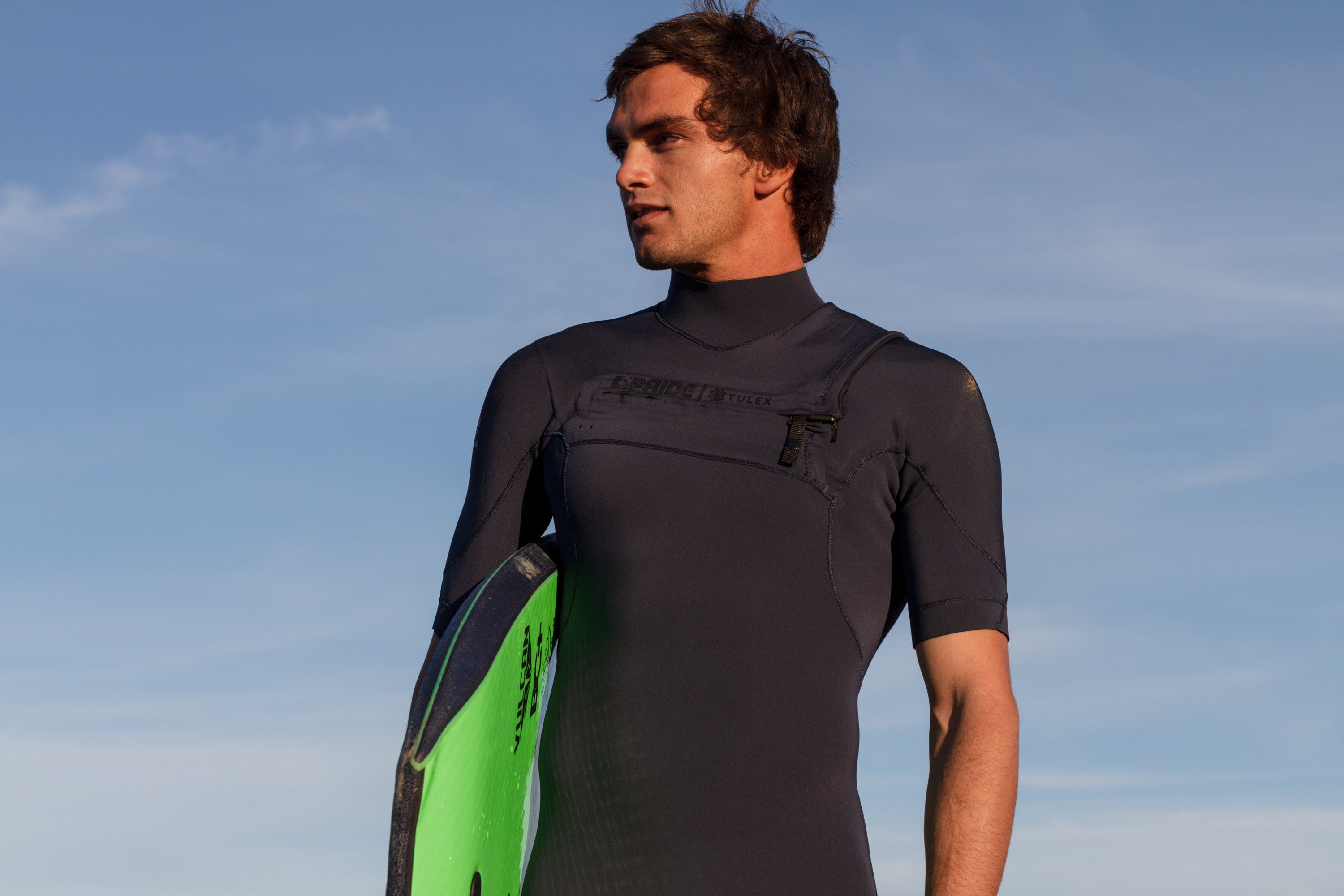
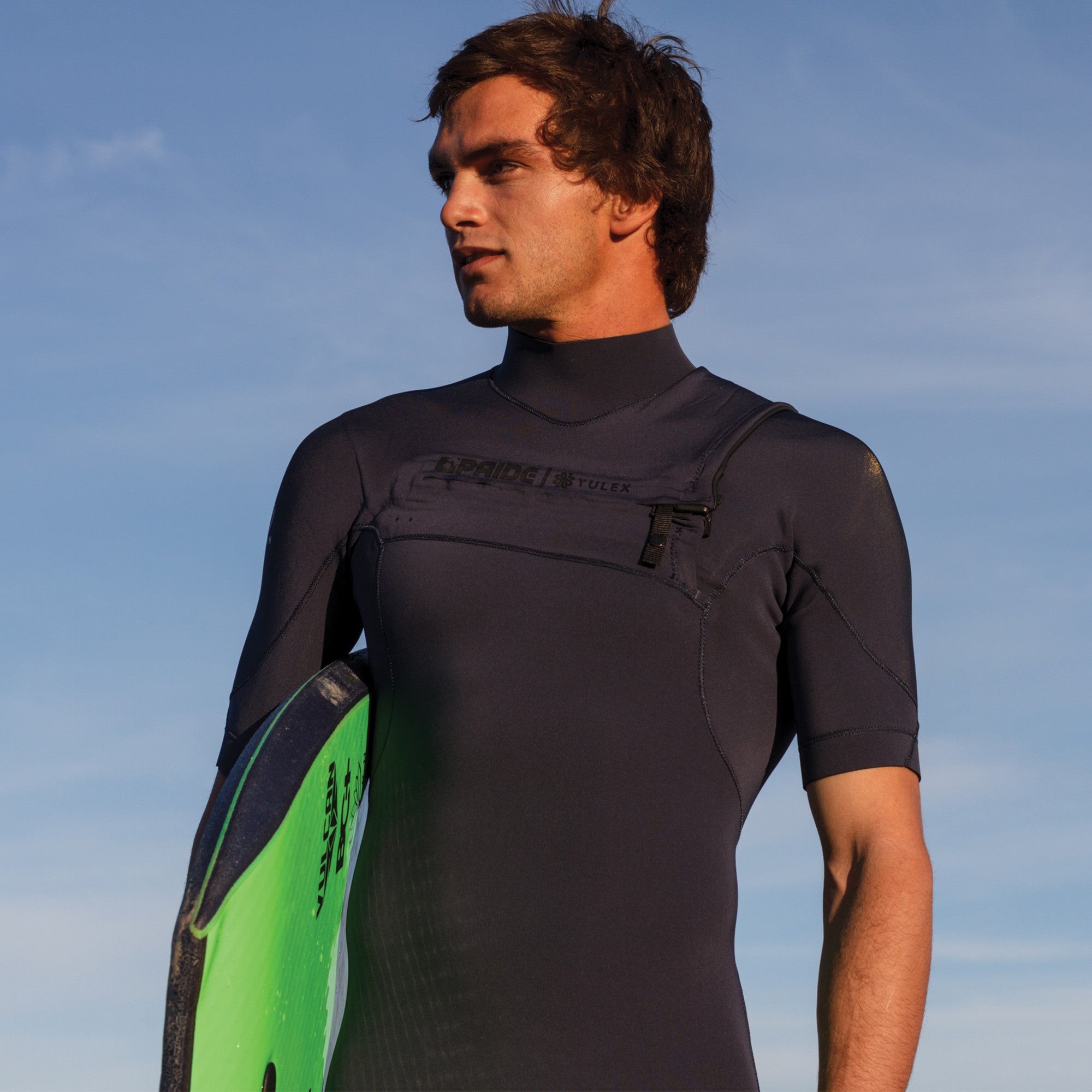
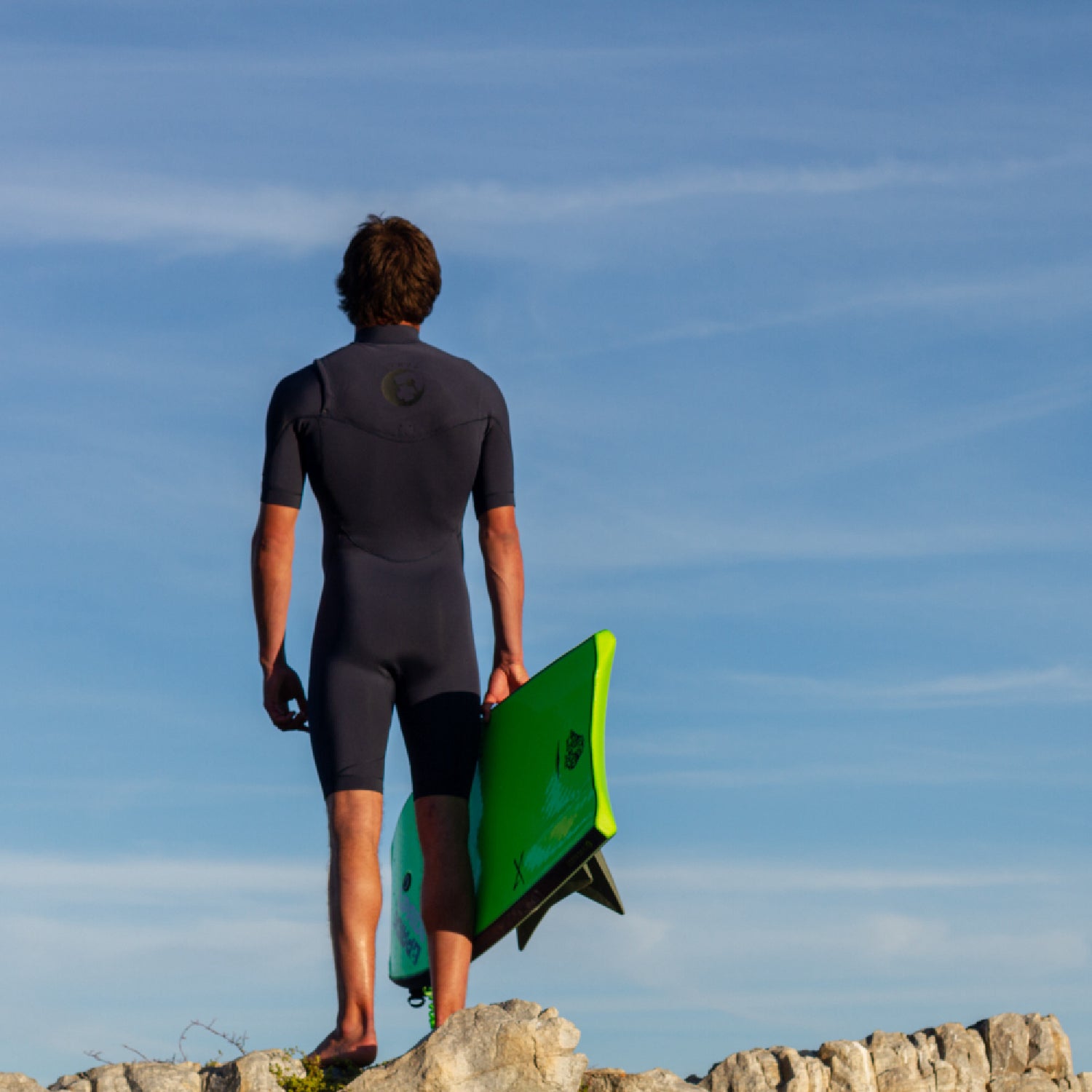
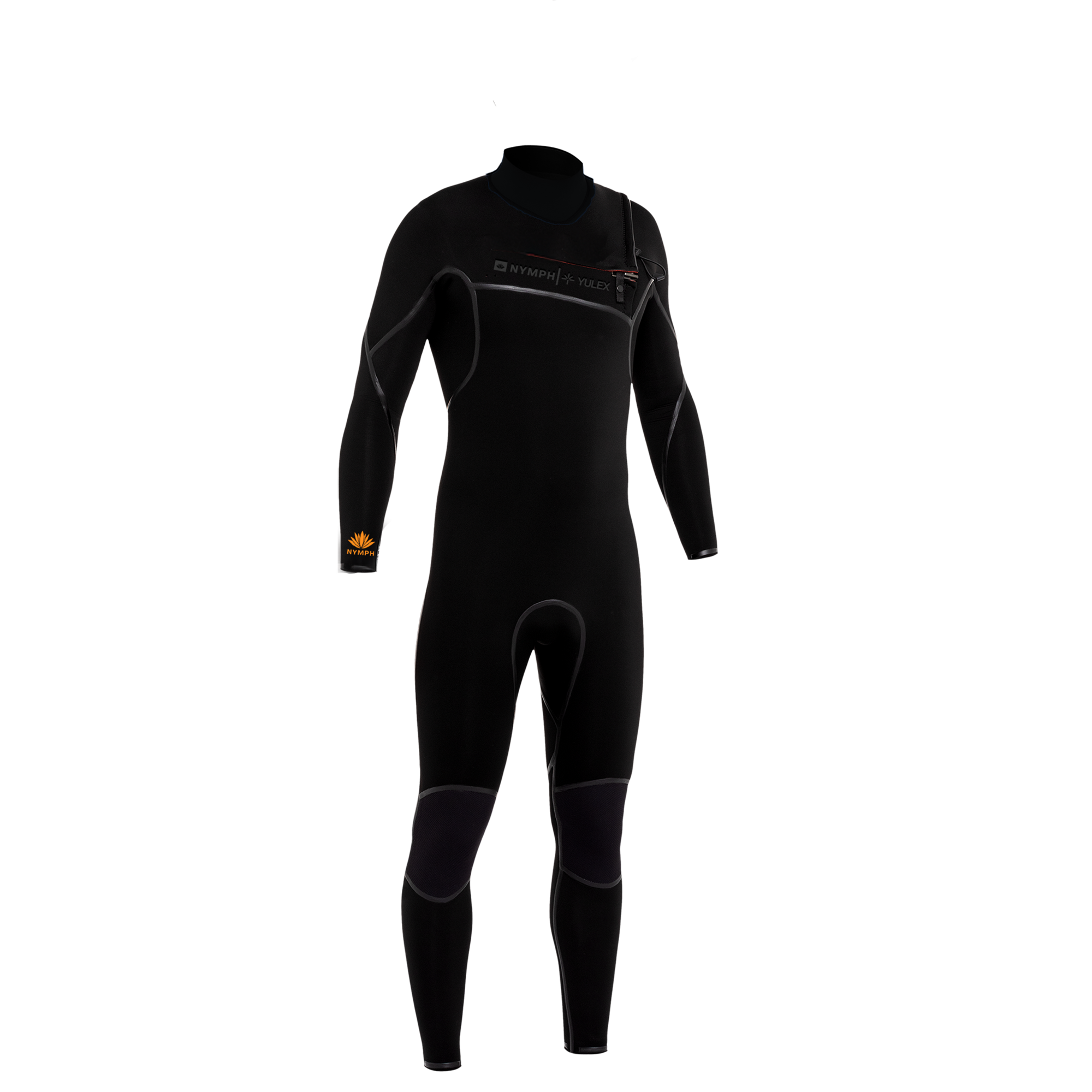
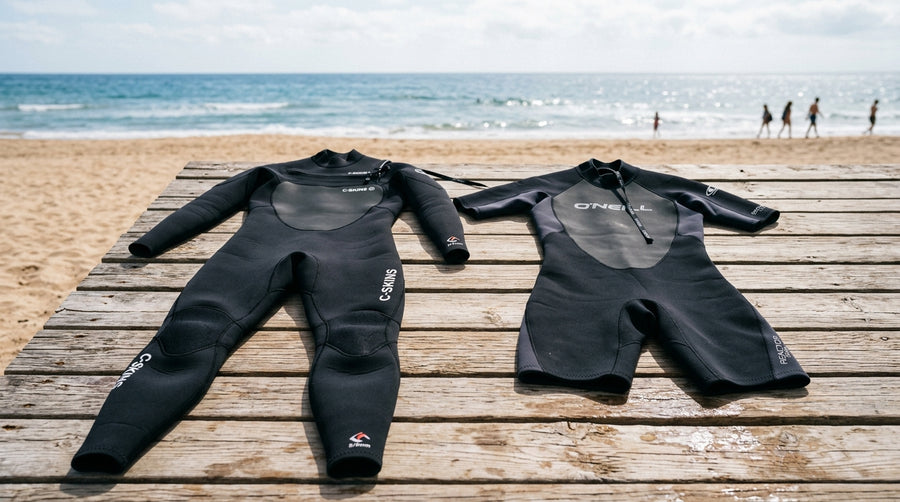
The style depends on the season and how much of the body you need to cover. A full suit covers arms and legs completely and is the reference from mid-season through winter. A shorty has short arms and legs, perfect for warm water and summer sessions. A neoprene top or rash guard is worn on its own in real heat, or under a suit for a bit of extra warmth. To start out in France, a full suit is still the best starting point, because it carries you through most of the year.
The zip system
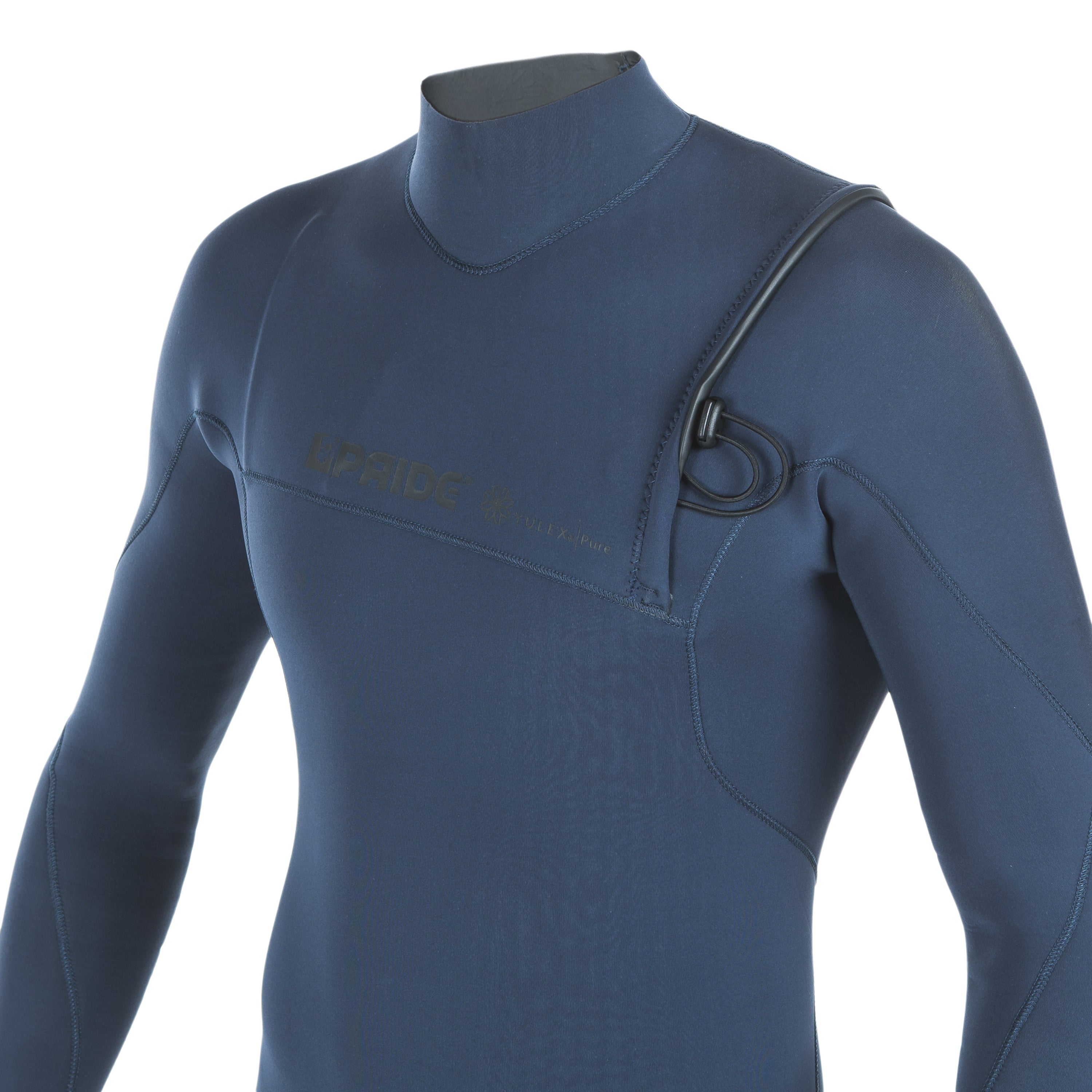
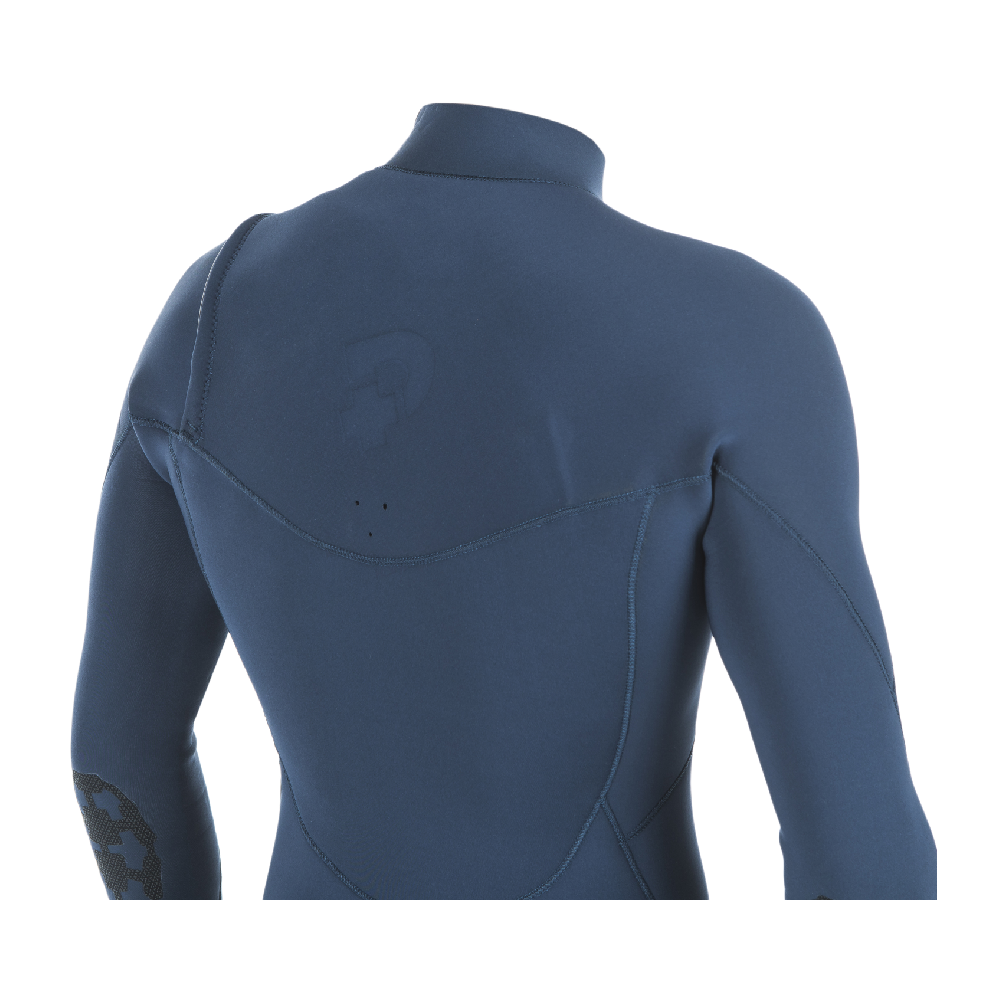
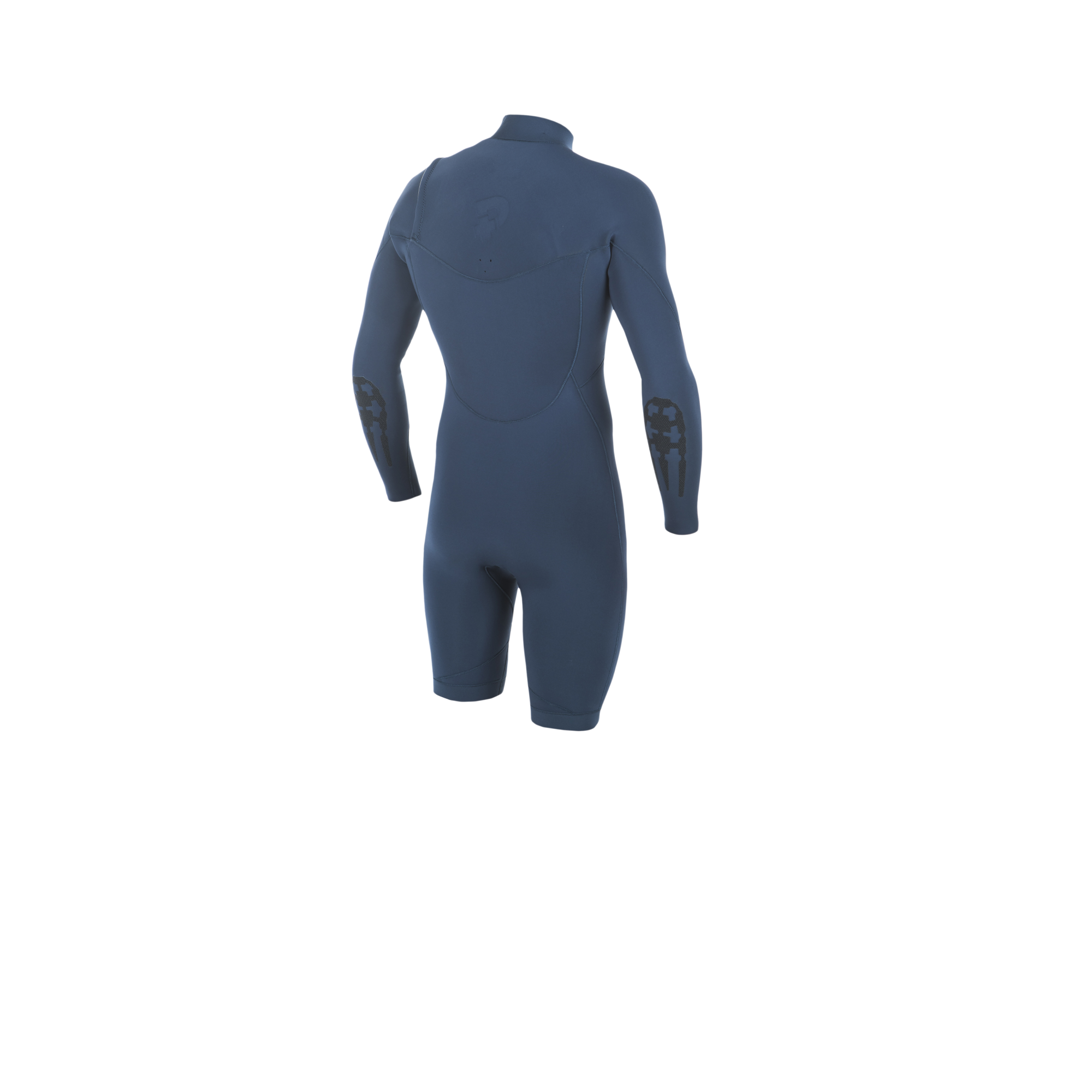
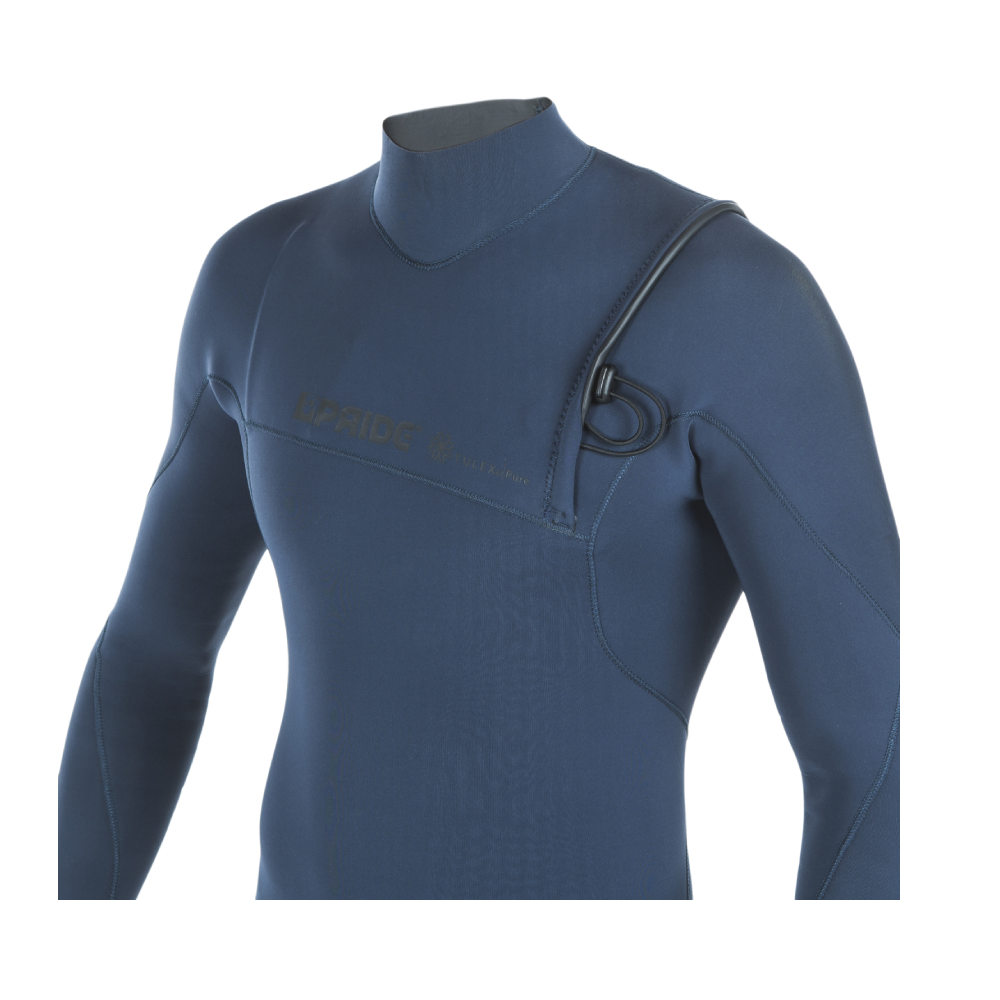
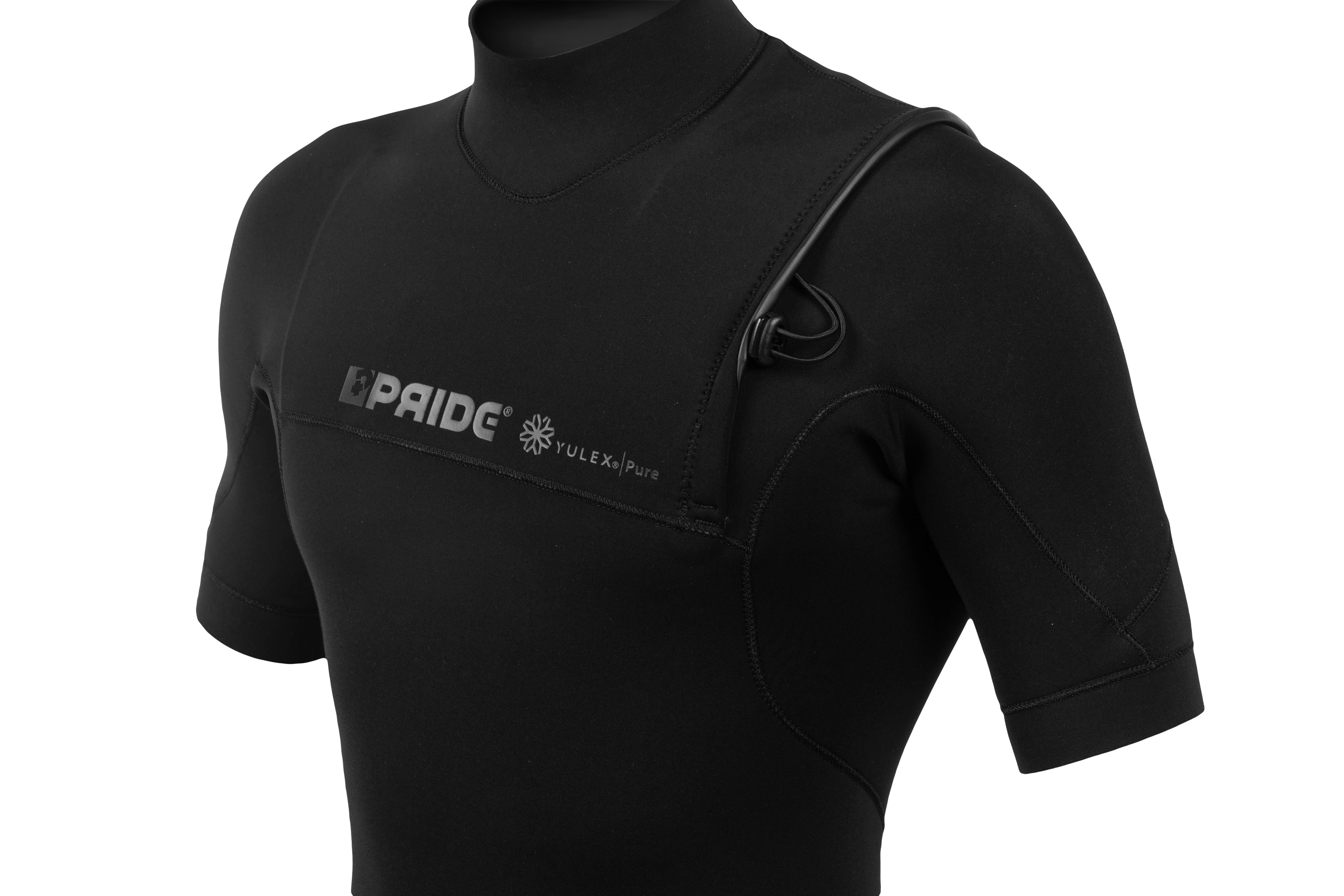
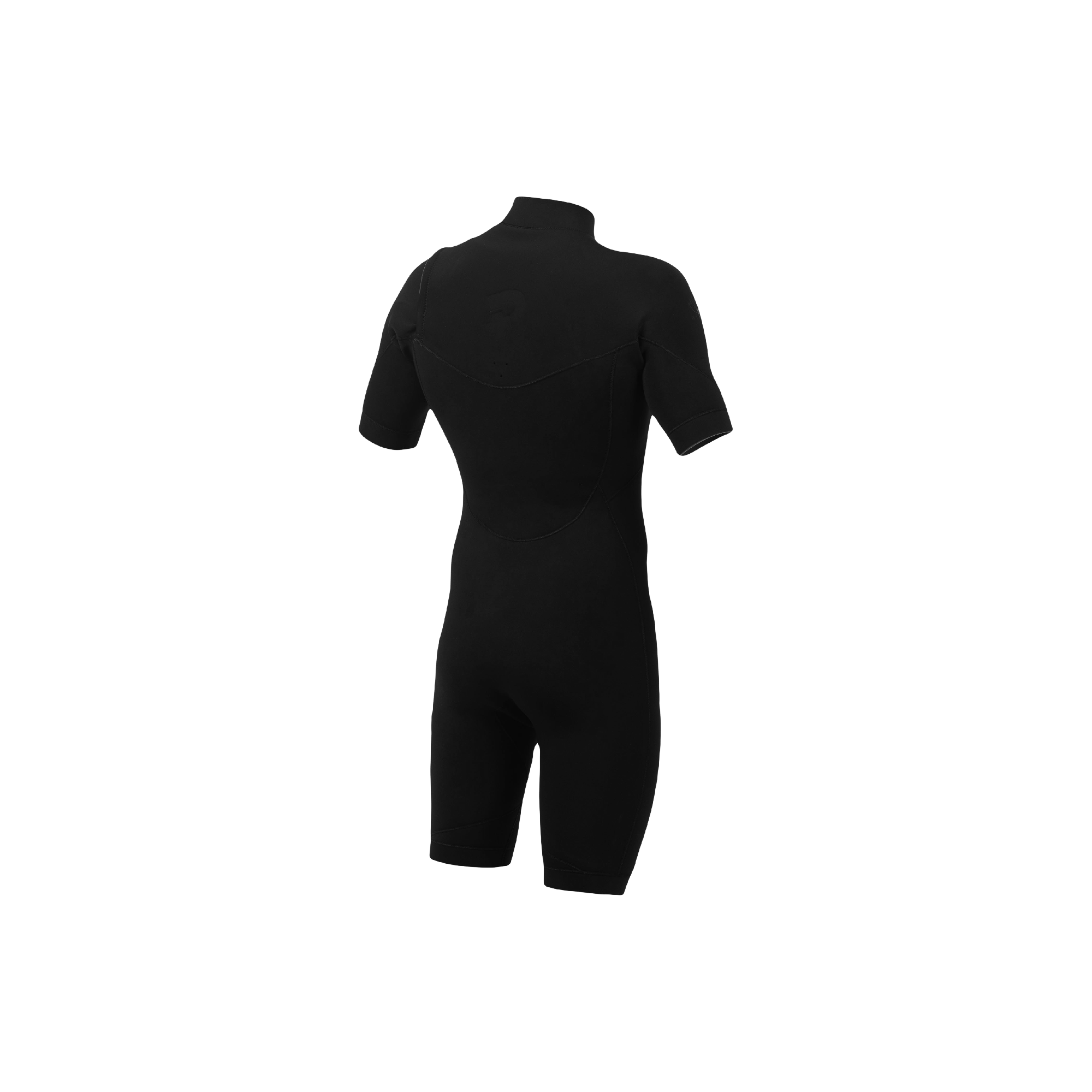
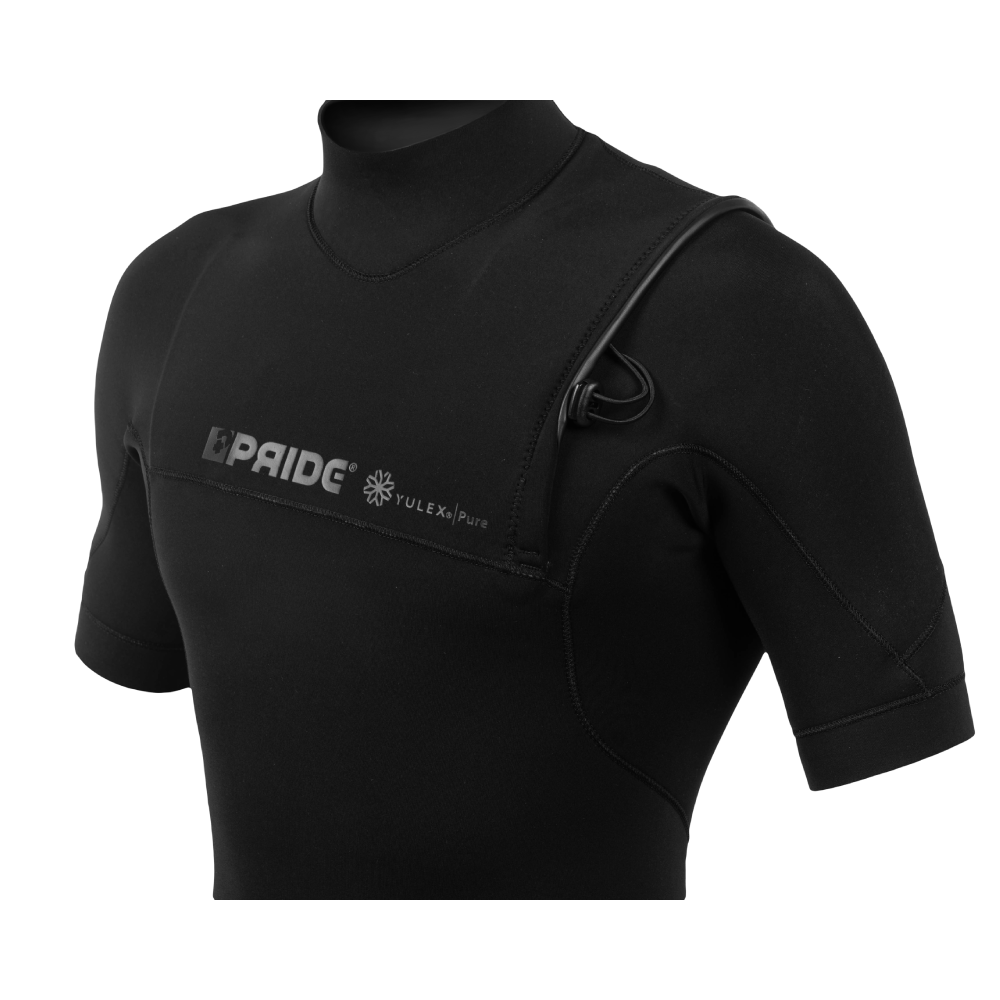
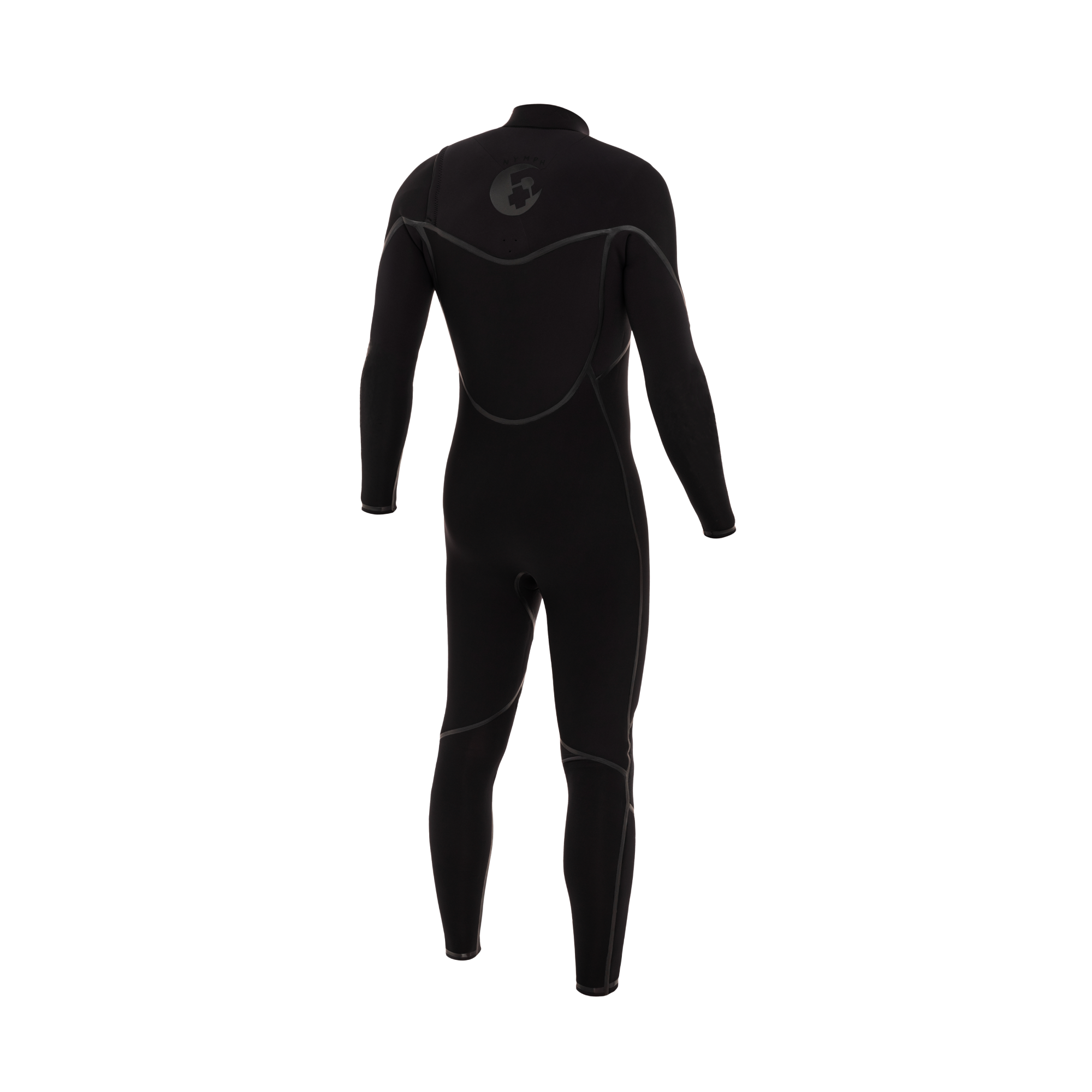
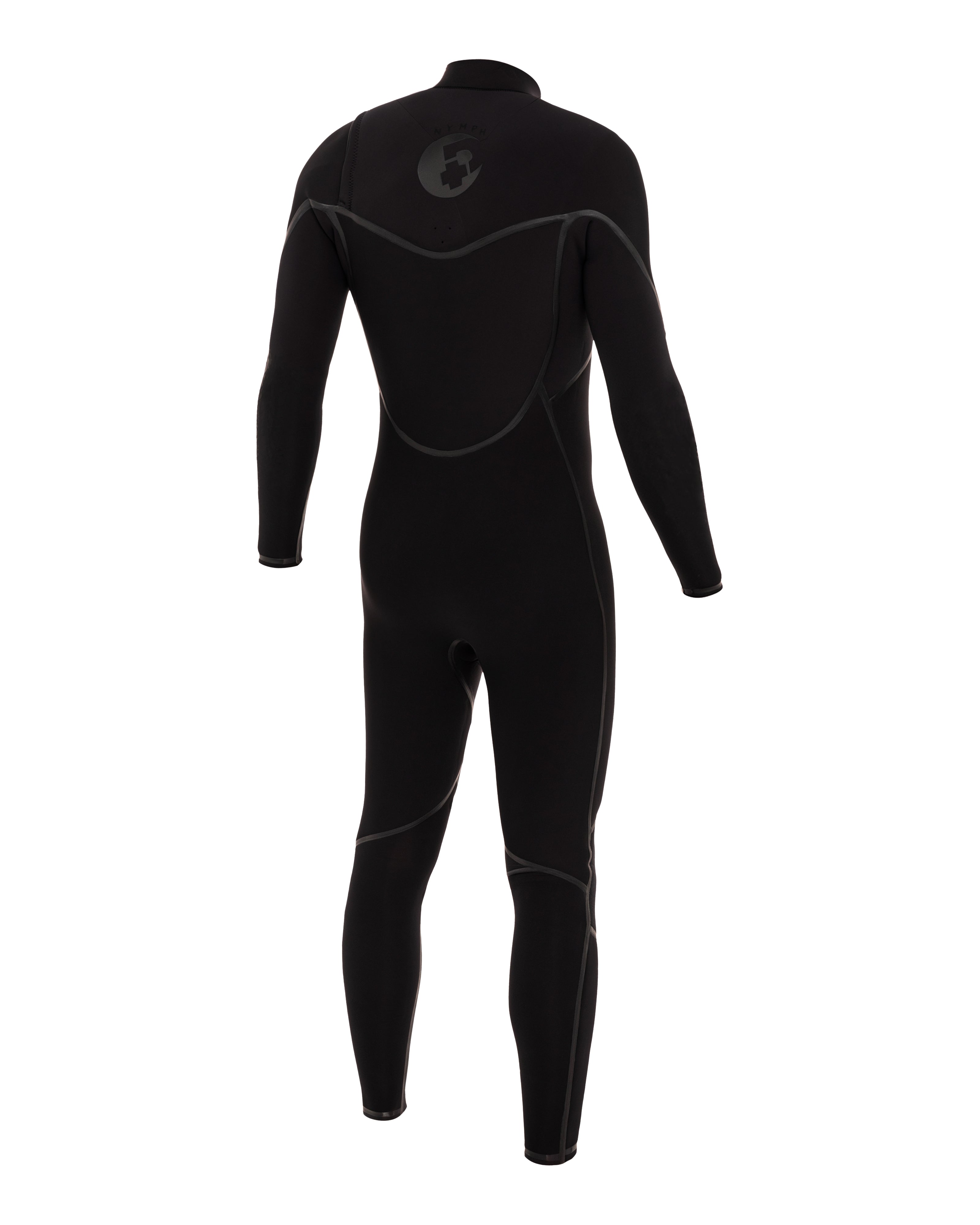
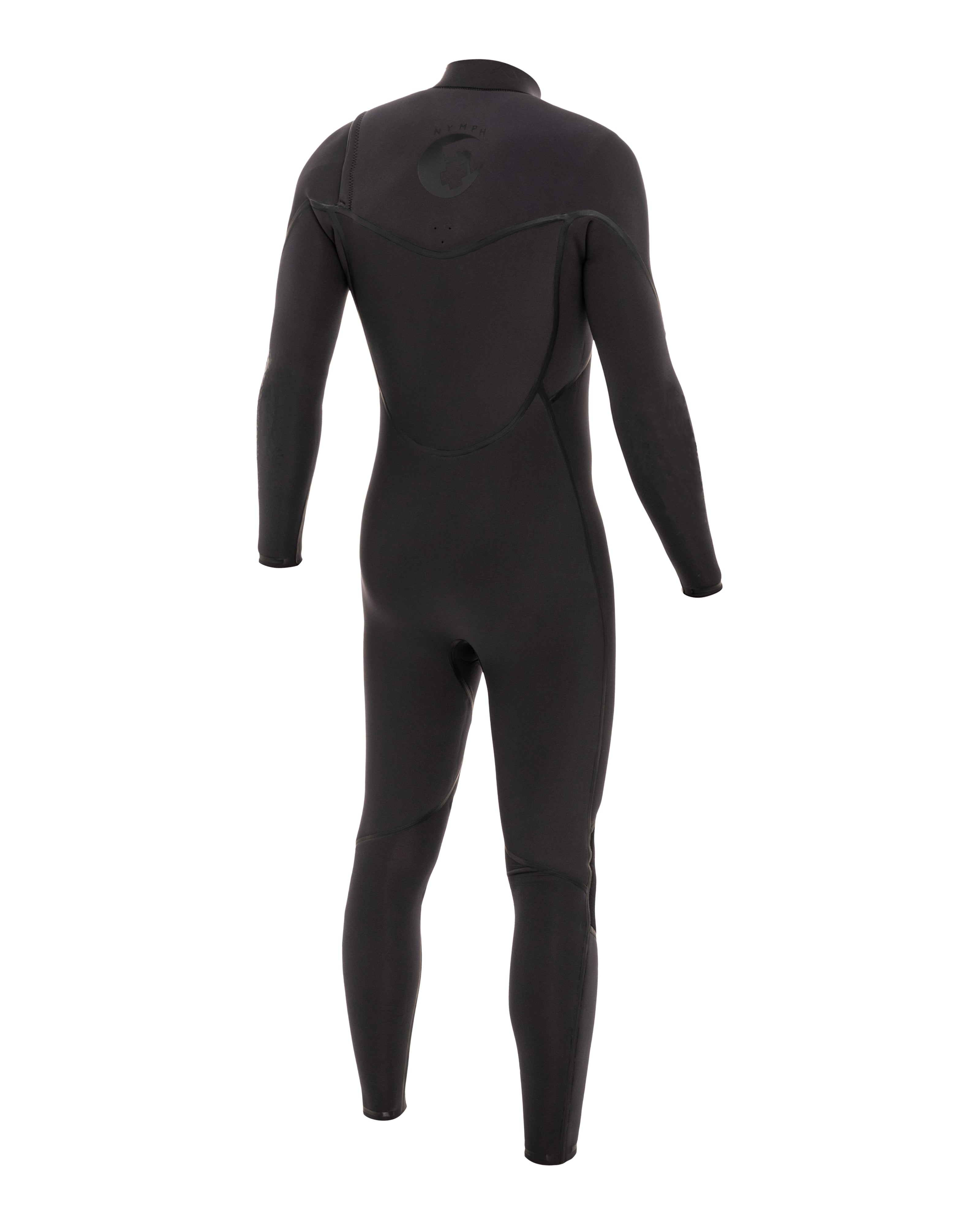
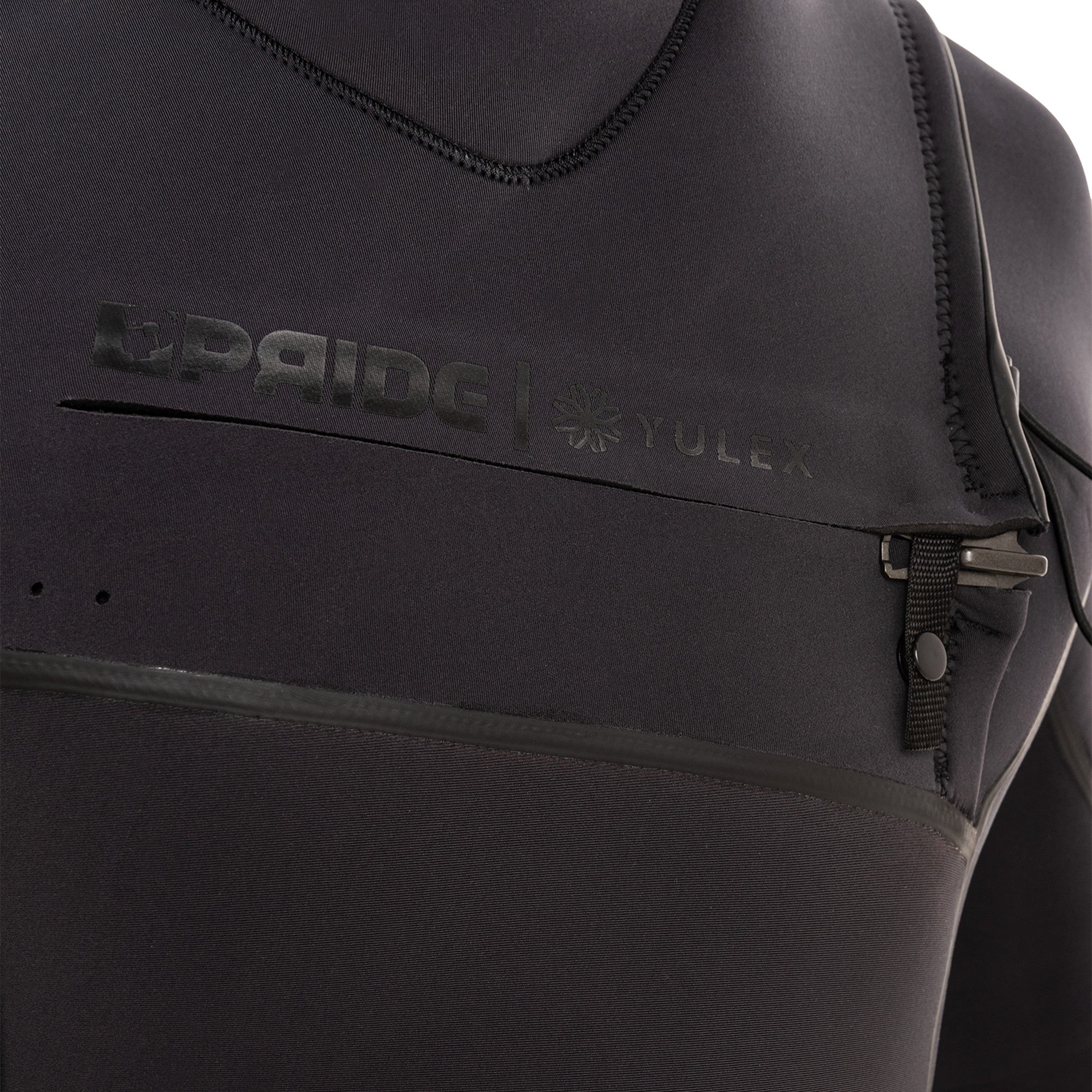
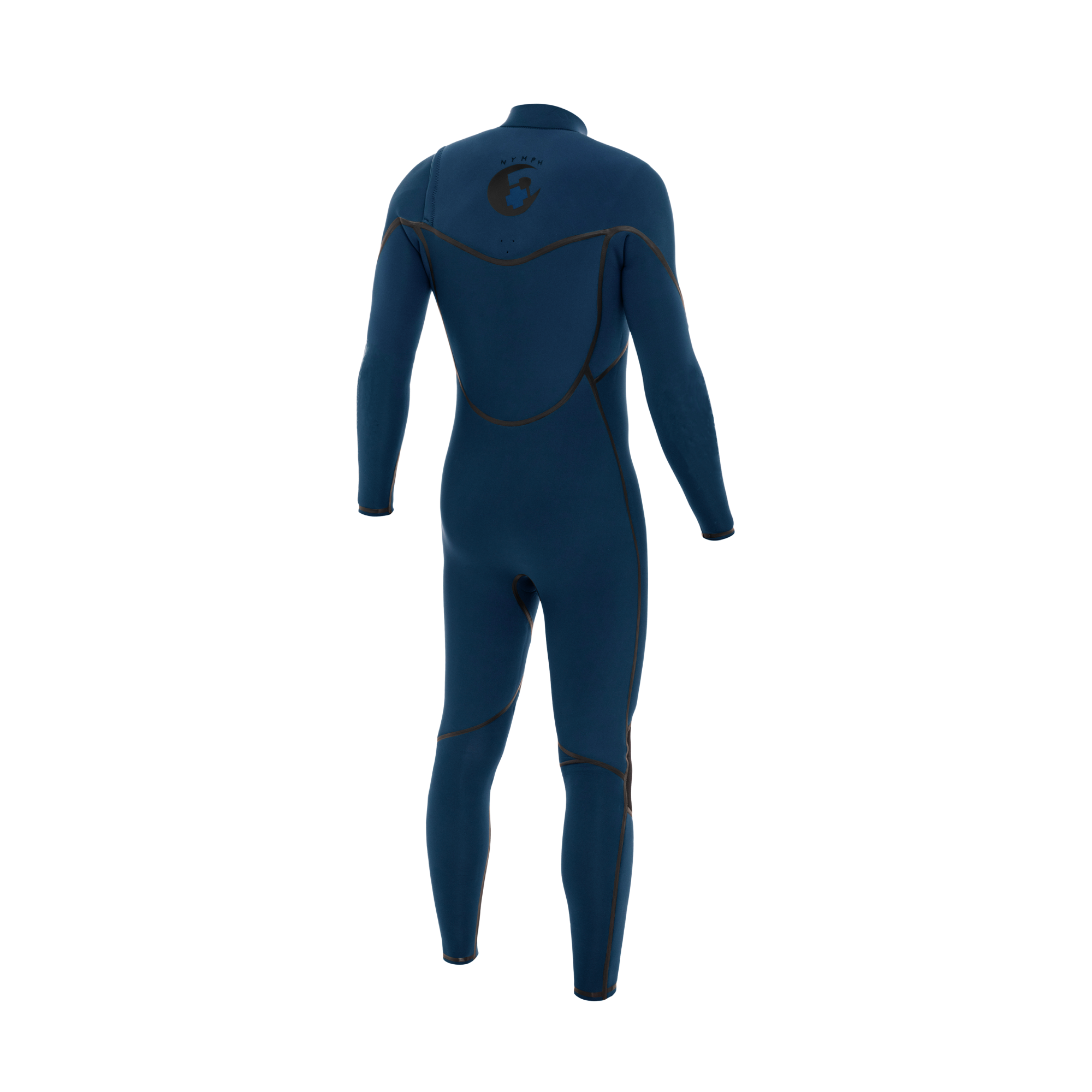
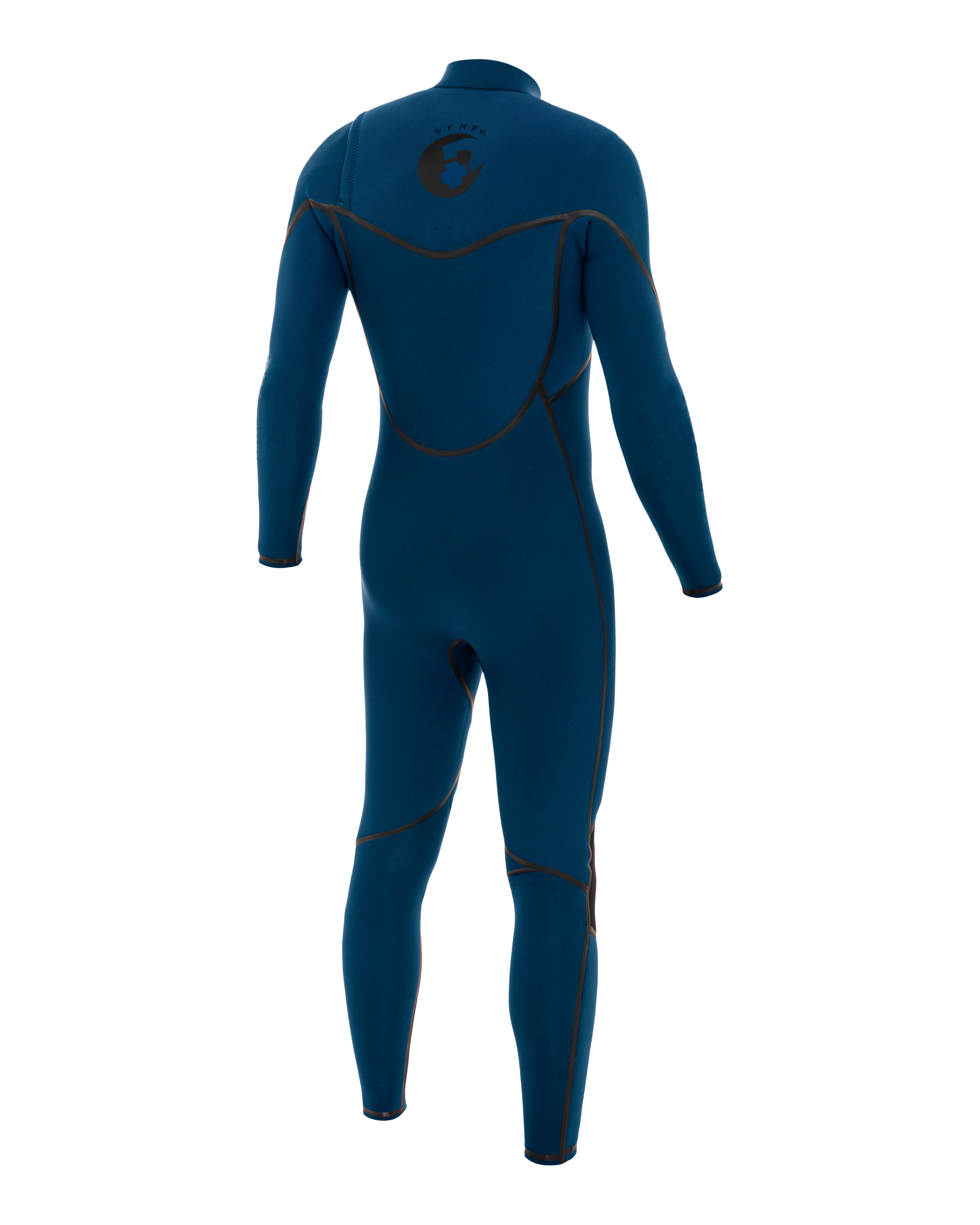
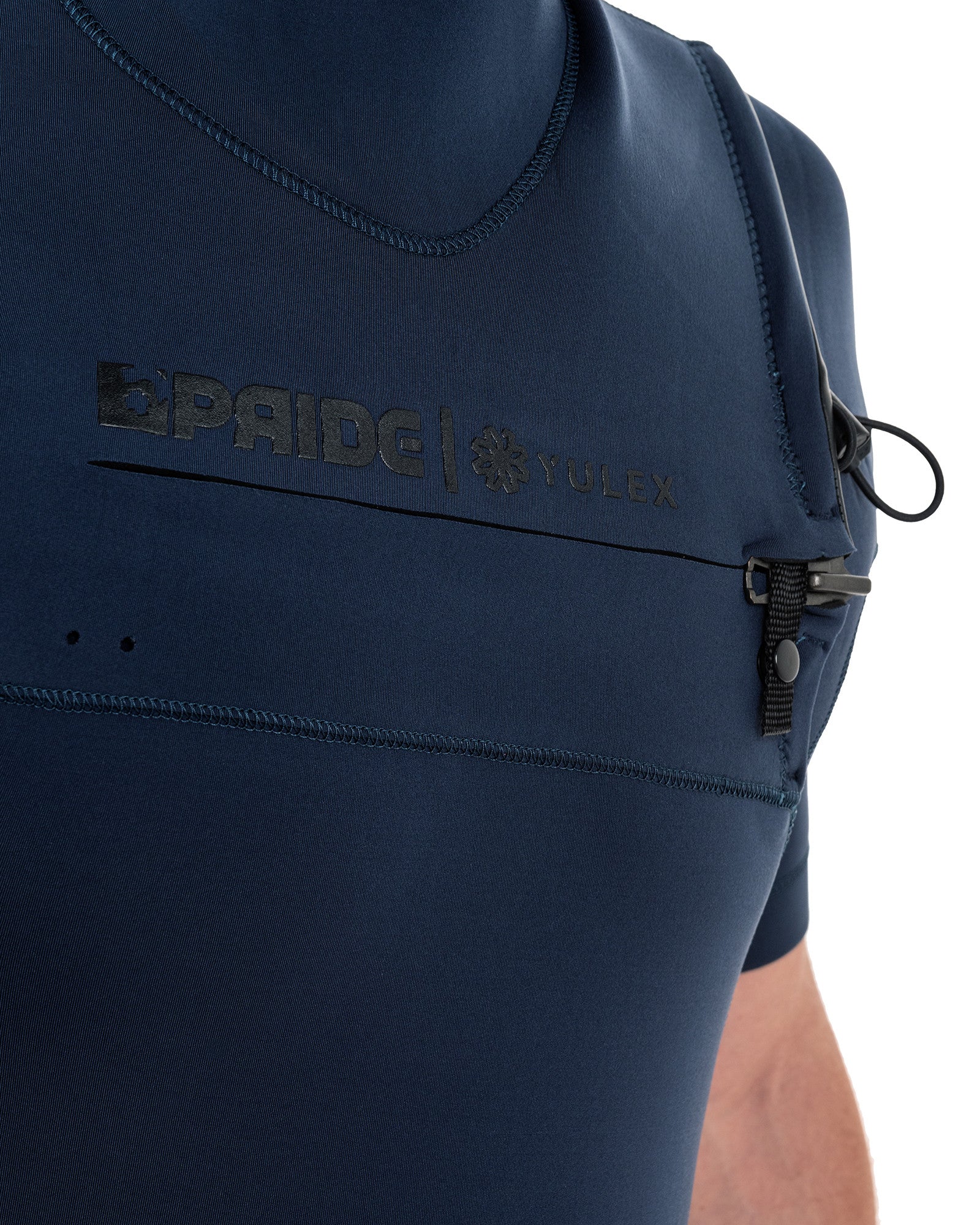
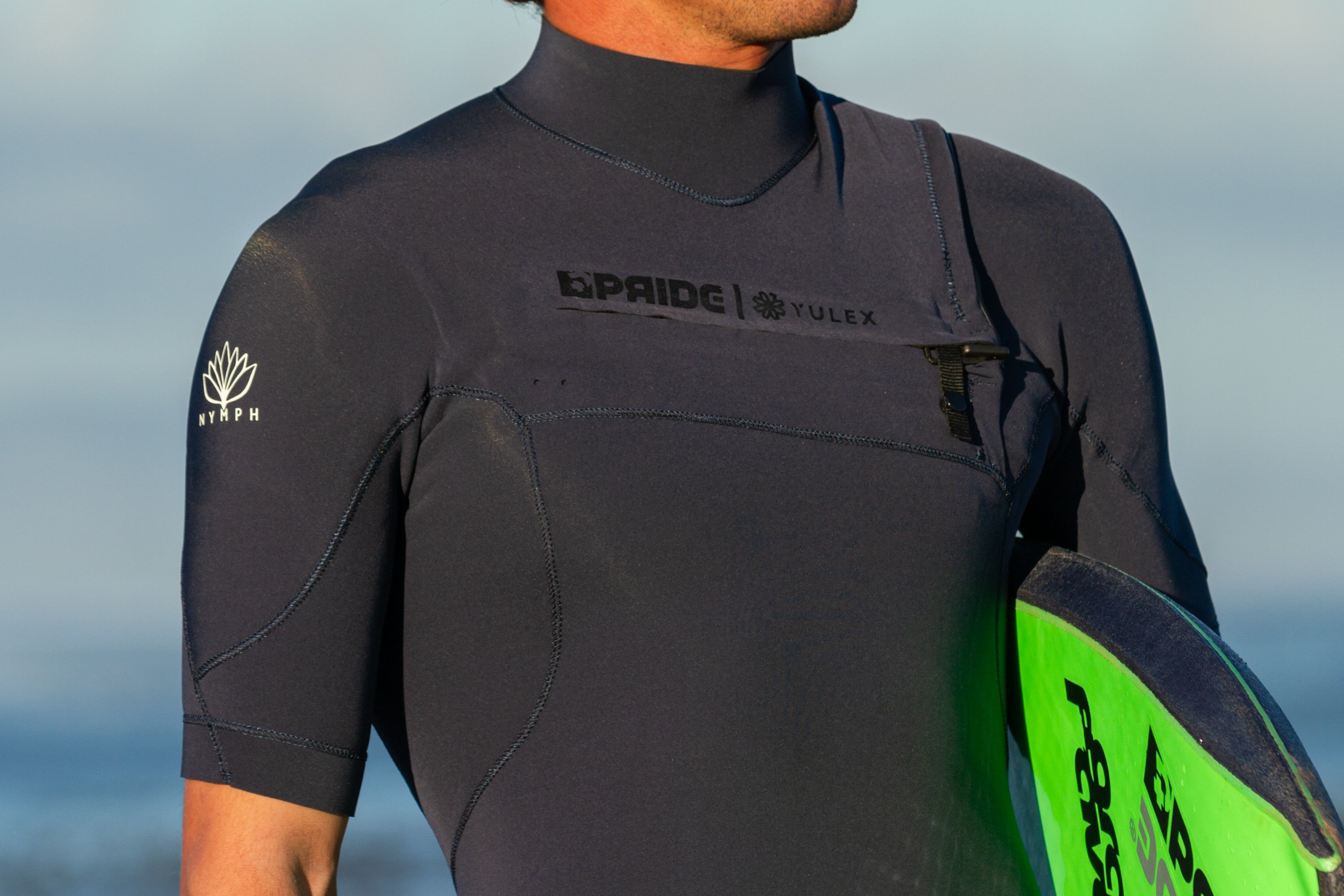
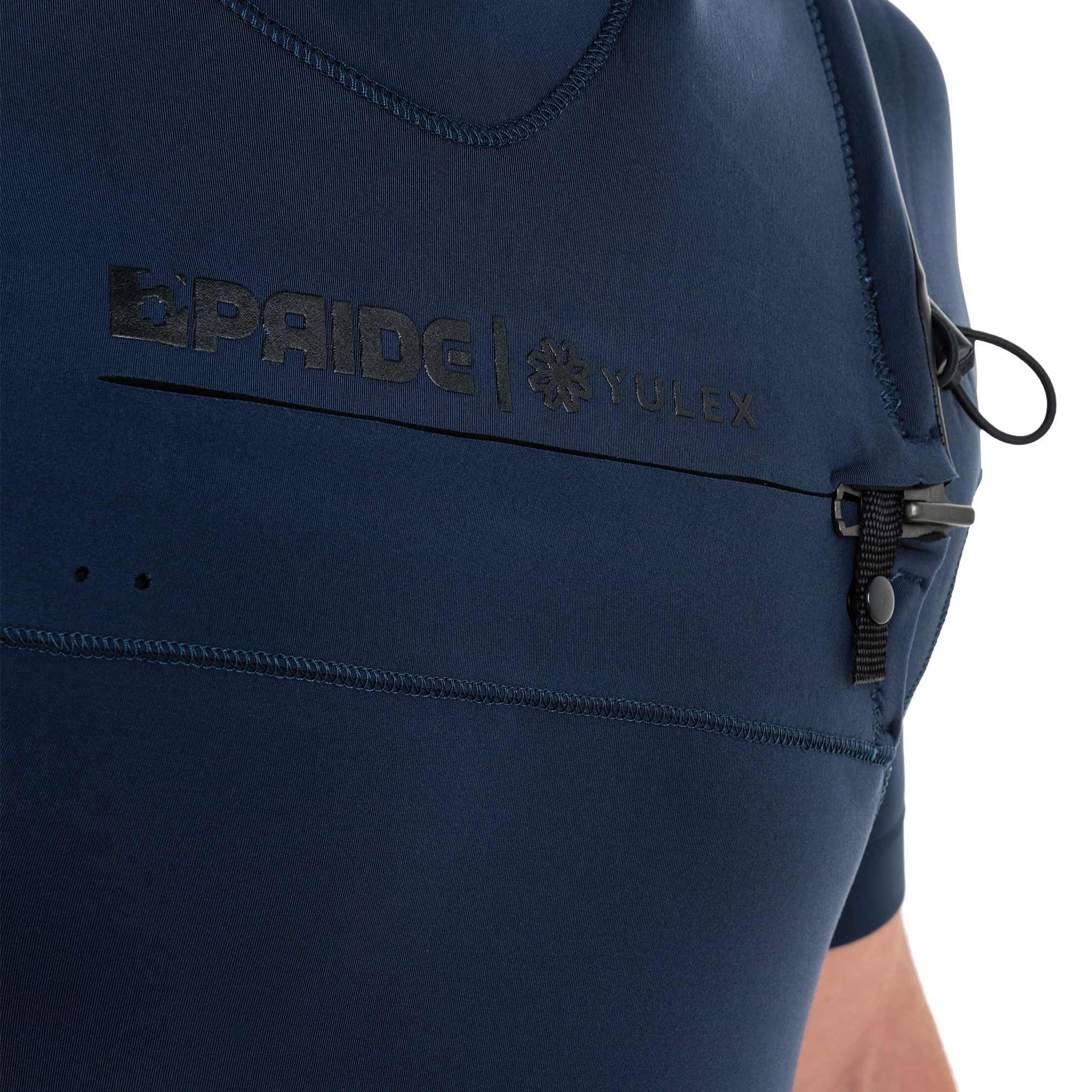
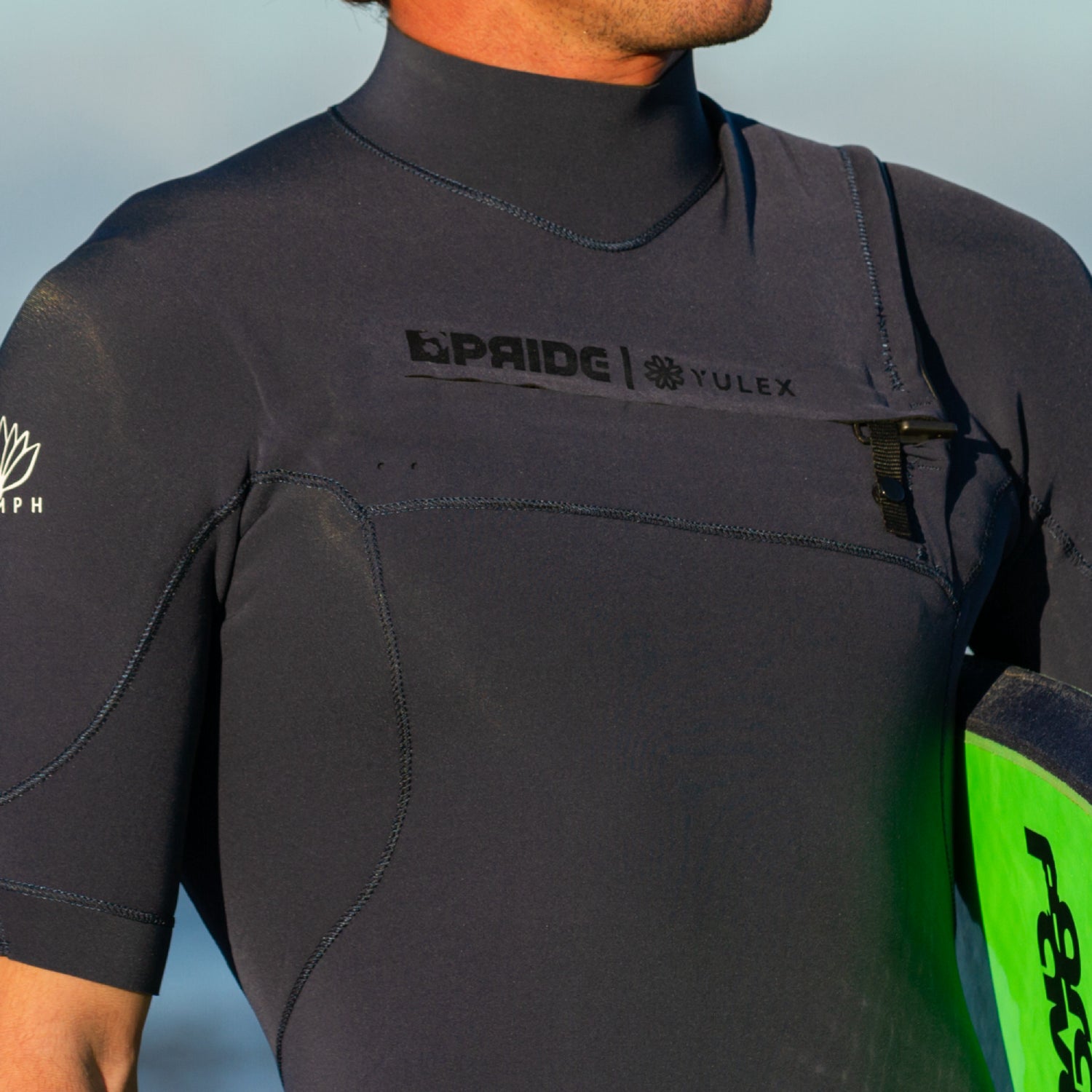
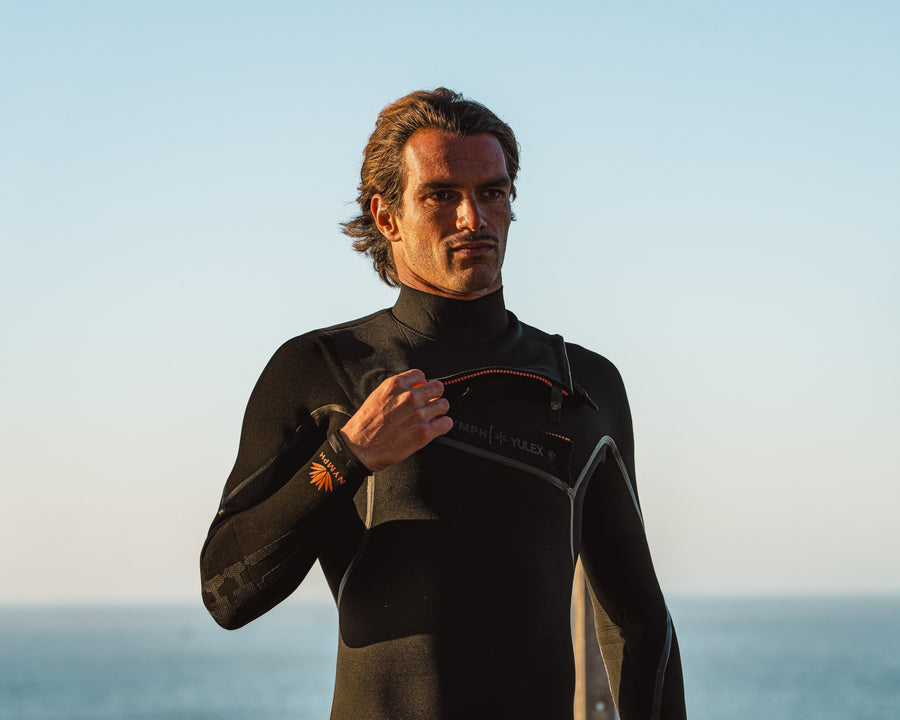
The zip changes both comfort and how easy the suit is to get into. A back zip is the simplest to put on when you are starting out, but lets a little more water in. A chest zip seals better and moves better, at the cost of a trickier entry. Zip-free gives maximum comfort and sealing, but takes getting used to. When you begin, a back zip is the most practical choice: less time fighting your wetsuit, more time in the water.
Size and fit
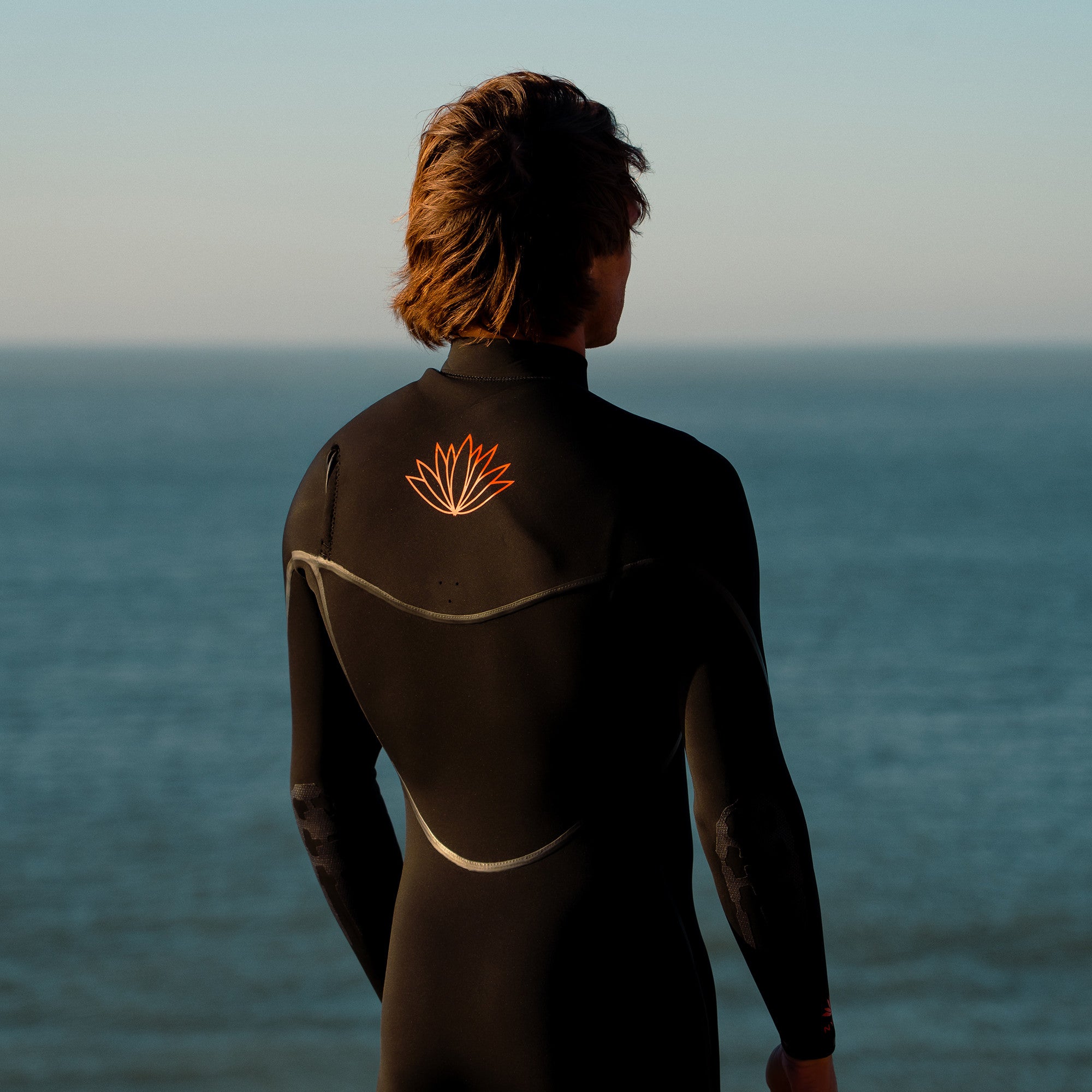
A wetsuit has to sit on you like a second skin. Too small and it restricts your paddling and your movement. Too big and water flushes through inside instead of staying trapped, so you get cold. The sweet spot: it hugs the body without squeezing your chest or locking up your shoulders. Follow the brands’ size charts, which often offer variants for taller or shorter builds.
Seams and finishing
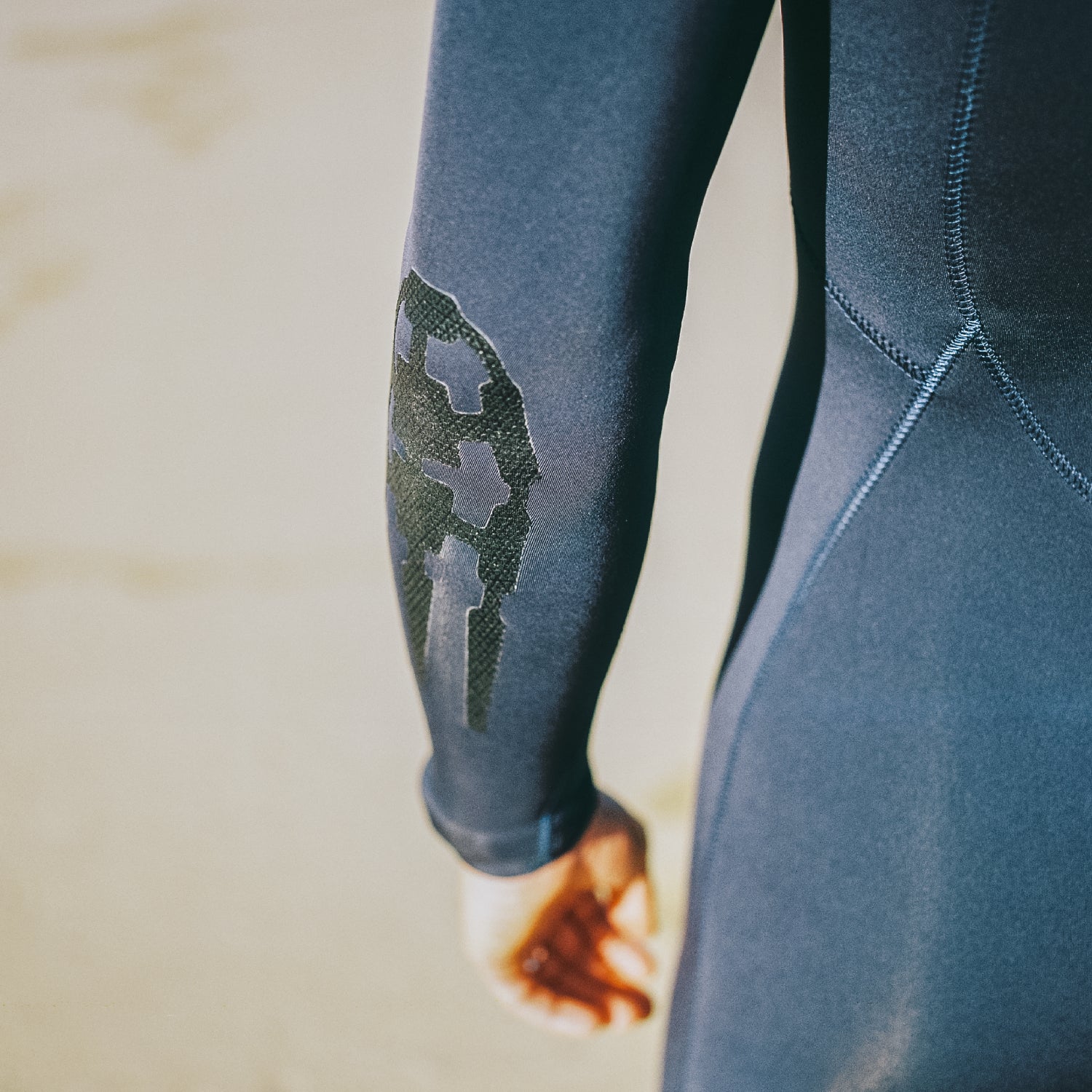
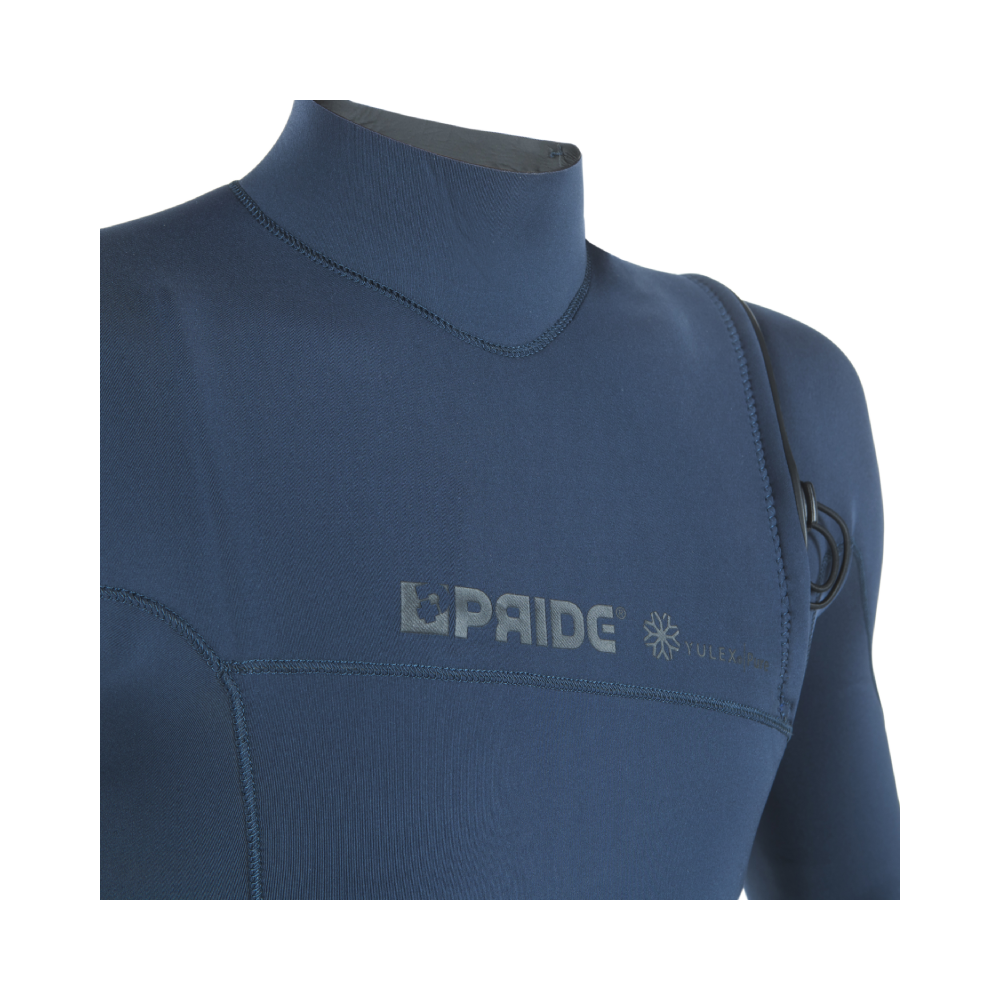
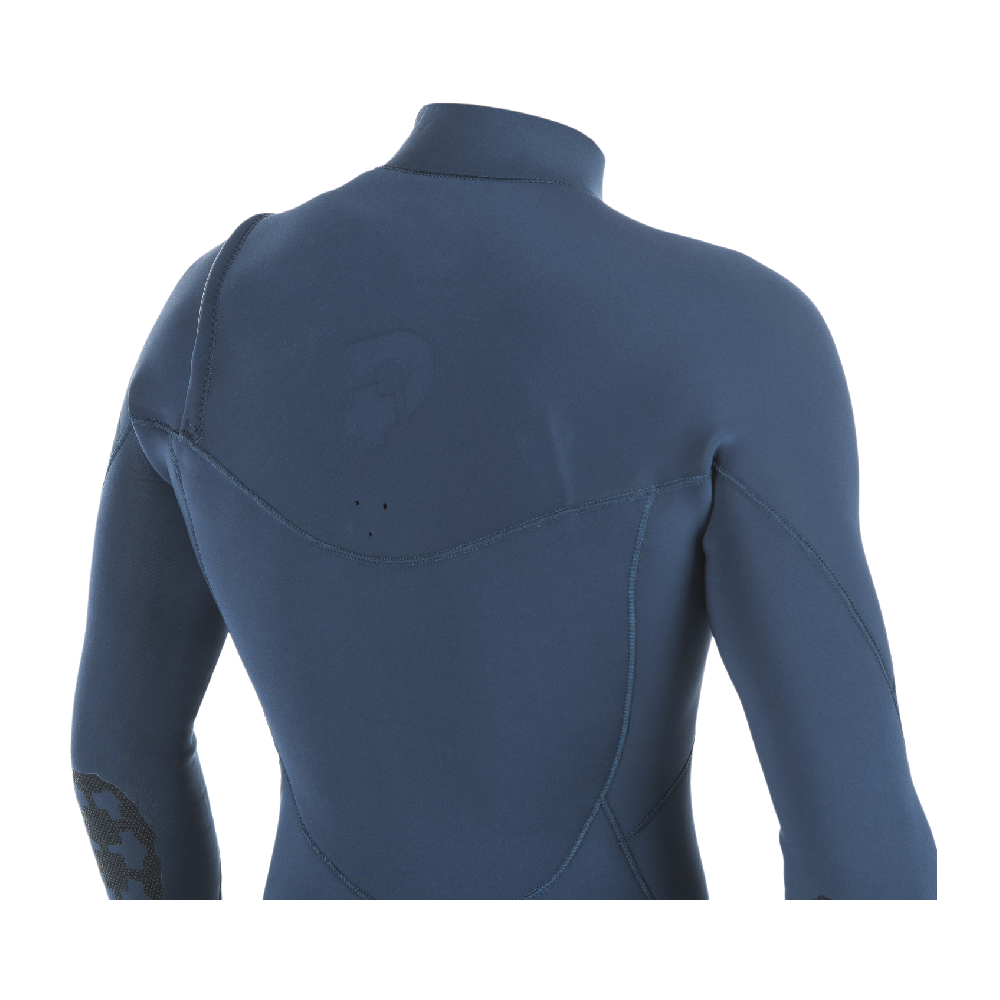
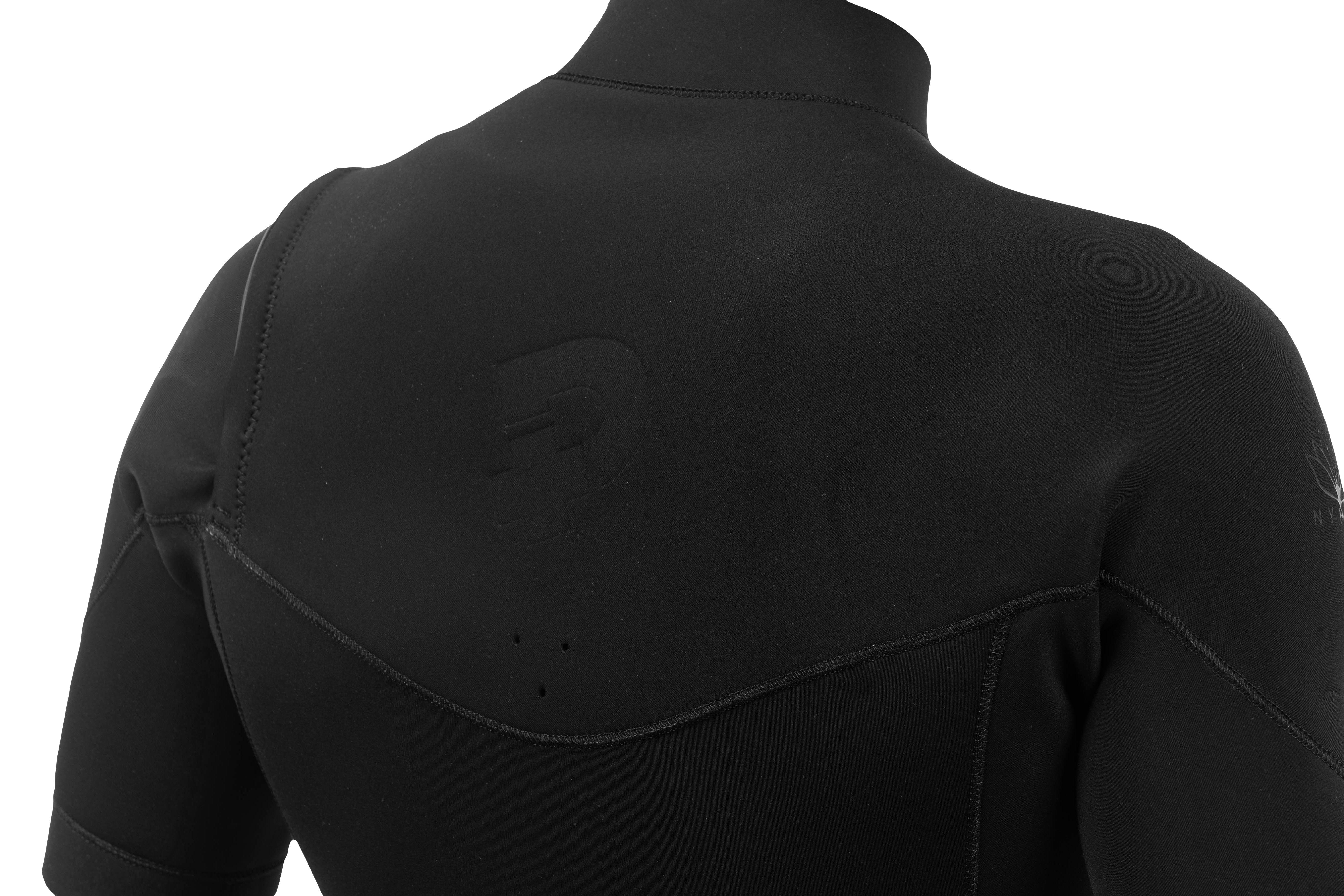
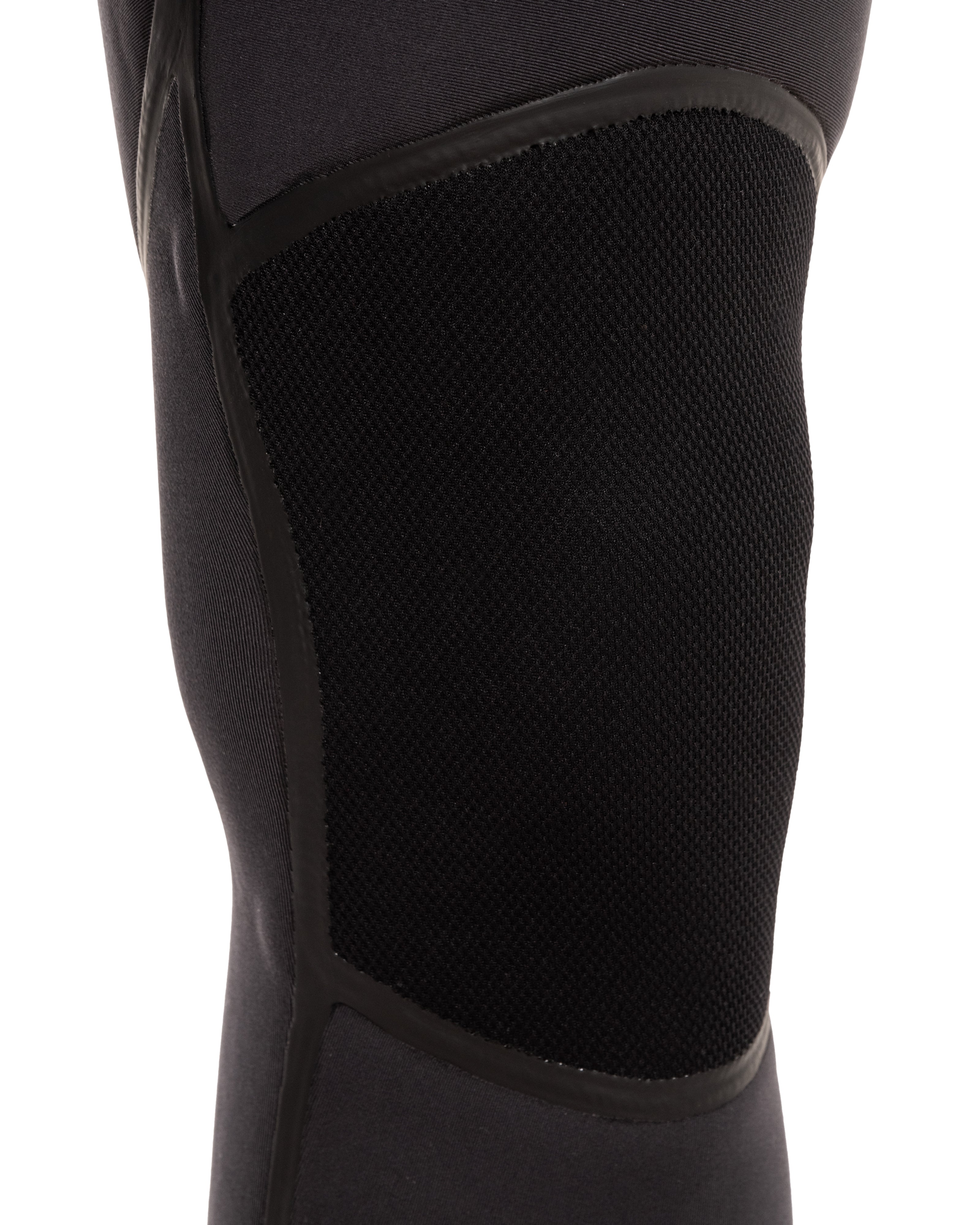
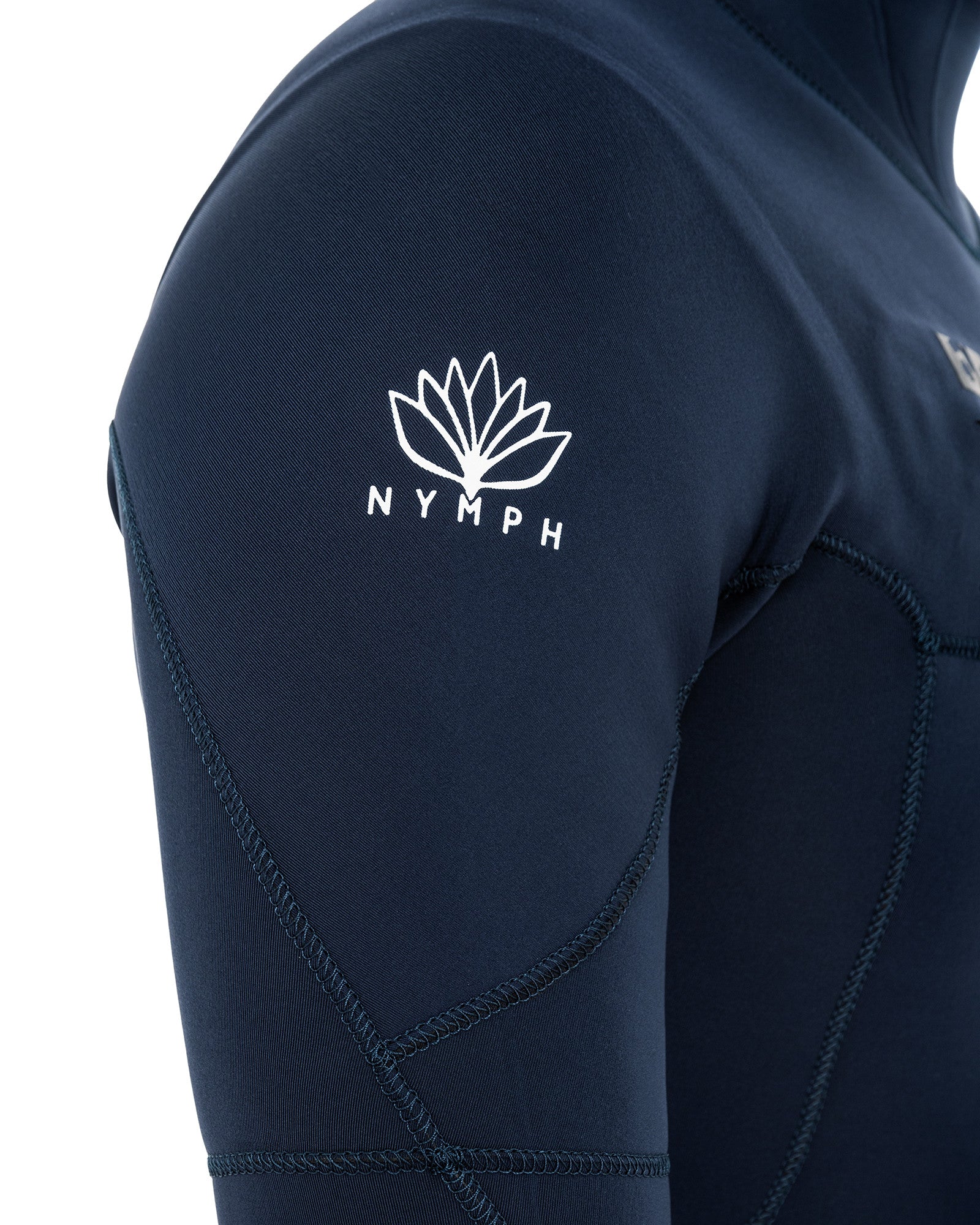
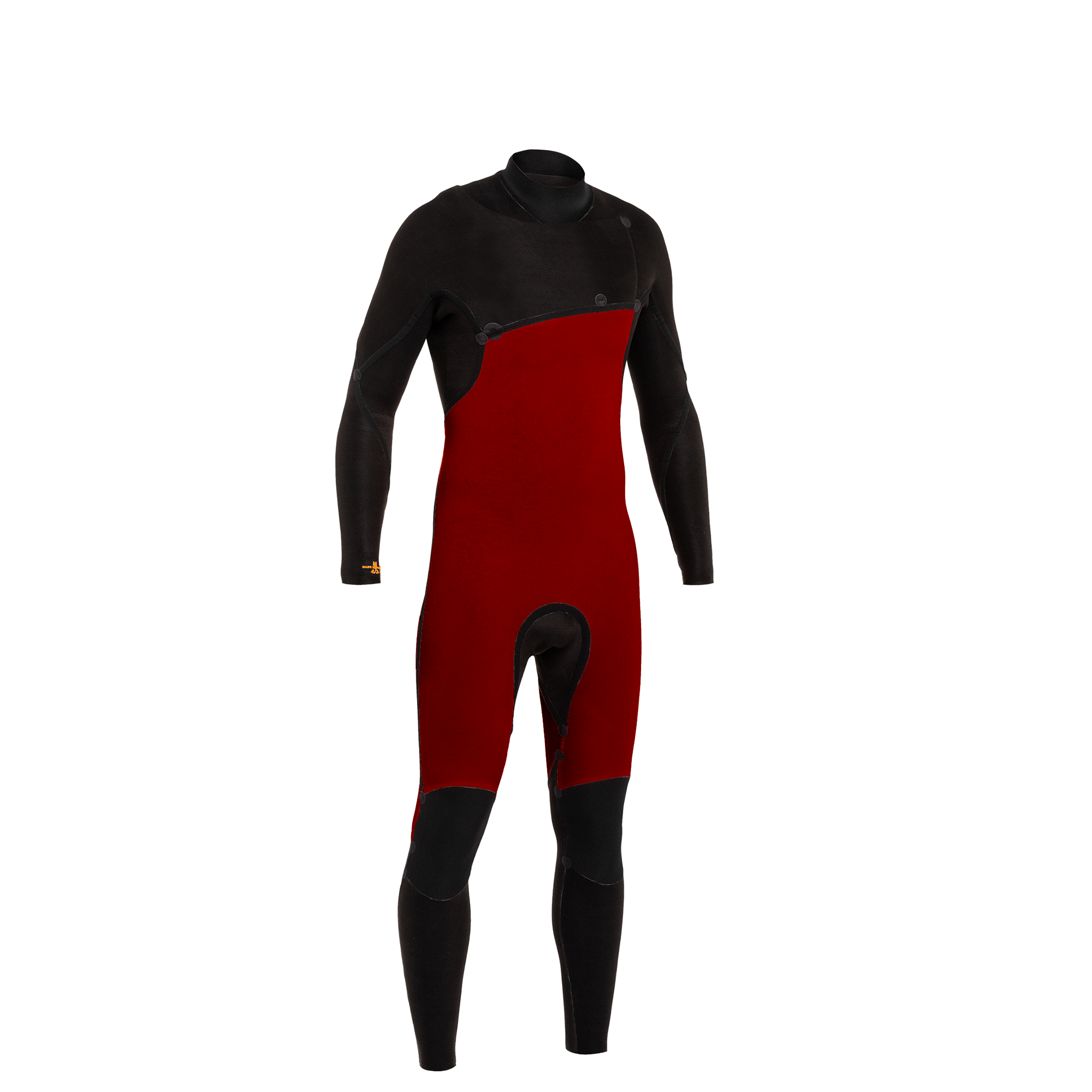
On warmer suits, seam quality counts as much as thickness. Glued and blind-stitched seams, known as GBS, stop water getting in and are fitted to most full suits. Taped seams, reinforced with a strip of neoprene, add sealing and durability, a real plus for winter.
Which wetsuit to start out on a foam board
If you are starting out in France and want a single do-it-all suit, a 3/2 mm back zip full suit is the safest choice. It covers you from spring to autumn on almost every spot, goes on easily and stays affordable. You can add a 4/3 later to stretch the season into winter.
Looking after your wetsuit
A well-kept wetsuit lasts for years. Rinse it in fresh water after every session to flush out salt and sand. Dry it in the shade, never in direct sun, which wrecks neoprene. Do not wring it out and do not fold it tight: hang it on a wide hanger.
Find your wetsuit in seconds
Enter the water temperature and how well you handle cold, and we will recommend the thickness, the style and the accessories to plan for.
A guideline based on water temperature and your tolerance for cold.
Frequently asked questions
How do you choose a surfing wetsuit?
Water temperature first, which sets the thickness, then the style (full suit or shorty), the zip and the fit.
What wetsuit thickness for surfing in Europe?
A 3/2 mm from spring to autumn, a 4/3 or 5/4 mm for winter depending on the region.
3/2 or 4/3 wetsuit: which one should you pick?
The 3/2 for temperate water from 17 to 21 °C, the 4/3 for cold water from 12 to 17 °C.
What is the best surfing wetsuit brand?
The safe bets are O’Neill, Rip Curl, Billabong and Quiksilver. To start out, a well-fitting entry-level suit does the job perfectly.
How do you put on a surfing wetsuit?
Legs first, then arms, without pulling on the seams, working the neoprene up gradually so it moulds to your body.
The essentials
Water temperature sets the thickness and the rest follows: full suit or shorty depending on the season, back zip for simplicity, a second-skin fit. Our complete guide to choosing a foam surfboard covers the rest of a beginner’s kit if you want to fill out your setup. To start out in temperate water, aim for a 3/2 mm full suit and you are covered for most of the year.
See the wetsuitsLes autres guides
Choisir sa planche
La méthode complète pour choisir un softboard selon ta taille, ton poids et ton niveau. Lire le guide
Choisir son leash
Longueur et diamètre du leash à retenir selon ta planche et les conditions. Lire le guide
Choisir ses dérives
Le rôle des dérives et le bon setup pour une planche de surf en mousse. Lire le guide
La planche de l’enfant
Taille, volume et niveau pour choisir le bon softboard enfant. Lire le guide
Réparer sa planche
Boucher un impact, recoller le pont, prolonger la vie de ton softboard. Lire le guide